
The complete guide
Choosing a Play Tent and Tunnel Set That Actually Gets Used
The problem with a wet Saturday
Every parent knows the feeling. It is eleven in the morning, the rain has not let up, the children have already circled the house twice, and screens are starting to look like the only answer. Small bodies need to move. They need to crawl, hide, pop out and surprise someone. A sofa cushion fort does some of that, but it collapses in four minutes and leaves you rebuilding it.
A three piece play tent and tunnel set solves this in a very simple way. It gives children a route. There is somewhere to go in, a passage to crawl through, and somewhere to land at the other end. That loop is enough to keep a three year old busy for a surprisingly long stretch, because the fun is in the travelling, not in any single feature.
How this kind of set works
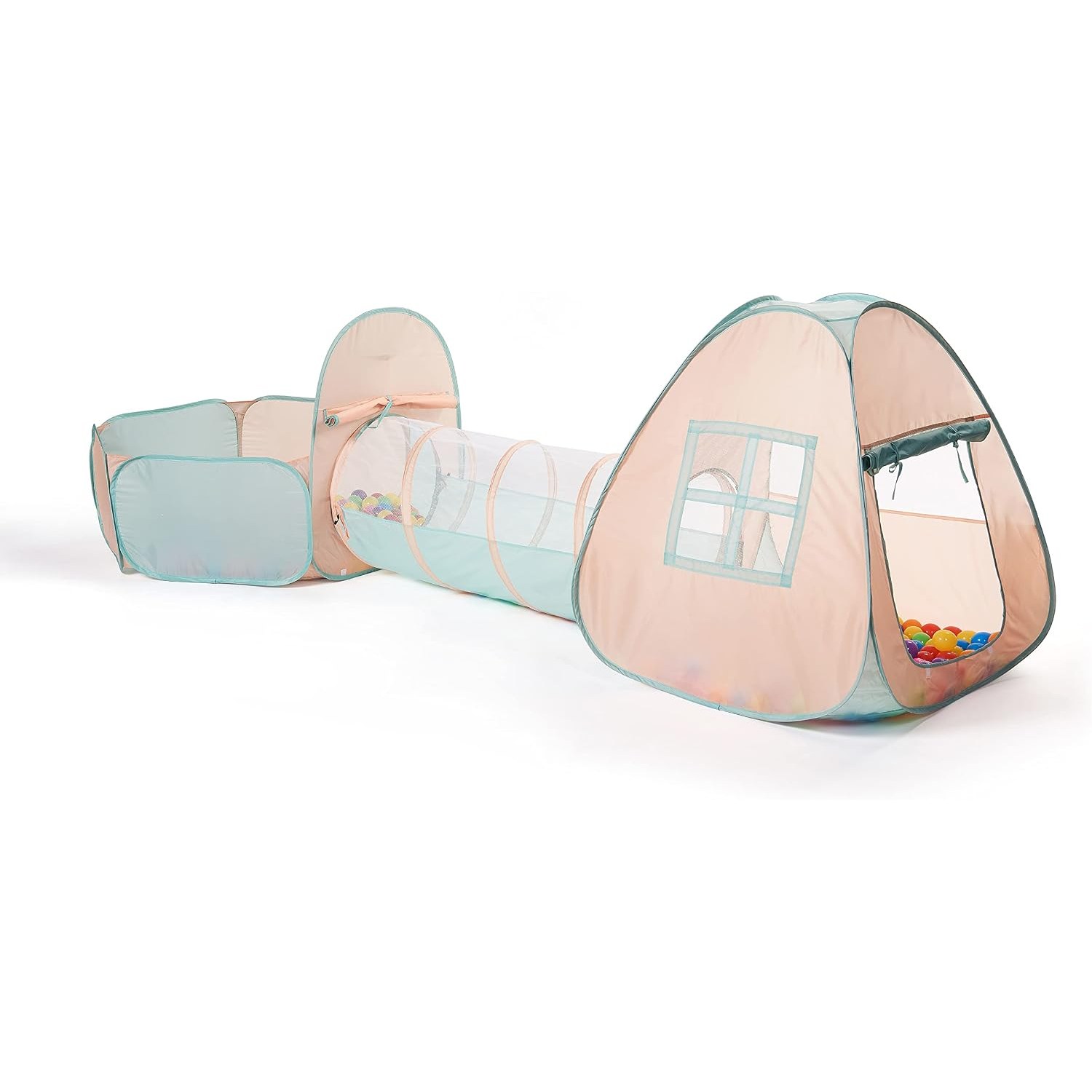
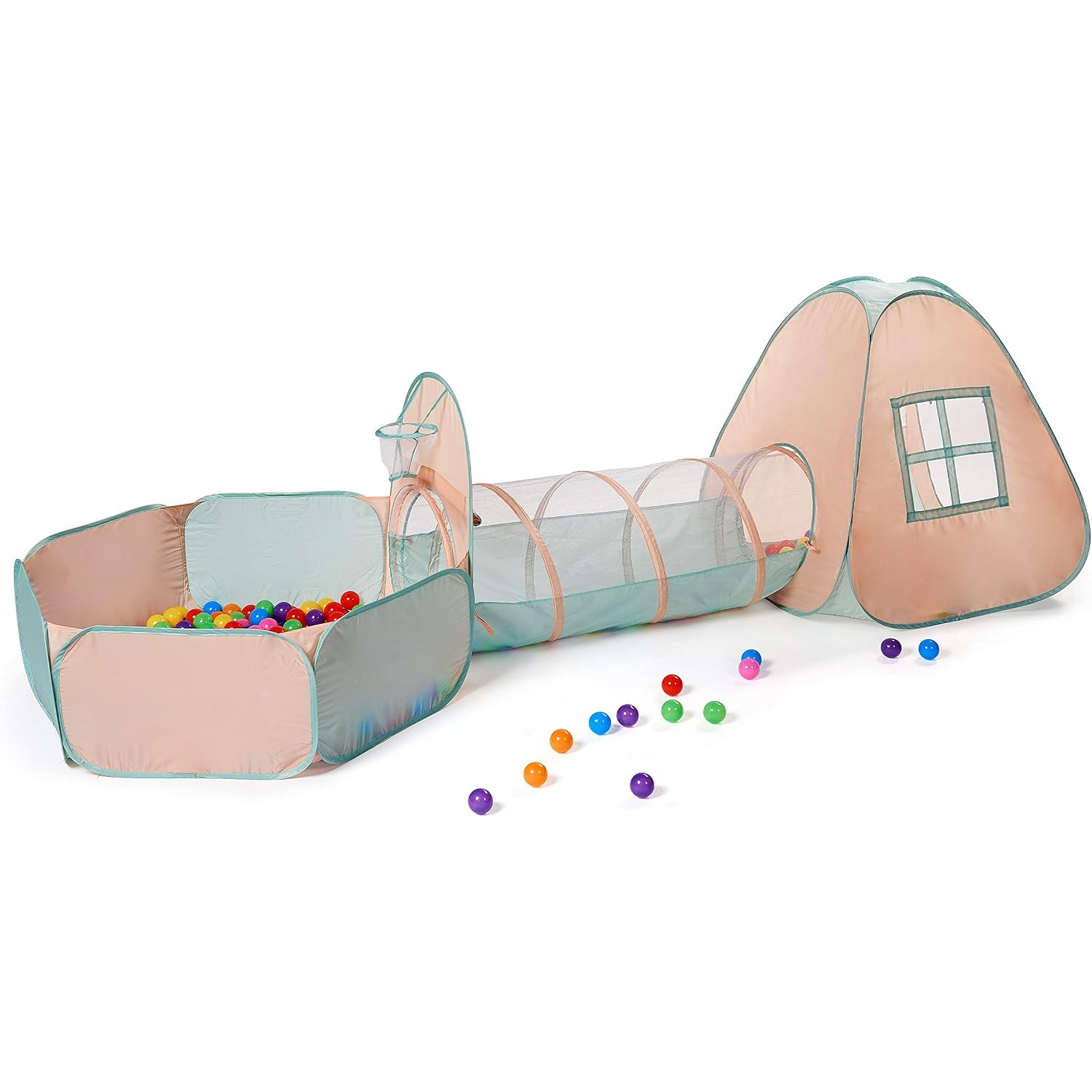
The design is deliberately low tech. Polyester fabric is stitched over a sprung frame, listed here as aluminium or stainless steel. The frame holds the shape without any poles to thread or screws to tighten. You take it out of the bag, let it open, and connect the three pieces together. That is why assembly is marked as required but tool free. There is nothing to lose in the carpet and nothing to tighten with a screwdriver.
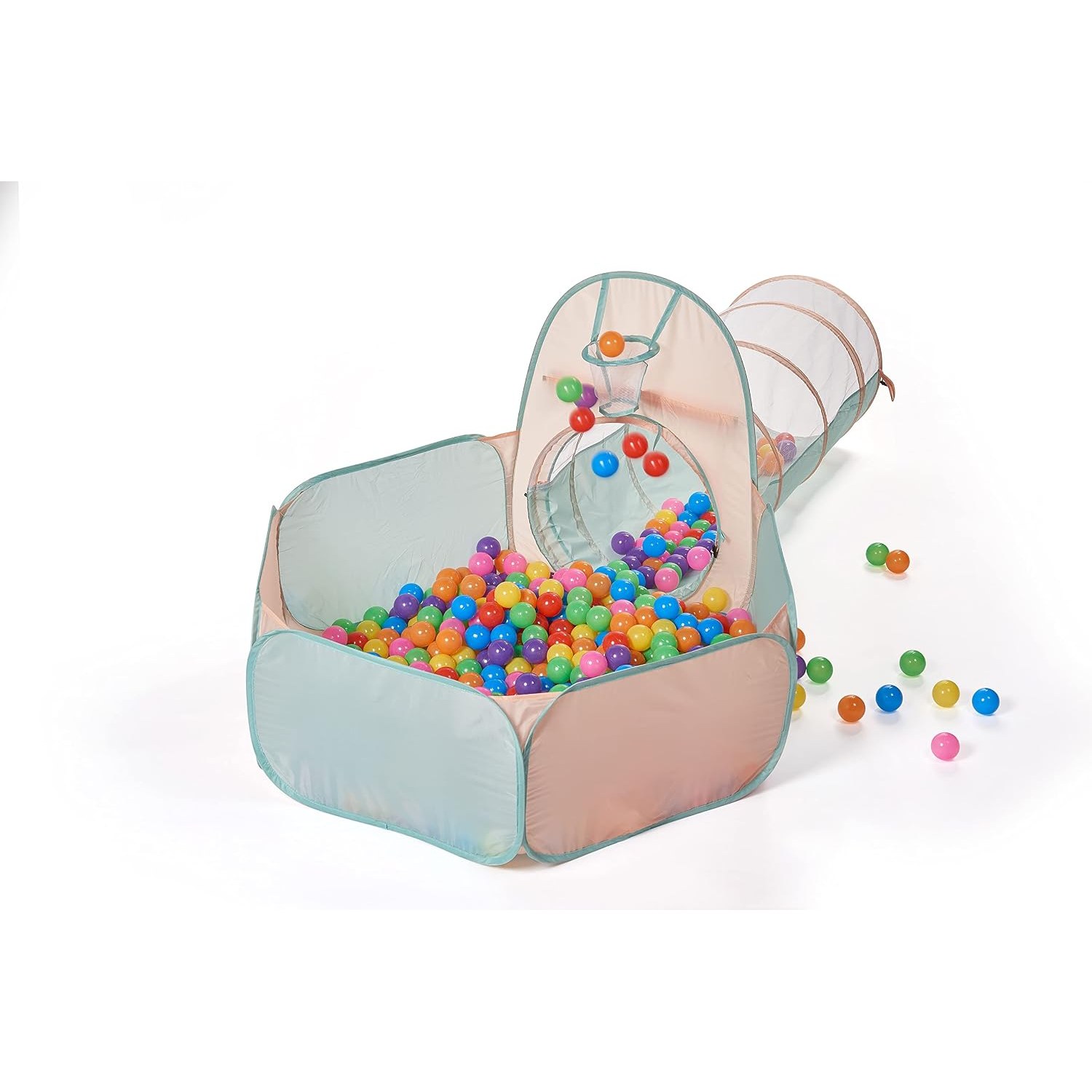
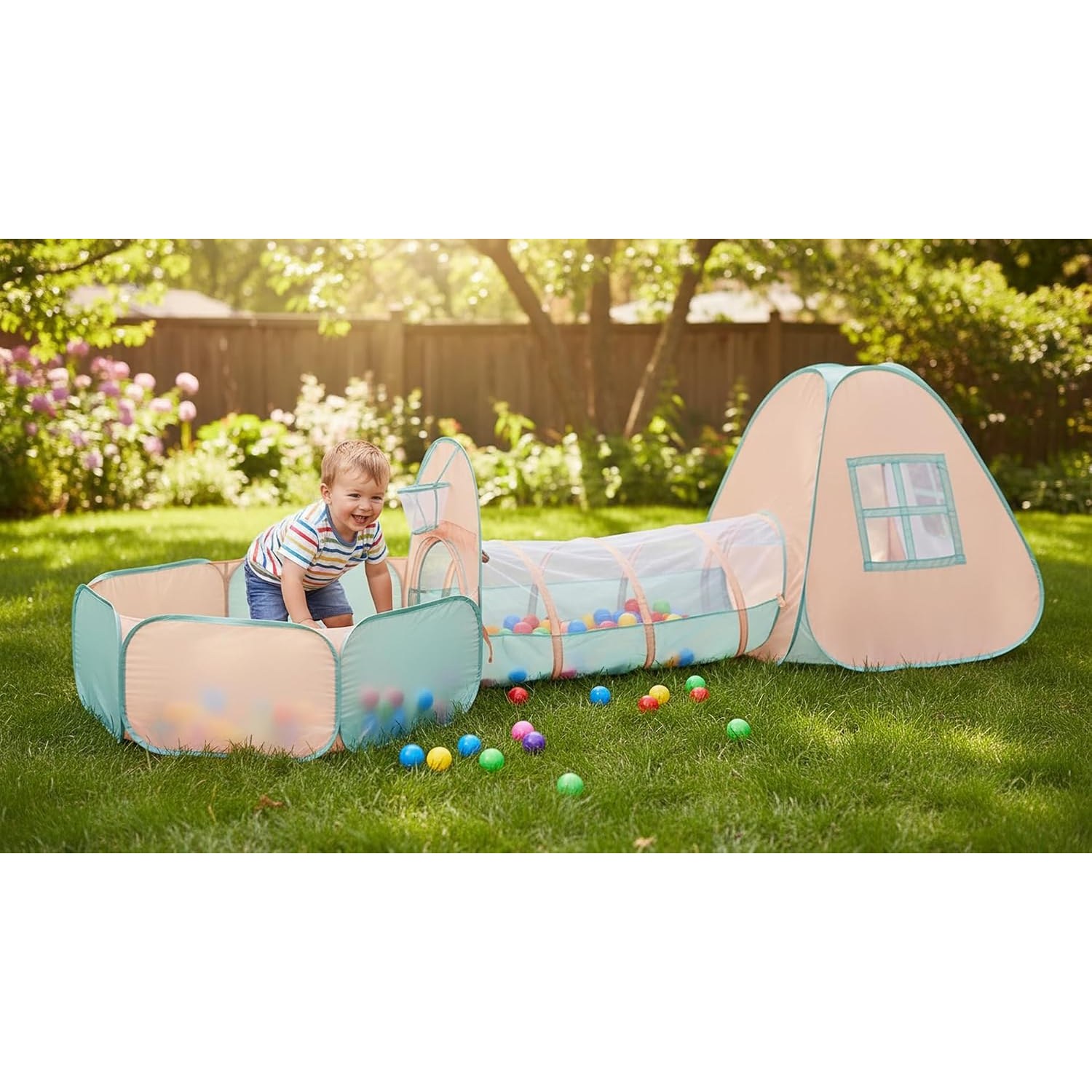
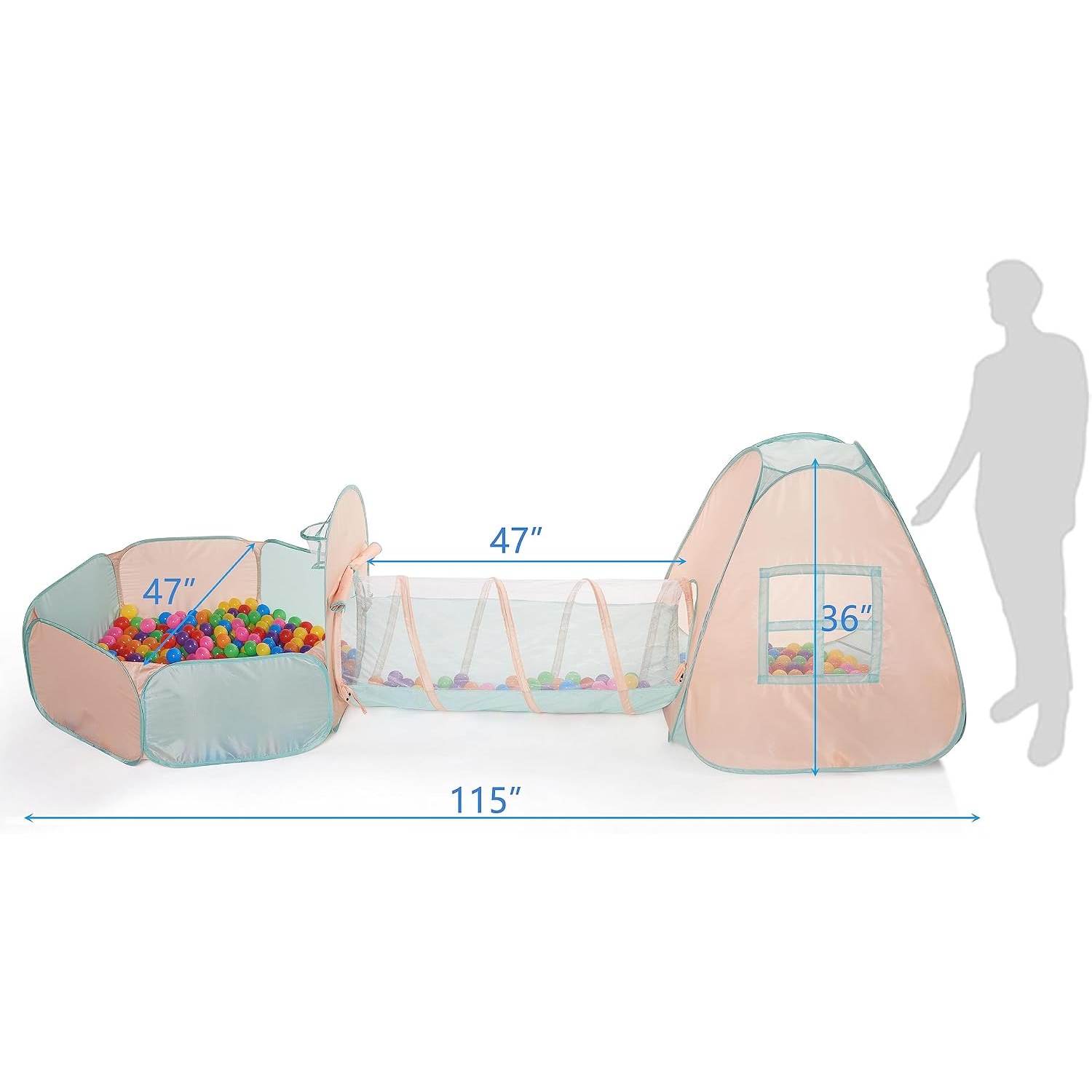
The three sections are a play tent, a crawl tunnel and a ball pit area. Joined end to end the full run measures around 292 cm by 119.4 cm by 91.4 cm, which is roughly 90 inches long. That is the figure to keep in mind when you look at your floor. It is longer than many people expect, which is a good thing for play and worth checking before you clear a corner.
Mesh windows are built into the panels. They are doing a practical job. Fabric over a frame can get warm and close inside, especially with a child wriggling around, so the mesh lets air move. It also means you can stay on the sofa and still see what is going on, which is the difference between relaxing and getting up every two minutes. Children work out the peek-a-boo potential within about ten seconds.
Who it suits
The maker recommends ages three and up. That lines up with how these sets tend to get used. A three year old can crawl confidently, understands the game, and will invent half a dozen versions of it by themselves. Four and five year olds often get the most out of the set, since they will start adding rules, characters and races to the basic layout.
Younger children are frequently drawn to tunnels too. If you have one, supervise closely and go by the age guidance rather than the child's enthusiasm. Older children around seven or eight may find the tent itself a little small to sit up in, though they will often still use the tunnel.
It suits families short on space as much as families with a dedicated playroom. The whole thing weighs very little and packs into its zippered bag. You can set it up in the lounge on Saturday, move it to a bedroom on Sunday, and have it out of sight by Monday morning. For anyone looking for the best foldable play tent, that storage question is usually the deciding factor.
How to choose between tunnel sets
A few things separate one set from another, and they are worth thinking about before you buy.
Start with length. Some sets are a single short tunnel with a small tent on one end. This one is a three part run, so it needs more clear floor. If your living room is narrow, you can set it out in an L shape, or use just the tent and the tunnel and leave the third section in the bag. Flexibility like that is useful.
Look at the frame next. A sprung steel or aluminium frame is what makes a pop up design work. It springs open without effort and twists down flat for storage. The twist technique takes one practice run, so do not panic the first time it fights back. Once you know the motion it takes under a minute.
Consider the fabric. Polyester is the standard for good reason. It is light, it holds colour well, and it wipes clean with a damp cloth. Natural fibres look lovely but absorb spills and take much longer to dry, which is a nuisance with a toy that lives on the floor.
Think about ventilation. Mesh panels matter more than people assume, particularly if the set will be used outdoors in warm weather or in a small room with the heating on. A set with good airflow stays comfortable for longer play sessions.
Finally, check what comes in the box. Ball pit sections are sometimes sold with balls and sometimes without. Whether balls are included here is not specified in the maker's details, so confirm before you plan a ball pit afternoon. Buying balls separately is easy enough and lets you choose the quantity.
Setting it up well
Pick a flat stretch of floor with nothing sharp nearby. Carpet works nicely because it adds cushioning and stops the set from sliding around. On tile or laminate, a rug underneath helps with grip.
Lay out the three pieces in the order you want them before connecting. Most families run it straight along a wall, but an L shape around a corner works fine and takes up less of the room's middle. Outdoors, choose level ground and keep it away from thorny plants or anything that could snag the fabric.
If you are using it in a garden, bring it in before dark or before rain. It is light, which is handy for carrying and unhelpful in wind. A couple of small weights inside, or just a child, will keep it put on a still day.
Keeping it in good shape
Care is simple. A damp cloth with a drop of mild soap handles juice, grass stains and the general residue of small hands. Let the fabric dry fully before you fold it, because packing damp polyester into a zipped bag invites a musty smell.
Do not machine wash it. The frame is sewn in, so the washer will damage both the fabric and the wire. Spot cleaning is enough for nearly everything.
When folding, work with the frame rather than against it. The hoops want to twist into smaller circles. Forcing a bend the other way puts stress on the wire and can crease the fabric. Store the bag somewhere dry, not a damp shed or garage floor.
Give the seams and frame a quick look every few months, especially after a spell of outdoor use. Catching a loose seam early is easier than repairing a torn one.
Using it beyond rainy days
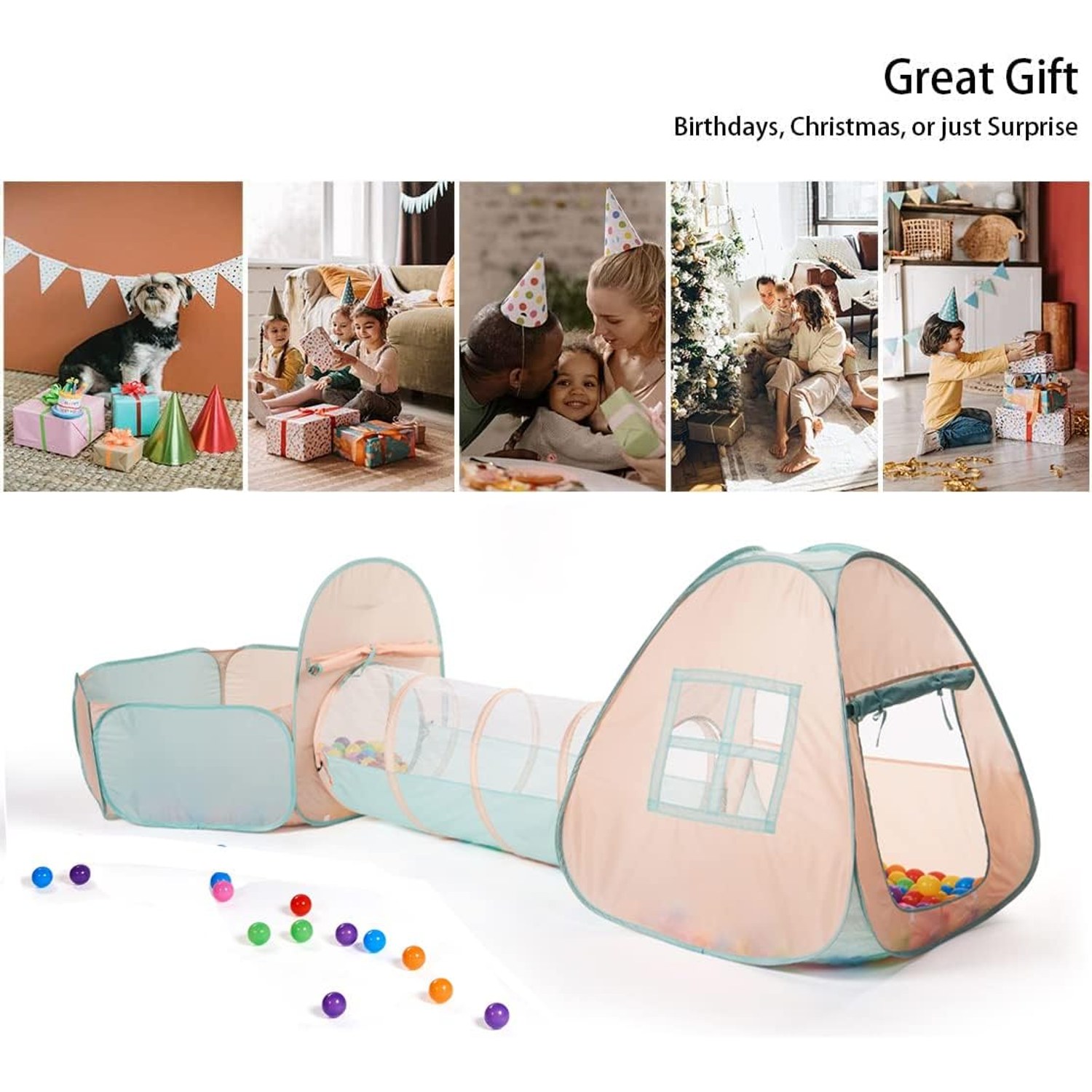
The obvious use is indoor play, but these sets travel well. They turn up at birthday parties, in playgroups and at grandparents' houses. A tunnel set is one of the few toys that genuinely improves when there are more children around, because it becomes a race track and a hiding game at the same time.
It also works as a quiet space. Plenty of children like having somewhere small and enclosed to retreat to with a book or a soft toy. The tent section does that job well, and the mesh windows mean it never feels sealed off.
Some families use it for pets. Dogs and cats are famously fond of tunnels. Just keep an eye on claws, since the fabric is built for a child's knees rather than a dog's digging.
The short version
This is a simple, light, three part play set that goes up without tools and packs into a bag. It gives children aged three and up a proper route to crawl and hide in, with mesh windows for air and visibility. Polyester fabric wipes clean, the sprung frame folds flat, and the whole thing stores in a cupboard.
Measure your floor against the 292 cm length, decide whether you need balls, and pick a spot away from sharp corners. After that it is about as low maintenance as children's play equipment gets.