

The complete guide
Choosing a Kids Play Tent That Actually Gets Used
The toy that solves a room problem
Children need somewhere that belongs to them. Not a whole room, just a spot with a roof where nobody asks them to tidy up for five minutes. In most houses that spot does not exist. Bedrooms get shared, lounges are open plan, and the one quiet corner is already stacked with washing.
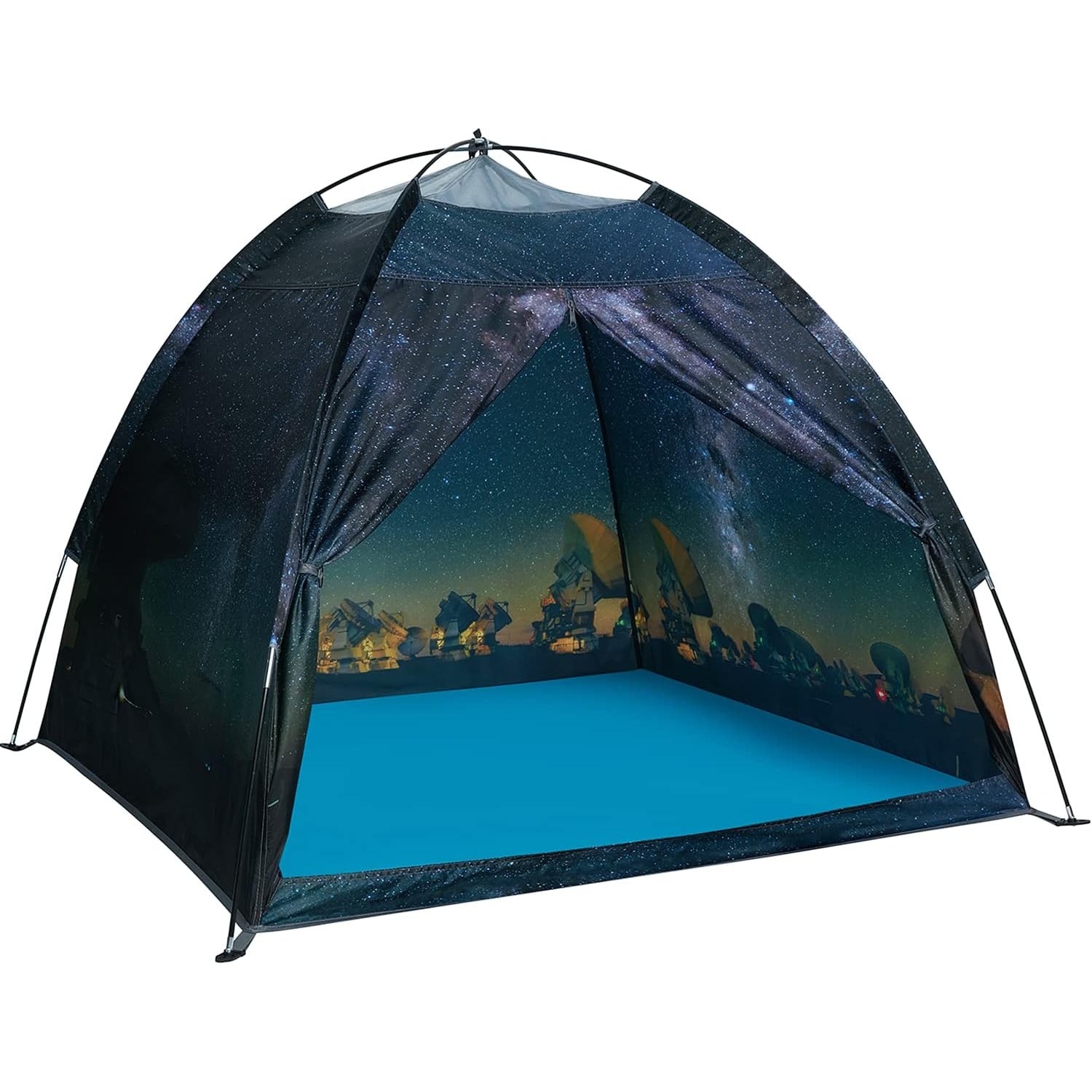
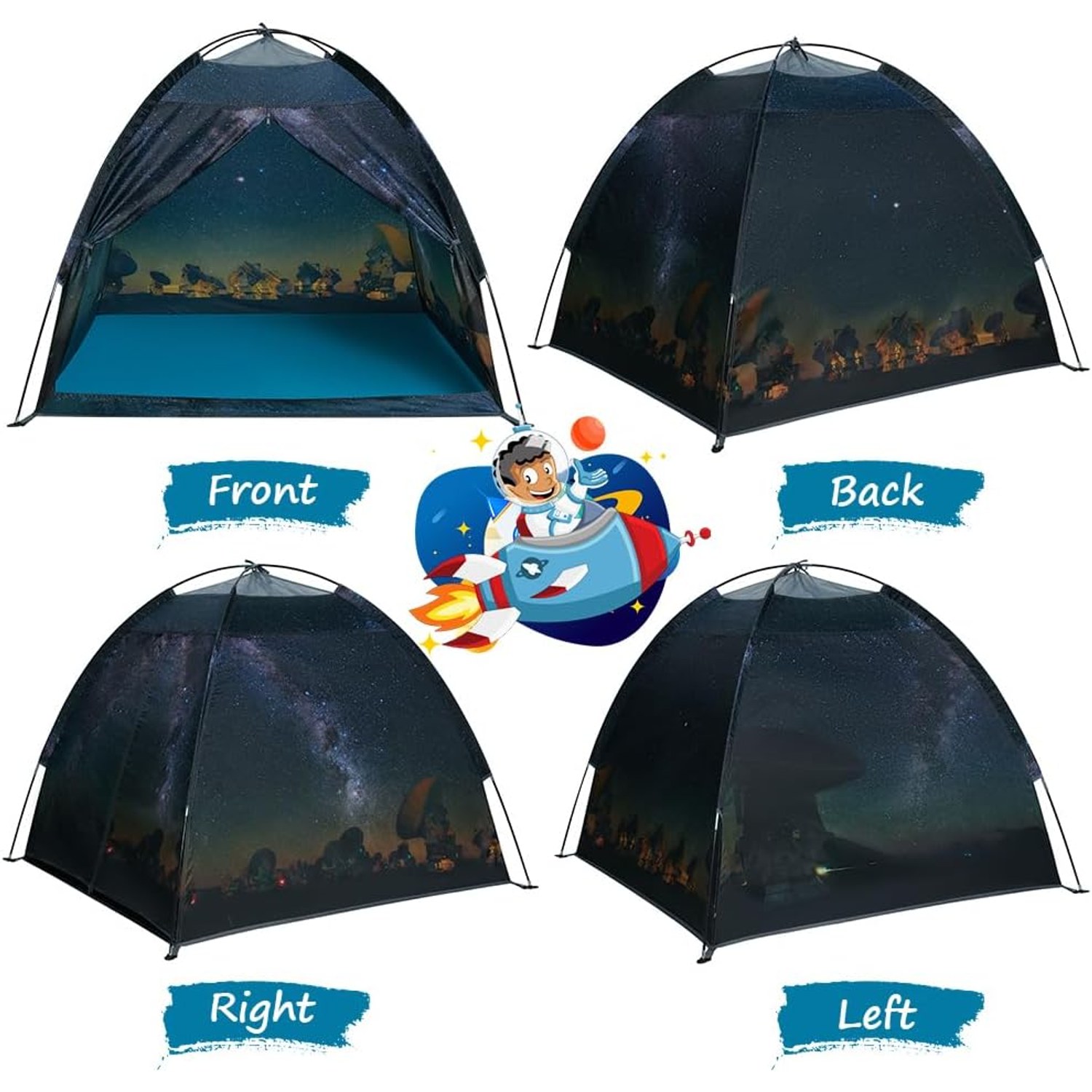
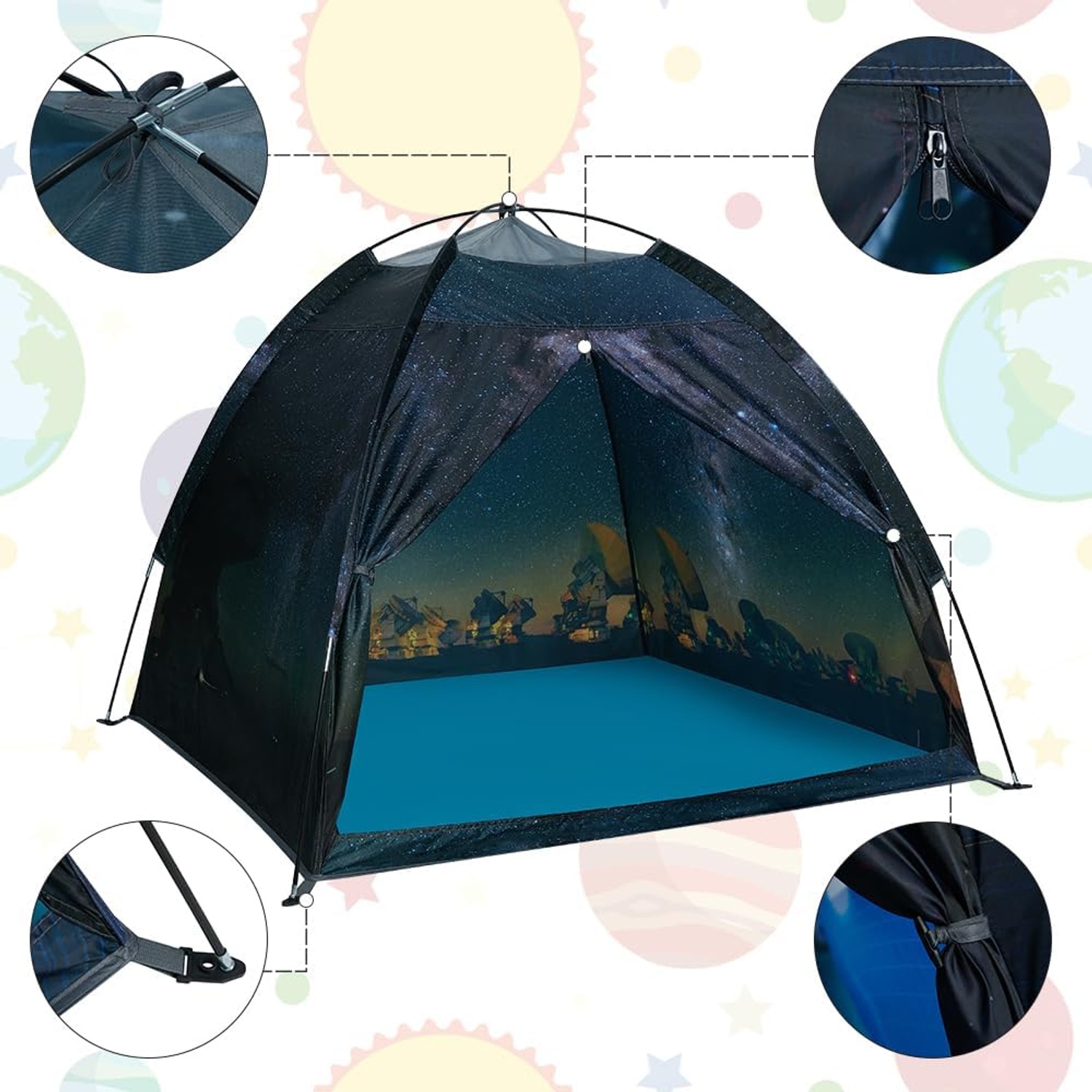
A play tent is the cheapest way to make that spot appear. It takes up about a square metre, it goes up in minutes, and when you need the floor back it folds into a bag. The Galaxy Dome Play Tent does this with a space theme, so instead of a plain fabric box you get something children build stories around. Rockets, planets, a mission to somewhere far away. That matters, because a tent that sparks pretend play gets used for years, while a plain one gets abandoned by the second week.
How a dome play tent works
The structure is simple. Metal poles slide into sleeves sewn into the polyester fabric, and when you flex them into position the dome pops up and holds its own shape. There is nothing to screw together and no tools required. Assembly is listed as required, which just means you do this once rather than pulling a sprung tent out of a bag.
That design has a real advantage over spring-loaded pop ups. Pop up tents are fast to open but notoriously fiddly to twist back into their flat circle. Pole tents come apart in the reverse order of how they went up, which anyone can manage. The poles sit flat, the fabric folds, and both go in the bag.
Double stitching is worth noting too. Seams are where play tents usually fail, because children lean on the walls and grab the edges to pull themselves up. A second row of stitching gives the seam more to hold onto. Combined with a metal frame rather than thin plastic, it is a build aimed at daily use rather than one birthday party.
Who it suits
The recommended age is 36 months to 12 years, which is a wide window for a toy. What changes is how it gets used.
At three or four, it is a nest. Children drag in a blanket, a stack of soft toys and whatever snack they can smuggle past you. They sit in it more than they play in it, and that is fine.
By six or seven, the pretend play kicks in properly. The space print starts to mean something. The tent becomes a rocket, a moon base, a cave. This is the stage where a themed tent earns its keep over a plain one.
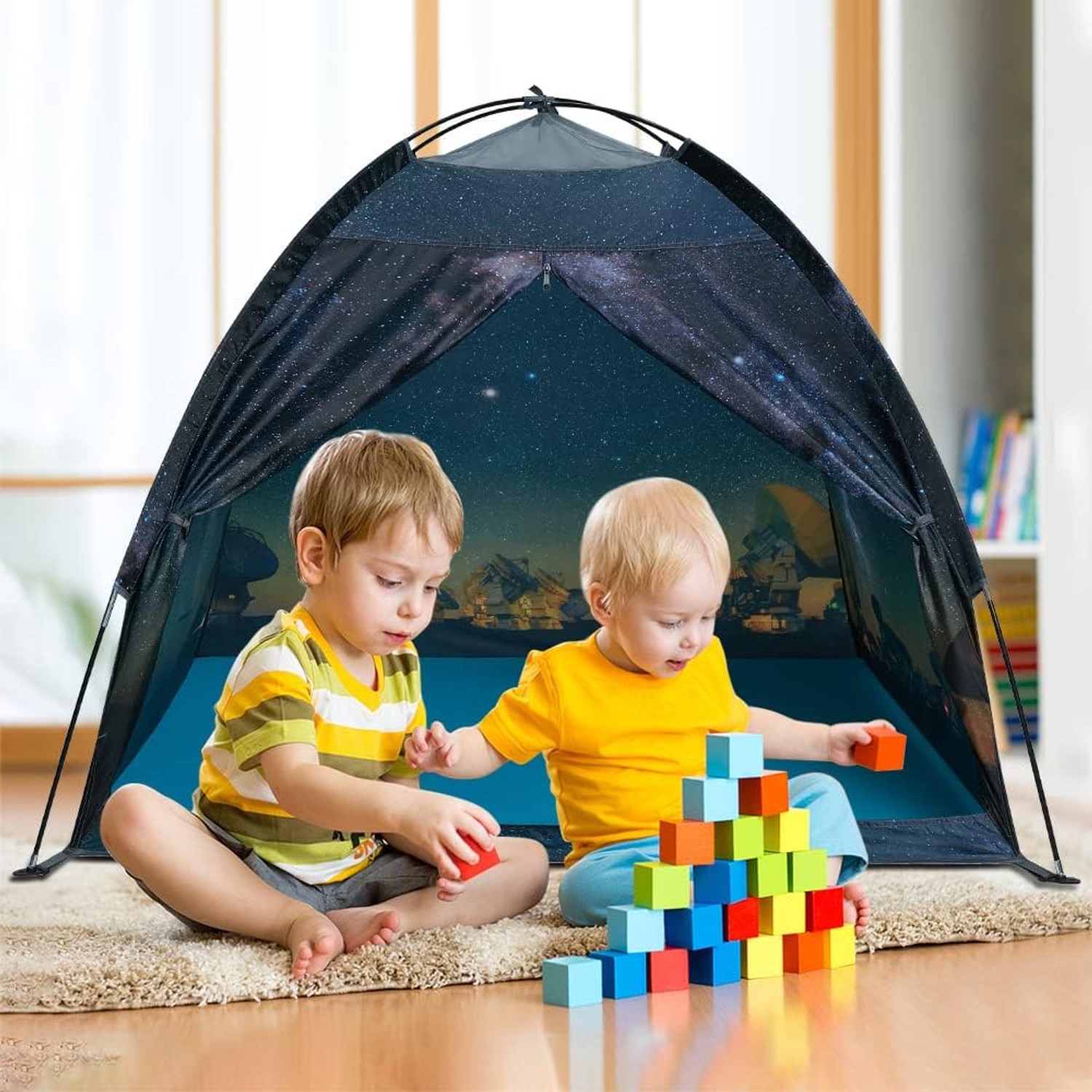
By nine or ten, it turns practical again. It becomes a reading corner, a place to take a tablet away from a noisy room, or a den for a friend who has come to stay. Some of the best play tent for siblings setups are exactly this, one tent that two children negotiate over and share.
The 119.4 by 119.4 centimetre footprint suits two children well. Three can play together for a while. Four is a stretch unless they are small and still.
Working out whether it fits your space
Before ordering anything, measure. You need a square of floor about 1.2 metres on each side and roughly 1.1 metres of clear height above it. That rules out spots under low shelving or sloped attic ceilings.
Think about where it will actually live, not where it will look best on day one. Tents that sit in the middle of a room get moved constantly and end up back in the cupboard. Tents tucked against a wall, in a corner or at the foot of a bed stay put and keep getting used. A corner is usually the best tent for a playroom corner because it uses dead space and keeps walkways clear.
Also check your flooring. On carpet a tent sits well with nothing underneath. On tiles or floorboards, a rug or folded quilt inside makes a huge difference to how long children stay in it.
Indoors, outdoors and the line between
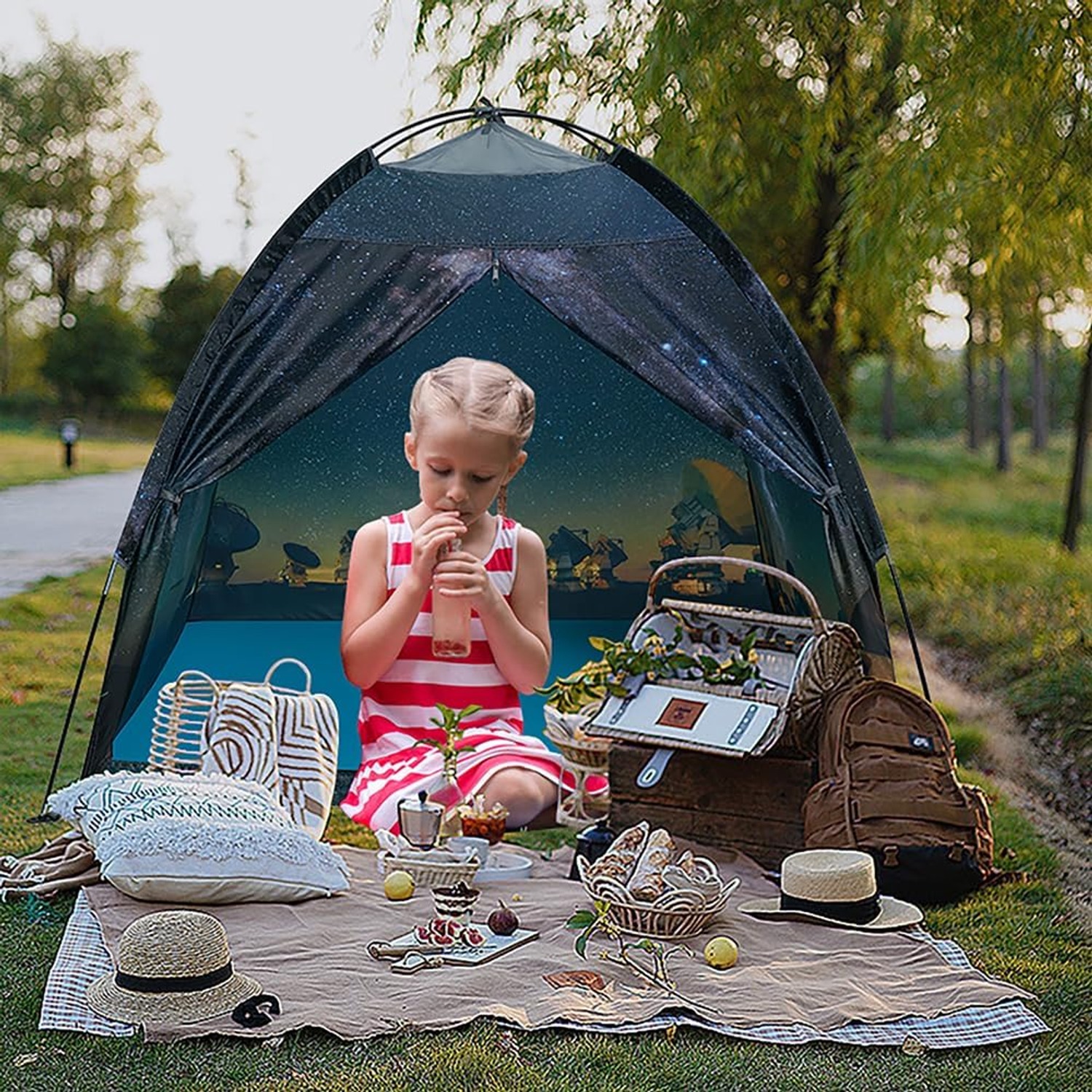
At 0.85 kilograms this tent travels easily. Carry it to the garden after lunch, take it to the park, pack it in the car for a trip to grandparents. That portability is half the appeal for busy families.
What it is not is a camping tent. There is no waterproof rating in the maker's details, so keep it away from rain and sprinklers. Set it on flat ground, away from thorny plants and anything that could catch the fabric. If a shower starts, bring it in, shake it out and let it dry open before folding.
Sun is worth a thought too. Long days in direct sunlight fade fabric over time, same as with curtains or outdoor cushions. A shaded spot under a tree or beside the house keeps the colours sharper.
Looking after it
Care is straightforward. Wipe marks off with a damp cloth and a little mild soap, then let it air dry. Skip the washing machine, the dryer, bleach and the iron. Machines pull sewn tent panels out of shape, and once the structure goes soft the poles never sit right again.
Two habits make a tent last. First, deal with spills on the day rather than letting them set. Second, never fold it away damp. A tent stored wet in a bag will come out smelling musty and may stain. Open it out, let it dry fully, then pack it.
It also helps to set a rule early. Tents are for crawling into and sitting in, not for climbing on or jumping against. Children who learn to use the entry rather than barrelling through a side panel will get years out of the same tent.
What to compare when you shop
If you are weighing up a few options, the things that actually matter are smaller than the photos suggest.
Look at the frame material first. Metal poles hold shape better than thin plastic rods. Then check the stitching, since single-stitched seams are the usual failure point. After that, look at whether a carry bag is included, because a tent without one ends up loose in a cupboard and gets damaged.
Size is the next check. Bigger is not automatically better. A large tent that does not fit the room gets packed away, while a small one that slots neatly into a corner stays up all year. And finally, think about the theme. A print your child genuinely likes buys you months of extra use compared to something generic.
The short version
The Galaxy Dome Play Tent is a 119.4 by 119.4 by 109.2 centimetre dome made from polyester with double stitching and a metal pole frame. It weighs 0.85 kilograms, comes with a carry bag, needs a short assembly the first time, and is recommended for children from three to twelve.
It suits families who want a quiet corner for one or two children without giving up a room to do it. It moves between house and garden easily and folds away when the floor is needed. Keep it dry, wipe it clean rather than washing it, and store it in the bag, and it will keep doing its job long after most toys have been passed on.