

The complete guide
Choosing a Castle Play Tent, A Practical Buyer's Guide
The problem with "just play in your room"
Most children's bedrooms are shared with sleep, storage and schoolwork. There is rarely a space that belongs only to play. Ask a four-year-old to go and entertain themselves and they will often drift back within two minutes, because nothing in the room says "this is yours".
A play tent solves that in a very literal way. It draws a boundary. Inside the fabric walls, the rules change. The child is in charge, the door can be closed, and whatever happens in there is their story. That small shift does a lot of work, especially for children who need somewhere calm to retreat to when the house is busy.
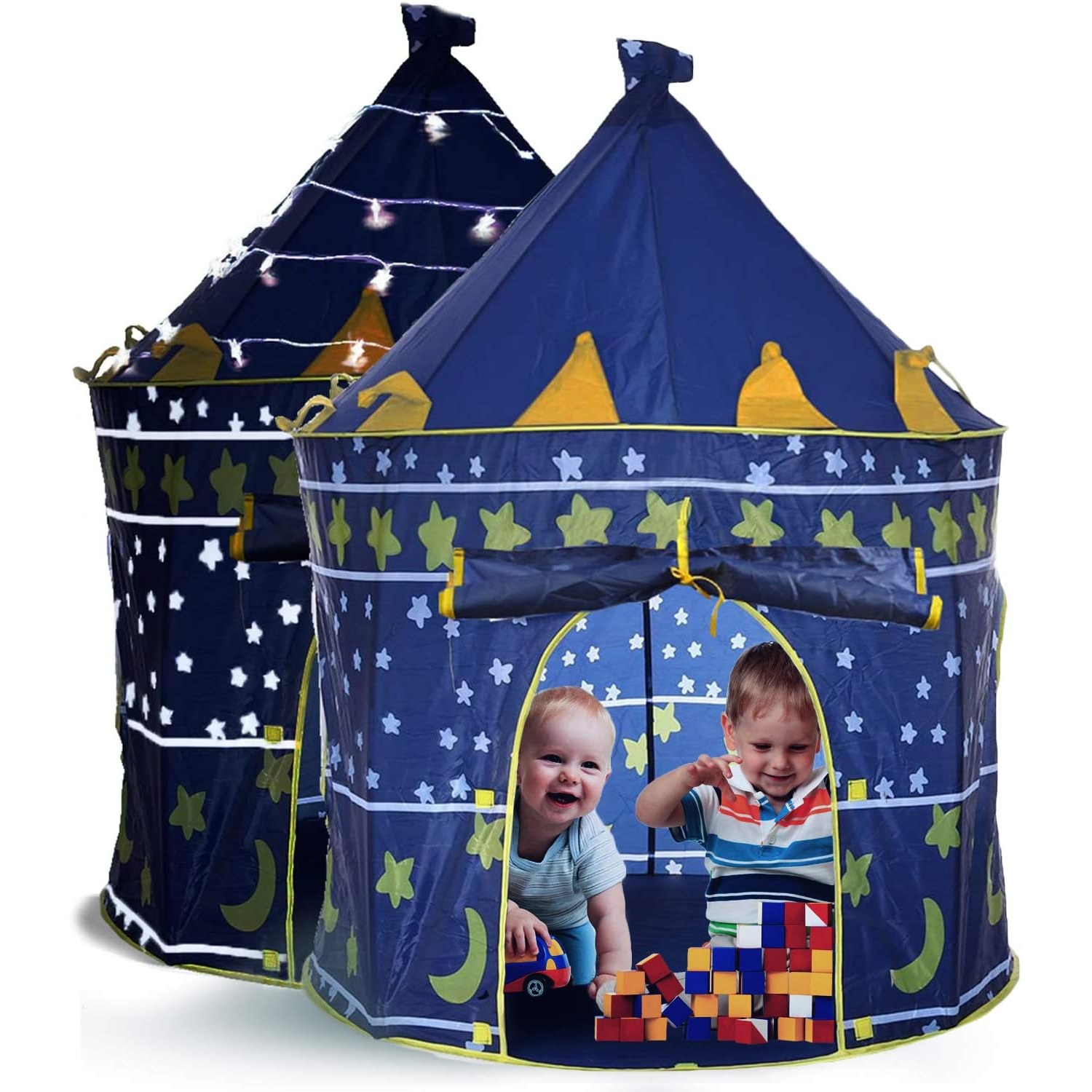
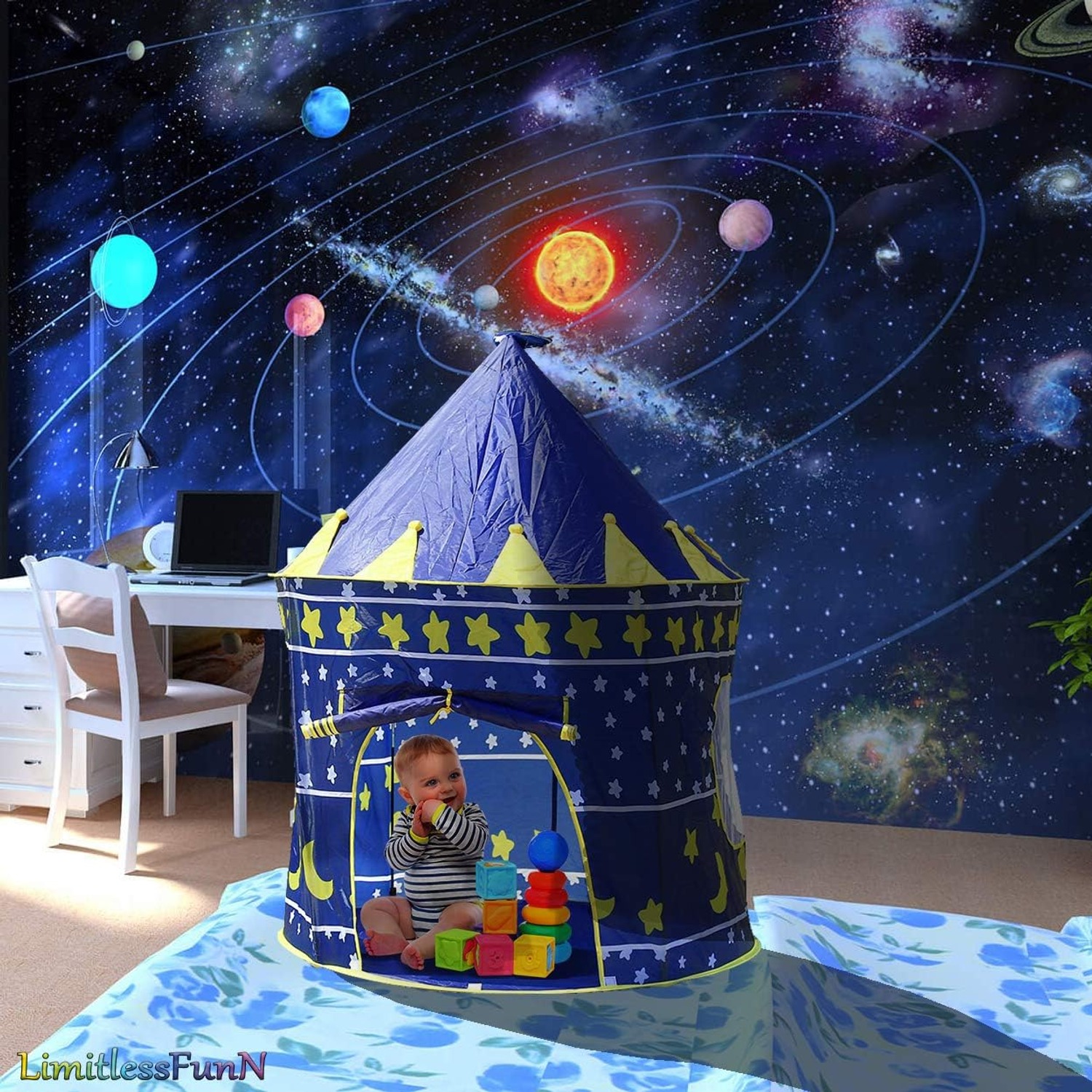
The castle version adds a theme that children recognise straight away. Turret shapes, a door that folds down like a drawbridge, and a scatter of star lights overhead. You do not have to explain what it is. They climb in and start.
How this castle play tent works
The design is deliberately simple. The tent pops open from its folded state, then flexible polypropylene rods slide into concealed sleeves from the bottom of the tent. Those rods hold the castle shape upright. There are no screws, no brackets and no instruction booklet with thirty steps. Once you have done it once, setup takes a couple of minutes.
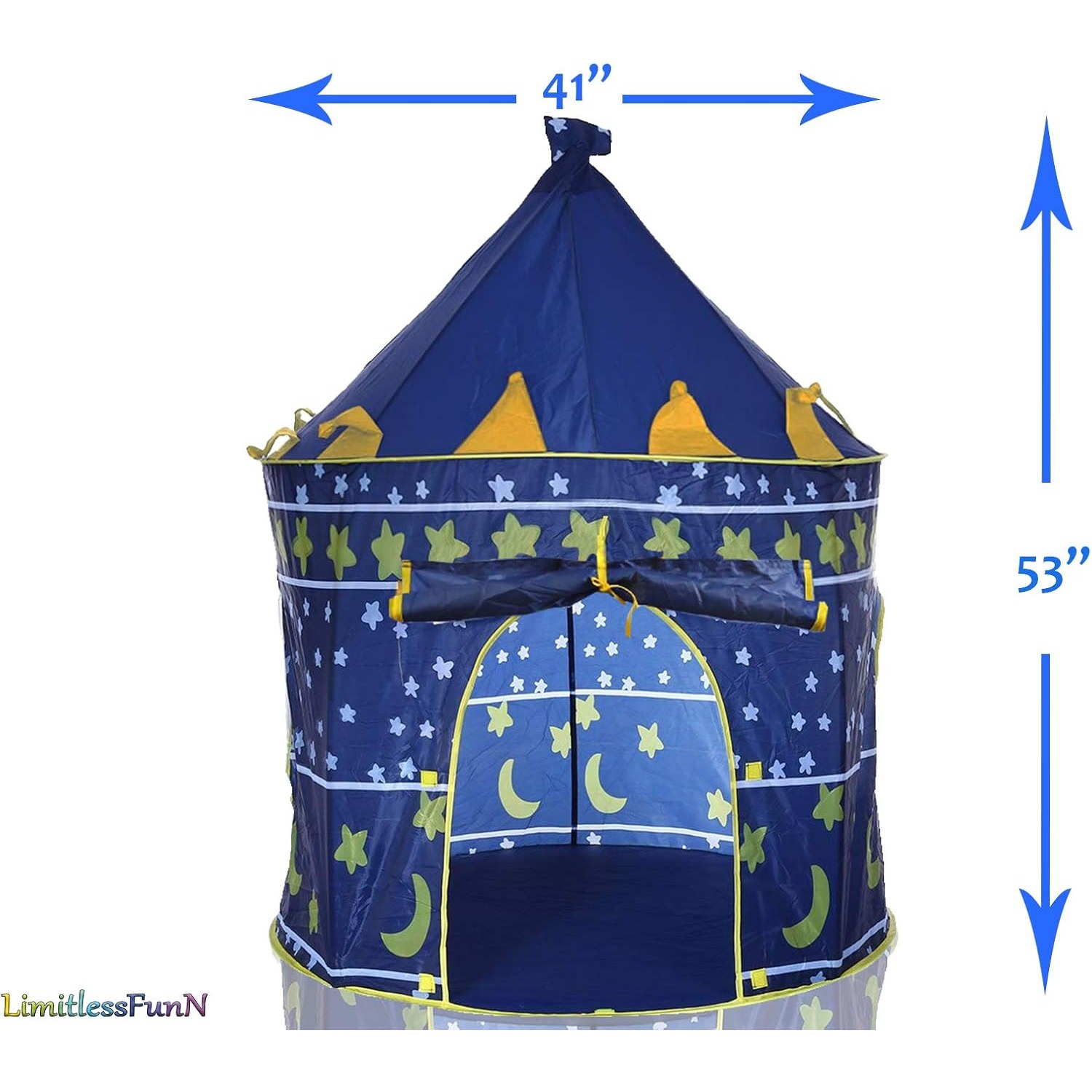
Assembled, the tent measures 104.1 cm wide, 104.1 cm deep and 134.6 cm tall. That is a square footprint of roughly a metre, which suits two or three small children sitting together. The height means most young children can stand up inside rather than crawling everywhere, which matters when the tent is being used for anything other than hiding.
The fabric is 190T, a light polyester weave used widely for pop-up play products. It is thin enough to let a little daylight through, so the inside never feels like a dark box. Two mesh windows on the sides handle ventilation. They keep air moving on a warm afternoon, and they let you glance in without opening the door and breaking up whatever game is happening.
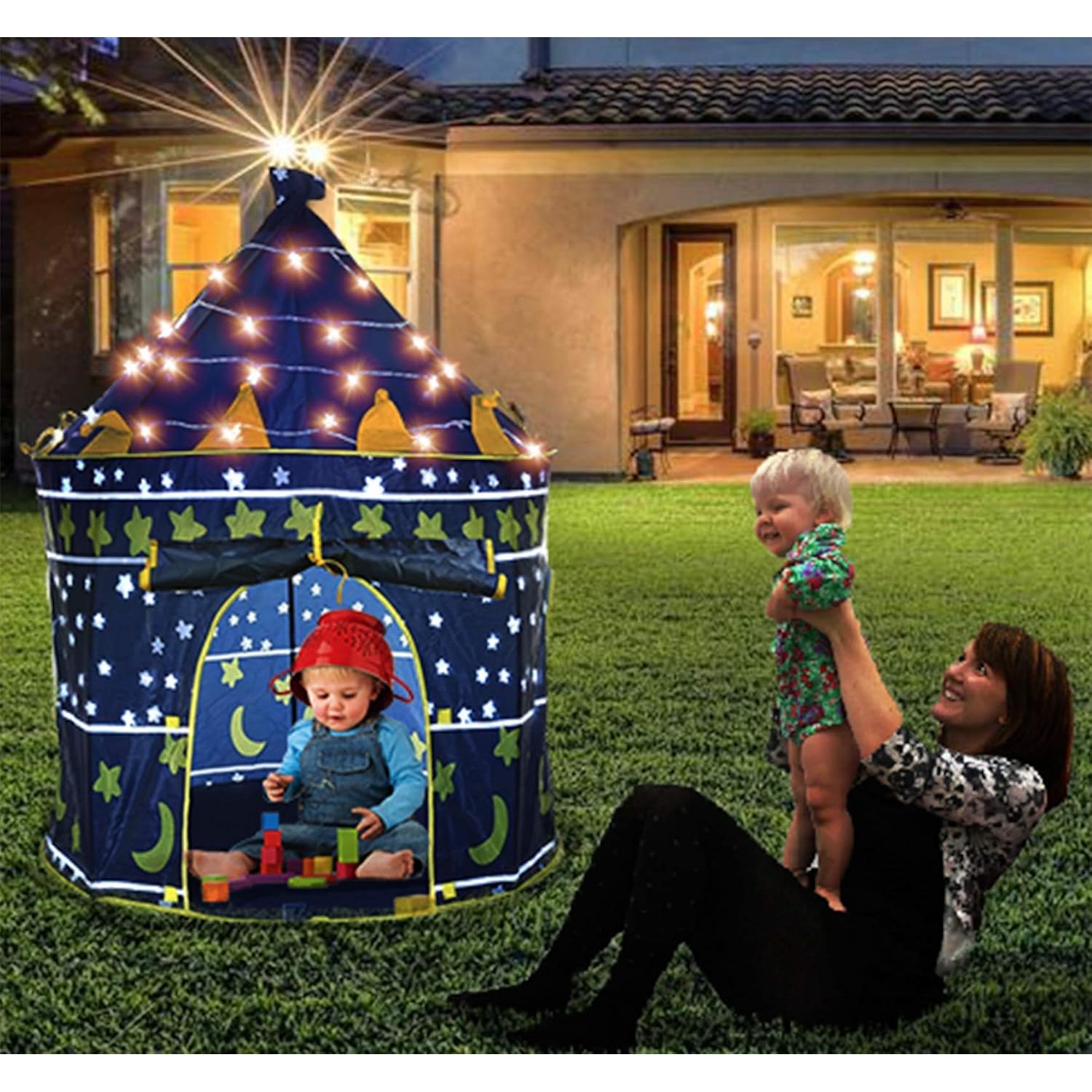
The star lights are the part children remember. A string of LED stars runs inside the roof, powered by three AAA batteries that are not included in the box. Because the power source is batteries, there is no cable snaking across the floor and nothing that needs to be near a socket. The tent can go wherever you want it, including out on the lawn on a dry day.
Who it suits
The manufacturer recommends ages 3 and up, with a minimum of 36 months. That is the sensible starting point. At three, children have the imagination to use a tent properly and the coordination to get in and out without pulling the frame around.
It keeps working for years after that. A six-year-old will use it as a reading corner. An eight-year-old will use it as a den for a sleepover, with the star lights on and a torch for backup. Many families find it becomes one of the best quiet corner tent options in the house, a spot where a child can go to cool off after a tough afternoon.
It also suits households that are short on space. A rigid wooden playhouse is a permanent commitment. This folds into a round zip bag and goes under a bed. If you only want a play structure out at weekends or during school holidays, a packable tent makes far more sense.
Grandparents' houses are another good fit. Light, easy to carry and quick to put up, it travels well. A lot of shoppers go looking for the best portable kids tent for exactly that reason.
How to choose between play tents
A few things separate a tent you keep from one that ends up in the loft.
Footprint versus height. Some play tents are wide and low, which is fine for young children but cramped for older children. Others are tall and narrow. This one is square and reasonably tall, which gives a balance of floor space and headroom. Measure the spot you have in mind before you order.
Ventilation. A sealed fabric box gets warm fast, especially with a child inside and the door closed. Mesh windows are not a luxury. They are the difference between a tent that stays in use through summer and one that gets abandoned by July.
Setup time. If a tent takes twenty minutes to assemble, it will go up once. Pop-up frames with sleeve-inserted rods go up in minutes, which means you will actually take it down and store it between uses rather than leaving it in the way.
Lights. Battery lights are safer around small children than anything mains-powered, and they let you put the tent anywhere. Check whether batteries are included. Here they are not, so add three AAA cells to your shopping list. Rechargeables are worth the small extra cost if the lights get heavy use.
Pack-down. A carry bag sounds like a small detail until the first time you try to stuff a collapsed tent into a cupboard without one. The zip bag keeps the rods and fabric together and stops the whole thing unfurling in the wardrobe.
Setting it up well
Pick a flat surface indoors, away from radiators, heaters and anything the fabric could catch on. A corner works better than the middle of a room because the tent gets a bit of natural support from the walls behind it.
Add something soft underneath. The tent does not come with floor padding, so a rug, a foam mat or a folded quilt makes it far more comfortable for sitting and lying down. This is also what turns it from a novelty into one of the best bedroom play tent setups, somewhere a child genuinely wants to stay.
Outdoors, choose dry grass or a patio and bring it back in before evening dew or rain. It is a play tent, not a camping shelter, and damp fabric packed into a bag will smell within days.
Set some simple rules early. No leaning on the walls, no swinging on the frame, no sitting on the roof. The rods are there to hold a shape, not to carry weight. Children who understand that from day one tend to look after the tent fine.
Keeping it clean and lasting
Spot clean as you go. A damp cloth with a little mild soap handles most marks, juice spills and sticky handprints. Let the fabric dry fully in the air before you fold it, because trapped moisture is what ruins play tents more than anything else.
Do not machine wash, tumble dry, bleach or iron it. The fabric is light and the stitching is not built for a wash cycle. There is also a light unit to consider, which should stay well away from water.
Take the batteries out before long-term storage. Leaking cells inside a battery compartment are a dull way to lose a light string. Give the rods and sleeves a quick look when you pack down, and store the bag flat somewhere dry and out of direct sunlight, since UV fades light fabric over time.
The short version
This is a pop-up castle play tent for children aged three and up. It stands 104.1 x 104.1 x 134.6 cm, uses 190T fabric over a polypropylene frame, and has a fold-down door plus two mesh side windows. LED star lights inside the roof run on three AAA batteries, which you will need to supply. Assembly needs no tools, and the whole thing packs into a zip carry bag.
If you want to give a child somewhere that belongs to them, without giving up a permanent corner of the house, that combination is hard to beat. Add batteries, add a rug, and let them get on with it.