
The complete guide
How to Choose a Ball Pit, Play Tent and Tunnel Set That Actually Gets Used
The problem with indoor play
There is a particular kind of afternoon that every parent knows. The weather has turned, the garden is out, the screen time allowance is gone and there is still three hours before dinner. Kids that age do not need entertainment so much as somewhere to put their energy. They want to crawl, hide, climb in, climb out and do it all again.
A ball pit play tent and tunnels set answers that fairly directly. It takes a flat, boring patch of floor and turns it into a route. Something to go into, something to go through, something to land in. The structure does the work, and the child supplies the story.
The catch is that plenty of play tents end up folded in a cupboard after two weeks. Usually that is because they only do one thing, or because packing them away is such a chore that nobody bothers getting them out. The sets that stick around are the ones that can change shape and pack down fast.
What this set actually is
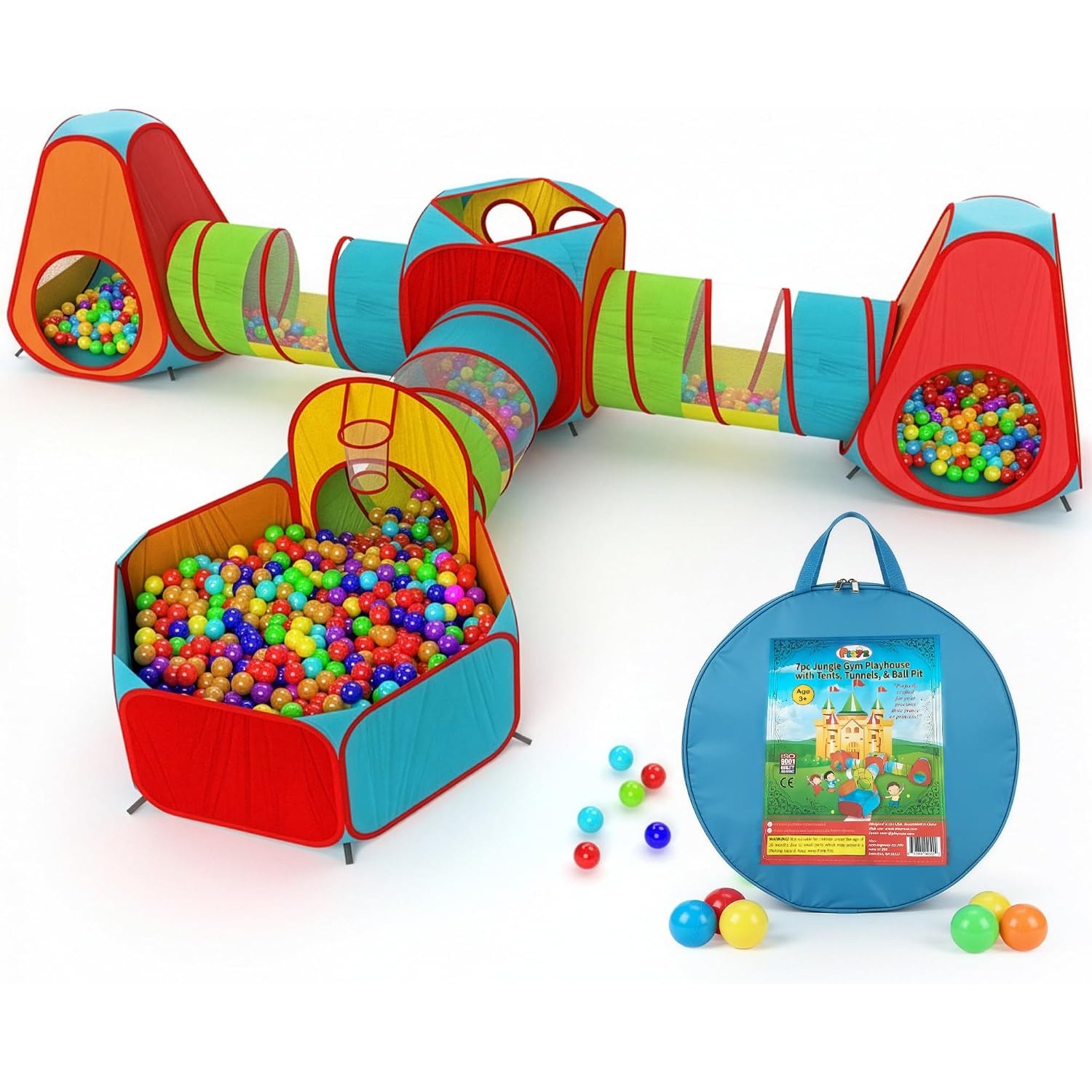
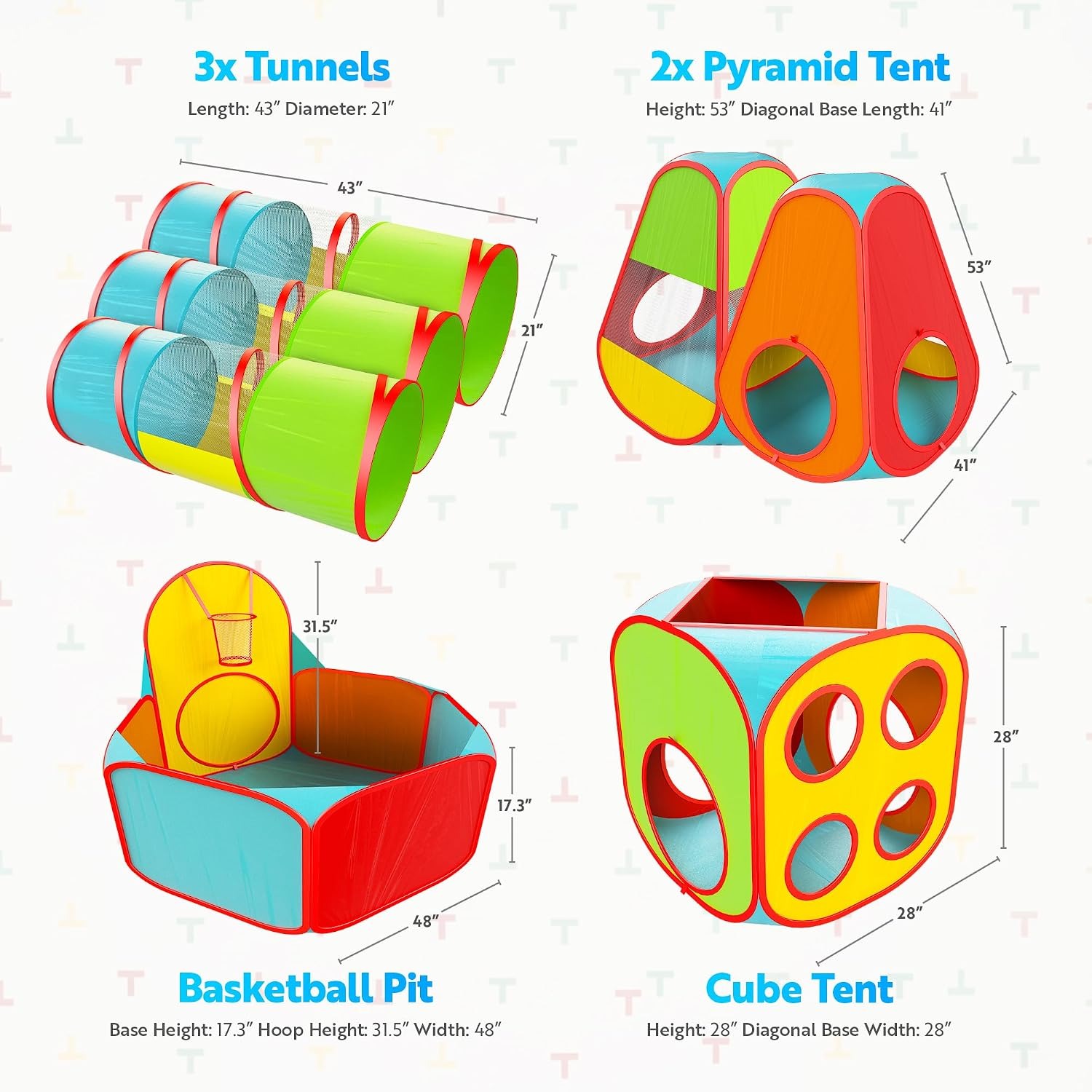
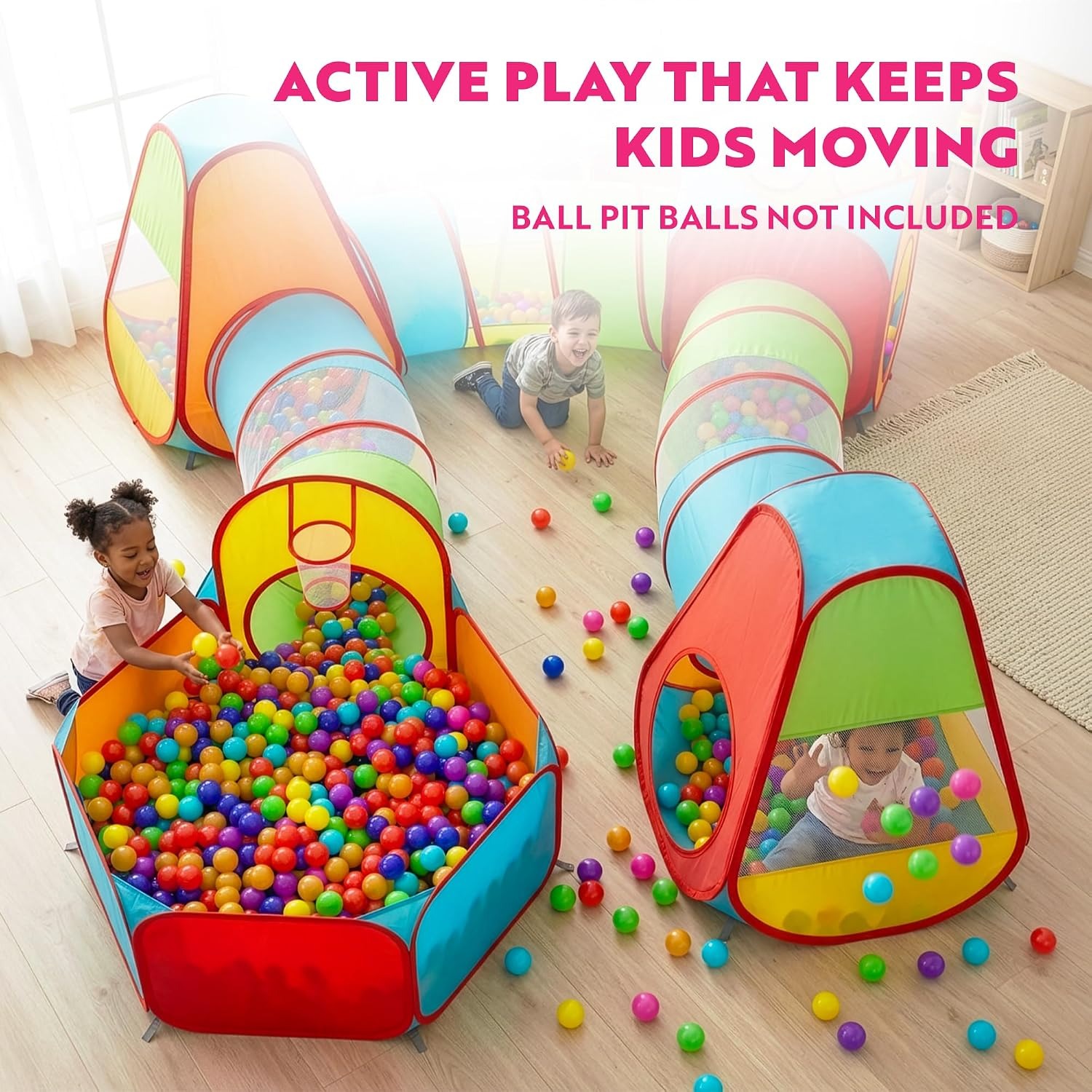
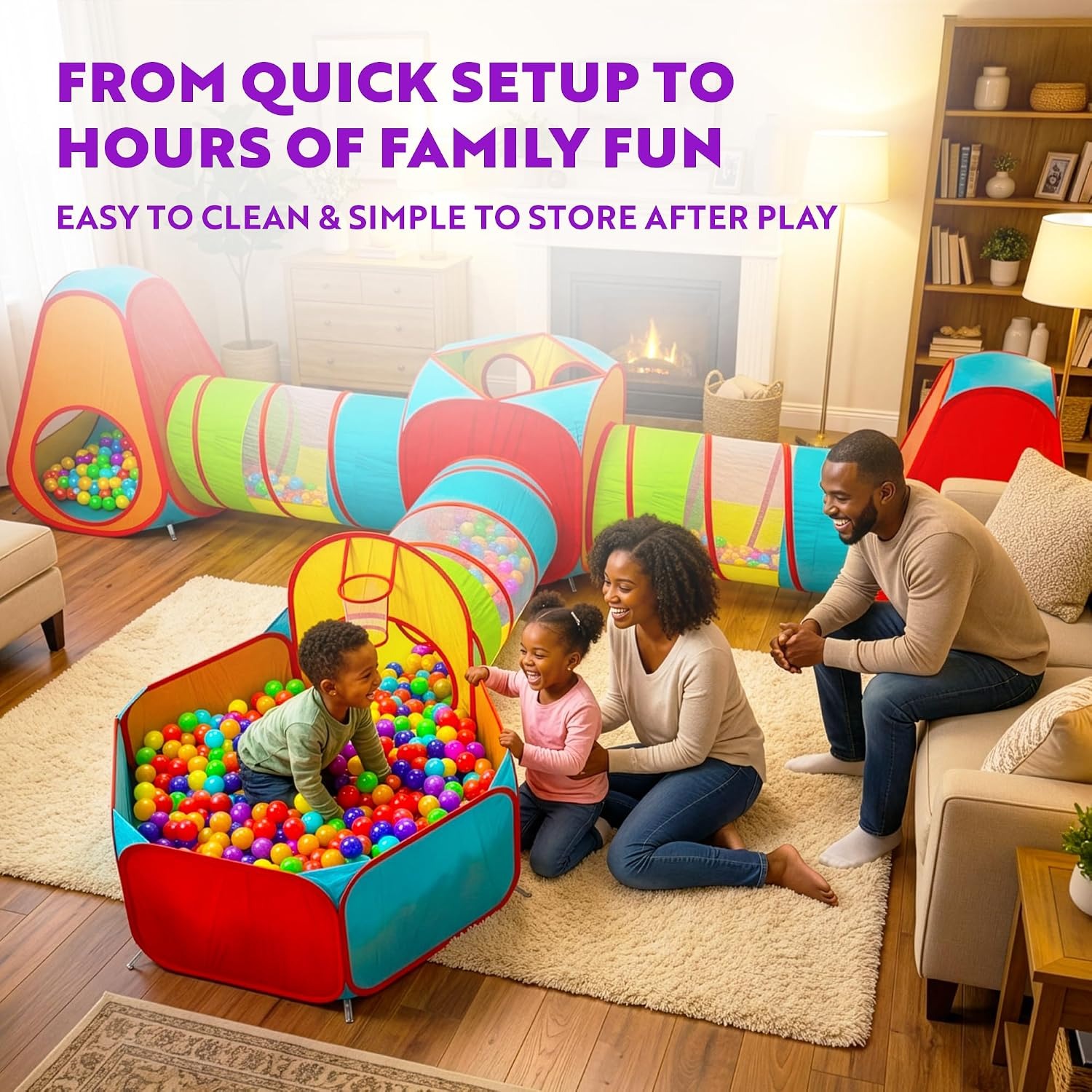
This is a seven piece set from the maker. Inside the zippered case you get two triangular play tents, three crawl tunnels, one square play tent and a ball pit with a hoop. The frame is alloy steel, which is what gives each piece its spring.
Nothing needs assembling. The manufacturer lists assembly as not required, and that is accurate in practice: each piece comes out of the bag already made, pops into shape and is ready. You are not threading poles through sleeves on the lounge room floor while a three year old shouts at you to hurry up.
Packed, the whole lot is 30.5 by 40.6 by 12.7 cm and weighs 1.81 kg. That is the detail worth underlining. A set that weighs less than two kilos and fits in a bag the size of a large laptop case is a set you will actually keep using, because getting it out is never a project.
The colourway is yellow, orange, green, red and blue on a jungle theme, and the manufacturer's recommended age range is 36 months to 8 years.
How the pieces work together
The real value here is in the combinations. Seven pieces is enough to build something different most days, which is the main reason a play tunnel set outlasts a single tent.
On the simplest level, use one piece at a time. A triangular tent in the corner of a bedroom becomes a reading spot. One tunnel down a hallway becomes a crawl race against a timer. The ball pit on its own, filled with balls, is enough for a young child to disappear into for a while.
Then you start joining things. A tunnel between the square tent and a triangular tent makes a two room house. Two tunnels end to end makes a proper long crawl, which is suddenly much more interesting than a short one. Run a tunnel into the ball pit and the crawl ends in a soft landing, which is the arrangement most kids gravitate towards.
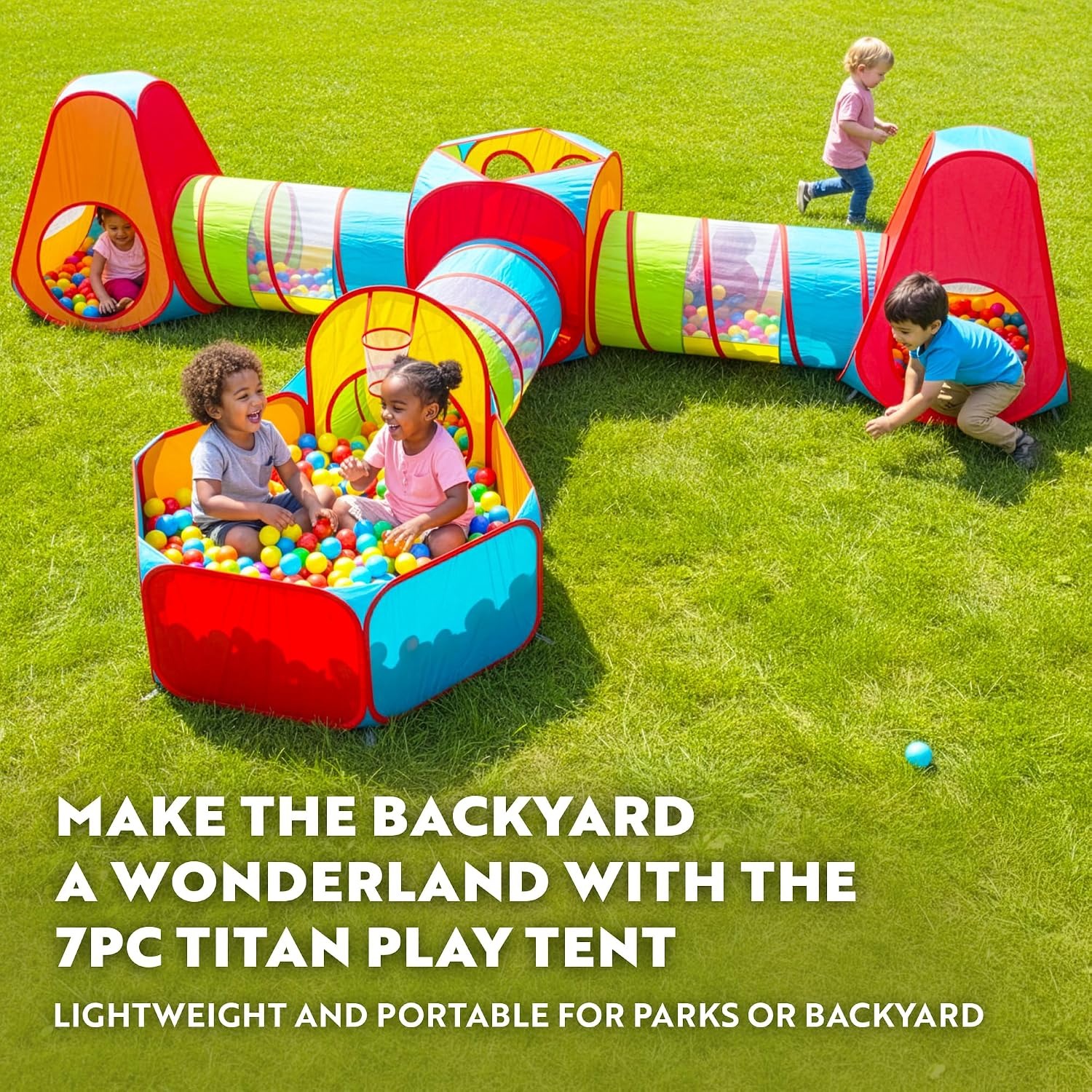
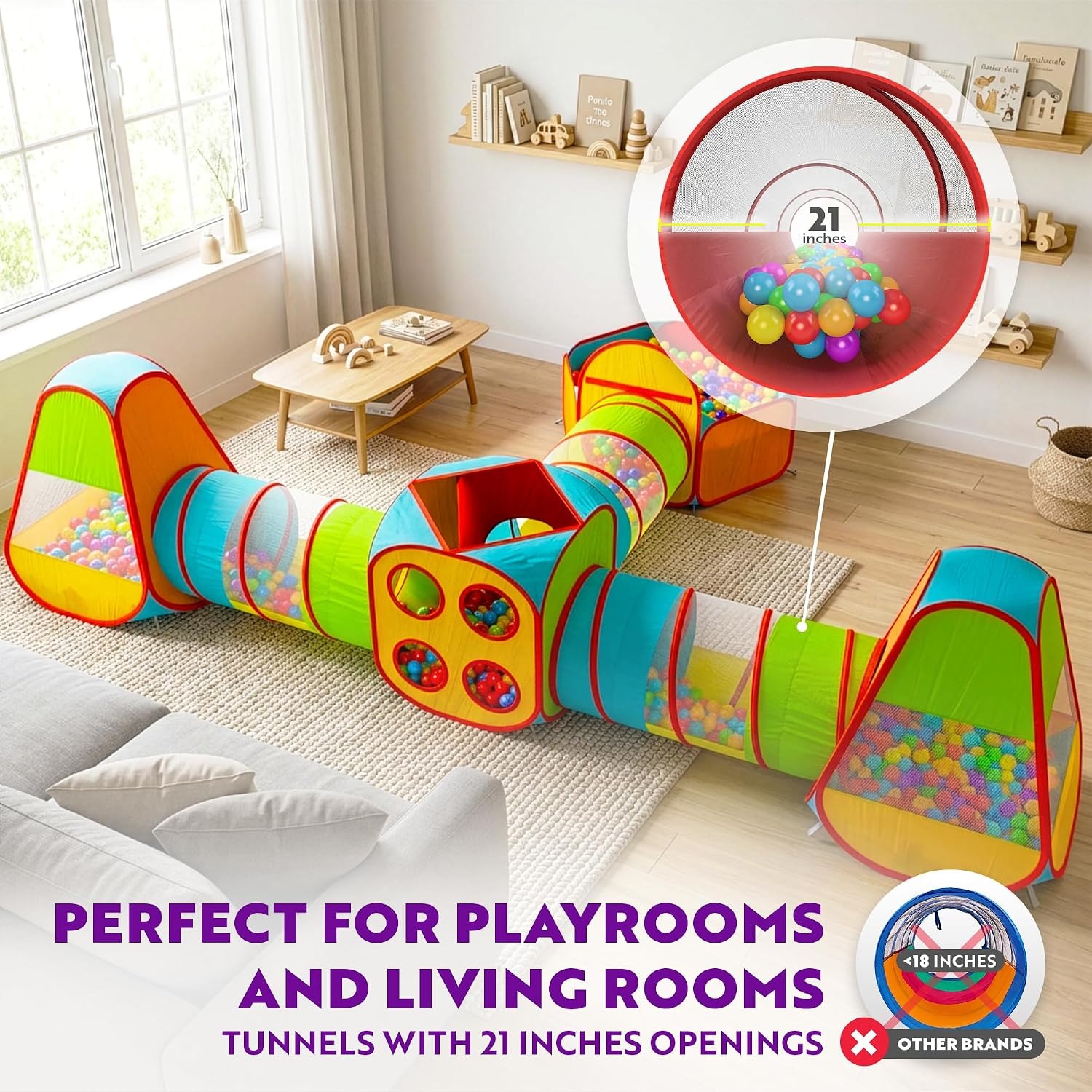
With all seven pieces out, you have a small course. This is where it earns its keep at birthday parties and playdates, because several children can be in the system at once without being on top of each other. Let them design the layout themselves. Rearranging it is half the fun.
The ball pit includes a hoop, which stretches the useful age range. A three year old is content to sit in the balls. A six or seven year old wants a target, and tossing balls through a hoop gives them one.
Who it suits
The set is aimed at the three to eight bracket. Within that, different ages get different things from it.
Young children around three mainly want enclosure and soft landings. For them, keep the layout simple, use short tunnel runs and a shallow fill of balls while their balance is still developing. Four and five year olds are the sweet spot. They can crawl confidently, they like building routes, and they will play imaginative games inside the tents for long stretches. Six to eight year olds tend to use it as a physical challenge, racing through tunnels and shooting hoops rather than playing house.
It suits families short on space too, oddly enough. Because it packs into one case and weighs under two kilos, a small flat can own it without surrendering a corner permanently. Grandparents often buy this type of set for exactly that reason: pull it out when the kids visit, pack it away the same evening.
If you have a child who needs movement to settle, the crawling and climbing involved gives them a legitimate indoor outlet. And if you have a child who needs somewhere quiet, a single tent with a cushion inside does that job as well.
Choosing the right set for your home
A few things are worth thinking about before you buy any play tent and tunnel set.
Measure your floor. Not the room, the clear floor. All seven pieces connected needs a decent open area, and if your living room is full of furniture you will be using three or four pieces at a time instead. That is fine, but know it going in.
Check the pack down size, because that is what decides whether a toy survives in a household. This one at 30.5 by 40.6 by 12.7 cm will go on a shelf or behind a door. Sets that need a whole cupboard tend to get given away.
Think about whether you want a single large tent or several smaller pieces. A single big tent is simpler but it does one thing. A multi piece set like this costs more in storage thought, but it is reconfigurable, which is what keeps a child interested past the first fortnight.
Finally, plan for the balls. Pit balls are not included with this set, so budget for them separately and decide how deep you want the pit. Buying a smaller quantity first and topping up later is a sensible approach, since you can see how your child actually uses it.
Setting it up well
Give the set a defined home in the room rather than scattering pieces randomly. Kids play better in a layout that has a start and an end.
On hard floors, put a rug or a play mat underneath. It makes crawling kinder on knees and stops the pieces skidding when someone dives into a tunnel. Keep the whole thing clear of fireplaces, heaters, stairs and glass furniture. Pop up frames are light, which is good for portability but means an enthusiastic child can shift a piece sideways in a hurry.
Supervise young children, especially in the tunnels. The usual rule works well: one child enters a tunnel at a time, or two enter from the same end.
Keeping it in good shape
Care is simple. Wipe the fabric with a damp cloth and a little mild soap when it needs it, then let it dry completely before folding. Do not put it in the washing machine, do not bleach it and do not tumble dry it. Folding away damp fabric around a steel frame is the fastest way to get a musty smell and rust marks.
Learn the fold properly. Pop up frames go down with a twist, not a shove, and the first few attempts are always the hardest. Once someone in the house has the knack, teach it to everyone else. Forcing a frame is the main cause of permanent bends.
Store it in the case. It keeps the set together, keeps dust off the fabric and means no tunnel goes missing behind the couch.
The short version
Seven pieces, no assembly, 1.81 kg in a bag that fits on a shelf. Two triangular tents, three tunnels, a square tent and a ball pit with a hoop, in yellow, orange, green, red and blue. Recommended by the manufacturer for ages three to eight.
It works because it changes. One tent for quiet time, a long tunnel run for rainy afternoons, the full course when friends come over. Add your own pit balls, give it a clear patch of floor, and it will handle a lot of the energy that would otherwise be bouncing off your walls.