
The complete guide
How to Choose a Castle Play Tent That Actually Gets Used
The problem with most play tents
A lot of play tents get used hard for a week and then sit in the corner collecting toys. Usually that is not the child's fault. It is because the tent was too small to sit up in, too flimsy to lean against, or too fiddly to put back together after the first time it came down.
A play tent has to earn its floor space. In a bedroom or a living room, you are giving up roughly a metre and a half of clear ground, and that is a real cost in most homes. So the tent needs to be somewhere a child actually wants to be, not just somewhere that looks good in a photo for a fortnight.
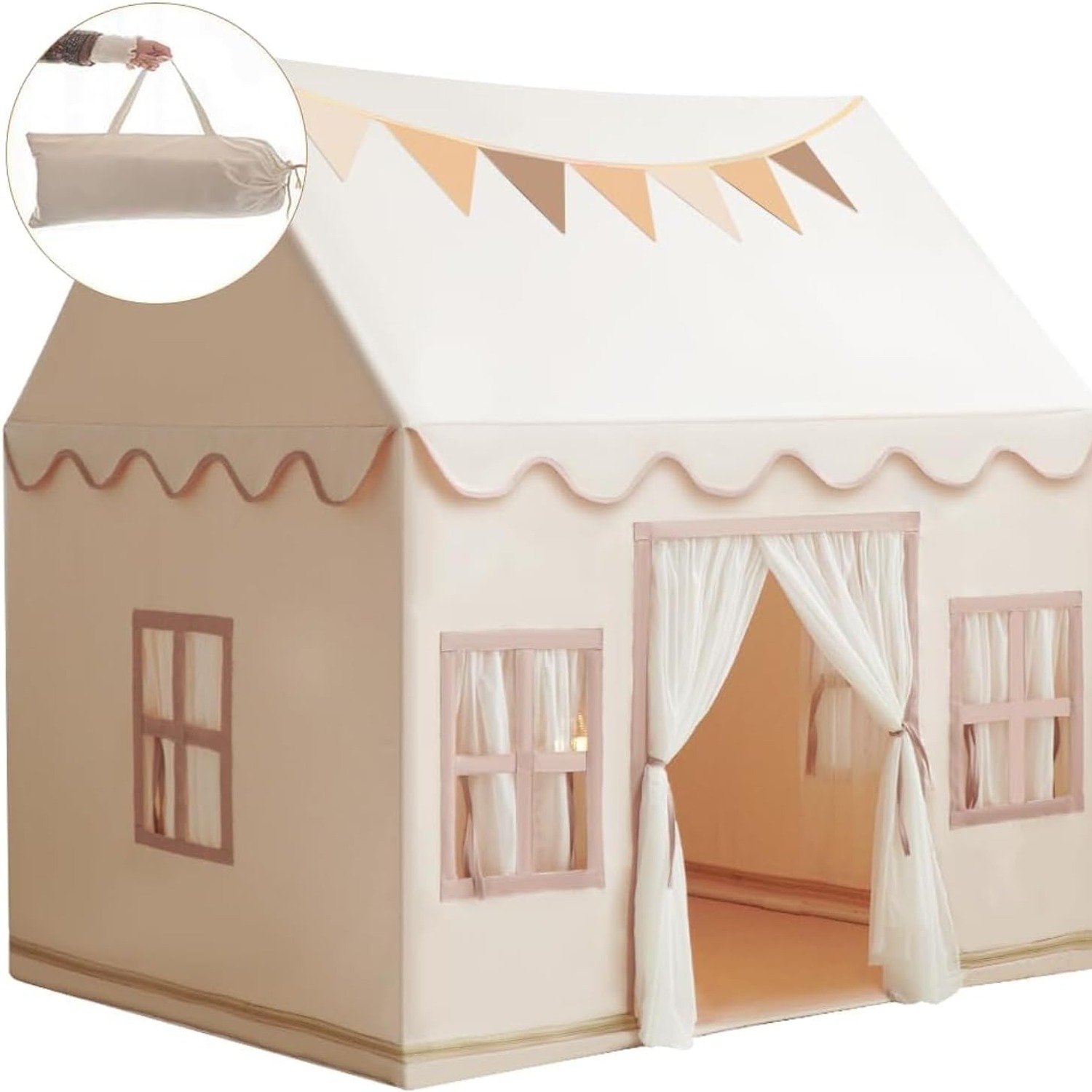
This castle tent is built around that idea. It is 119.4 cm square at the base and 149.9 cm at the peak, which is on the larger end of what you will find in the kids playhouse tent category. That size matters more than any other single feature, because it is the difference between a child crouching inside for five minutes and a child settling in with books for an hour.
How it is put together
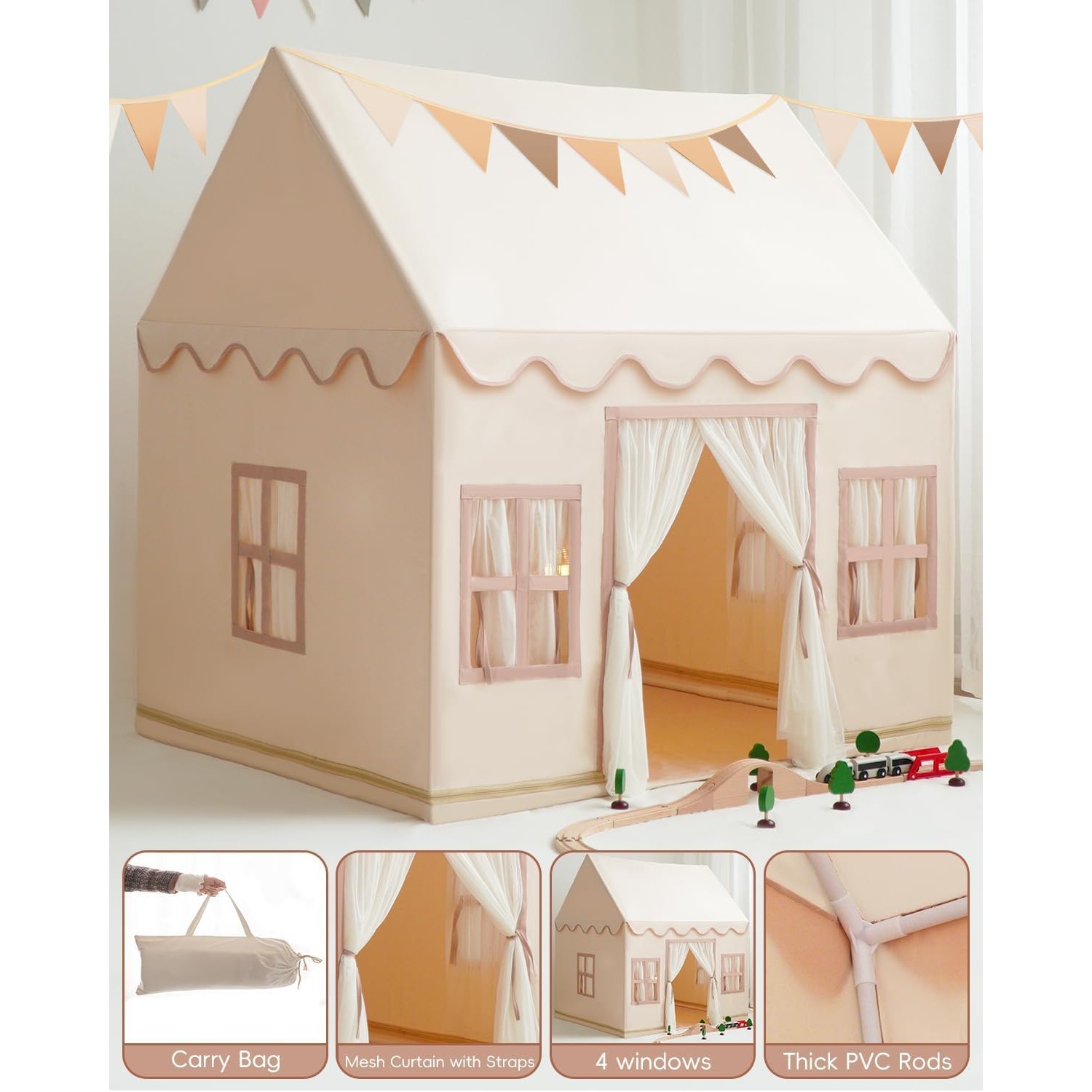
The structure is simple. Metal poles form the frame, and a cream cotton cover goes over the top. There is no complicated mechanism, no spring-loaded pop-up that eventually refuses to fold back down, and no plastic clips to snap.
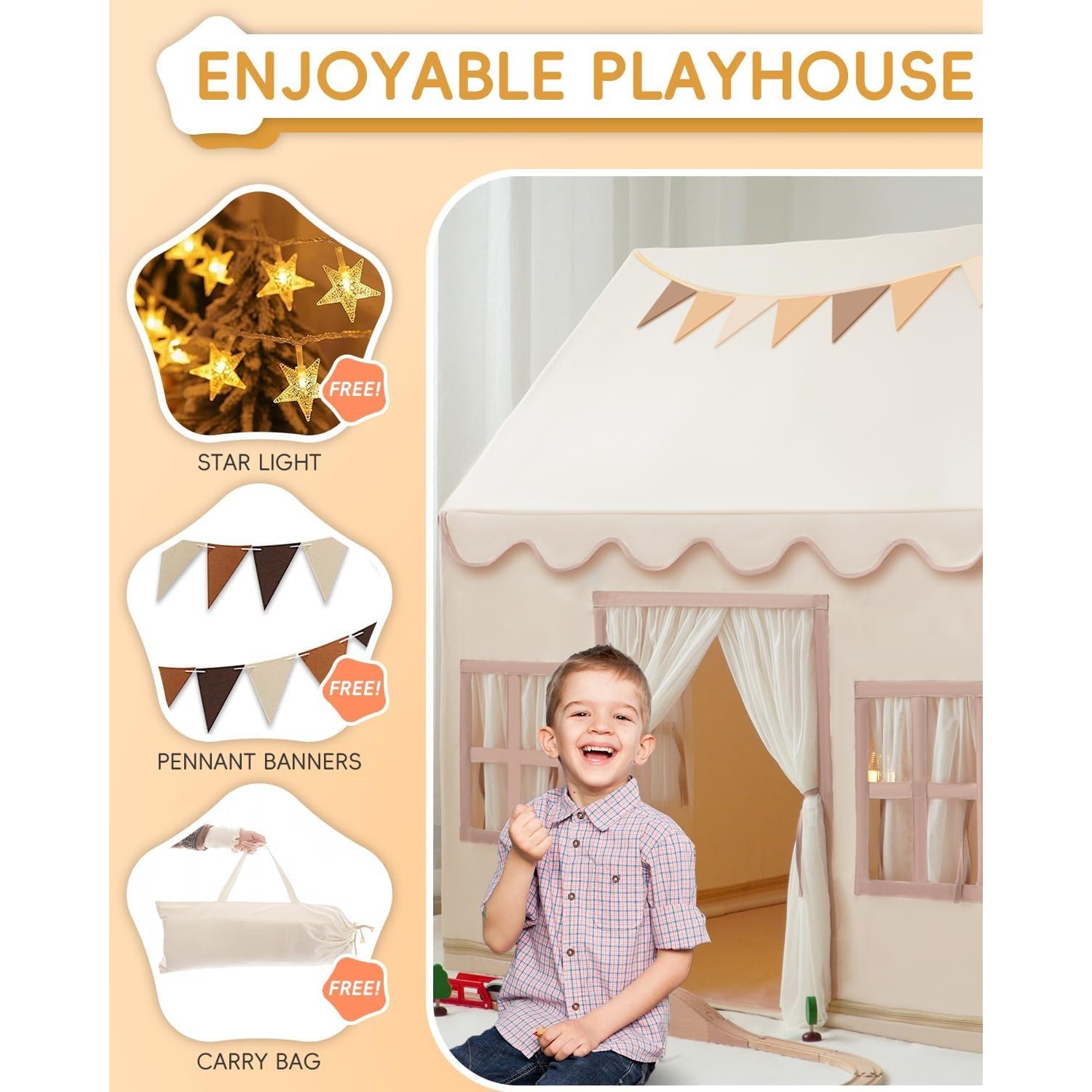
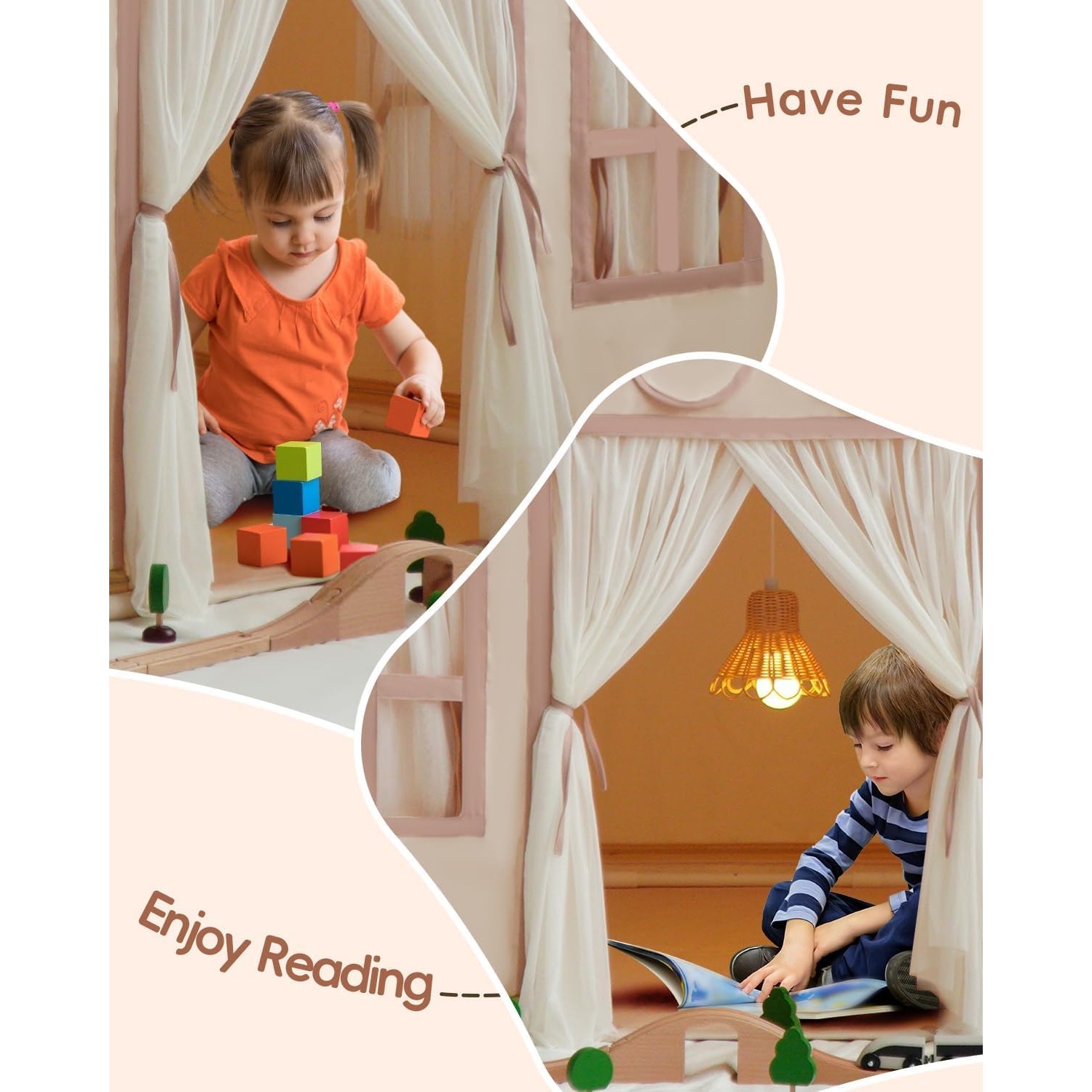
Four windows are cut into the sides, each backed with a light gauze curtain. Children can tie those curtains up for a view out and plenty of airflow, or drop them when they want to feel hidden. That small bit of control is a big part of why these tents work for kids. Being able to choose between visible and hidden is most of the appeal.
The door is a single large opening, big enough to crawl through without a struggle and wide enough for a parent to see in from across the room. For supervising younger children that visibility is genuinely useful.
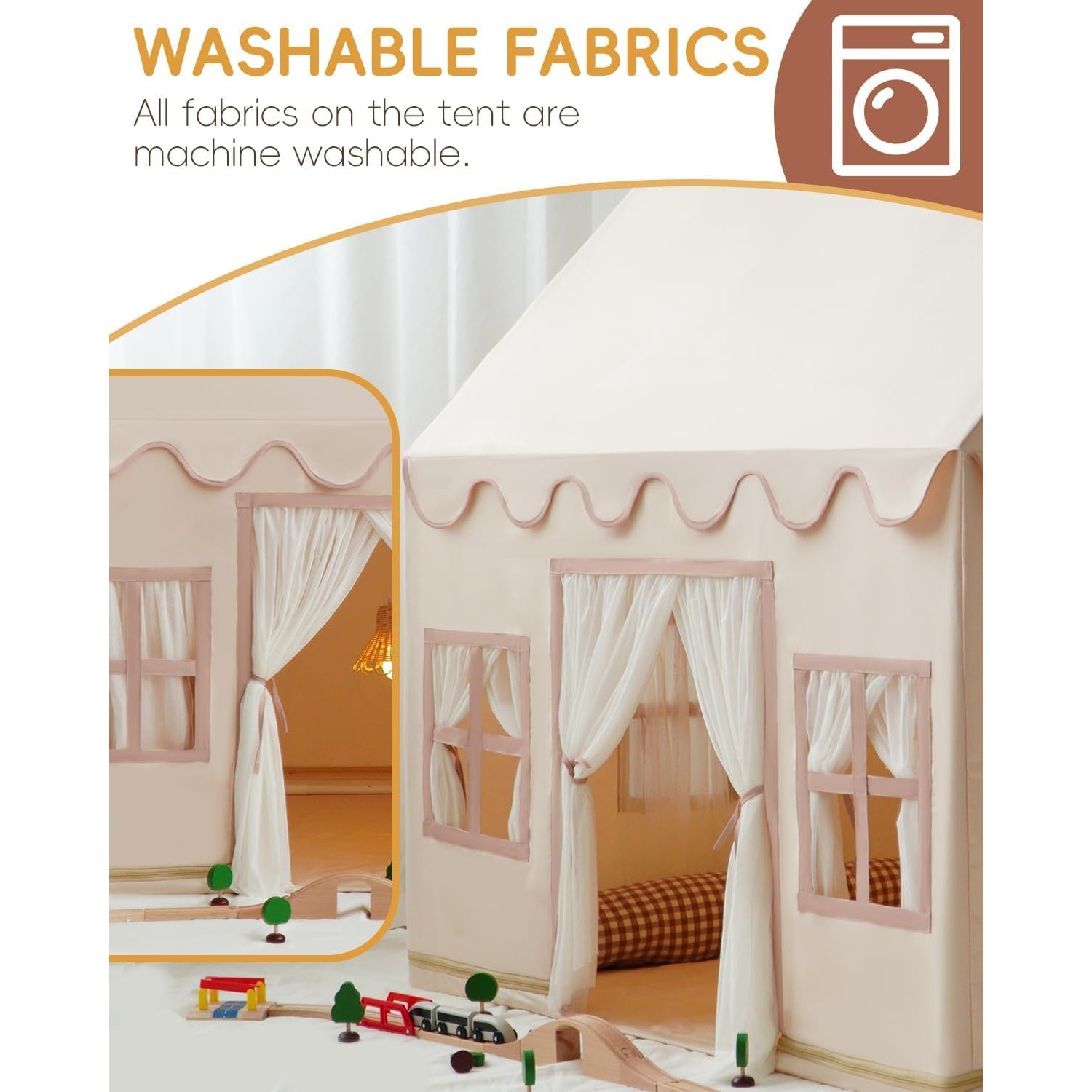
On the floor sits a detachable base mat. It softens the surface so a child is not sitting directly on floorboards or a thin rug. Because it lifts out entirely, you can shake it off outside or run it through the wash when it gets grubby, which it will.
A string of star lights and a decorative flag complete the set. The lights are the thing most children notice first. Switched on in a dim room, the inside of the tent stops being a fabric box and starts being somewhere.
Who it suits
This size works well for one child who wants a private spot, or for two children sharing. Two can sit facing each other with room for a book pile in between. Three smaller children will fit for a short game, though it gets cosy.
The height is the part parents tend to underestimate. At nearly 150 cm to the peak, a young child or young primary-age child can stand up inside without ducking. That changes how a tent gets used. Low tents are for lying down. Tall tents are for playing.
It also works for families who want something that does not shout. The cream cotton and castle shape read as decorative rather than garish, so it can live in a living room corner without clashing with everything else. If you have ever bought a bright plastic playhouse and then found yourself hiding it when guests come, you will understand why the neutral option matters.
Age-wise, the listing records the range simply as Kid, with no specific manufacturer age rating confirmed. Use the dimensions as your real guide. Any child who fits comfortably in a 1.2 metre square with 1.5 metres of headroom is in the right range, and supervision is sensible for the youngest users.
Working out if it fits your room
Before you order anything in this category, do the tape measure test. Mark out a square 1.2 metres on each side on your floor. Then add about ten centimetres of clearance on each side so the poles are not jammed against skirting boards or furniture. You want roughly 1.4 metres of clear floor.
Check your ceiling height too, though almost every standard room will clear 149.9 cm with plenty to spare. The bigger issue is usually light fittings, shelves or a sloping attic ceiling.
Think about where the tent will sit relative to the rest of the room. Children like tents in corners, but a corner spot means you can only access two sides. If you want the windows usable, a position with a bit of space behind it works better.
Finally, think about whether the tent is permanent or temporary. If you plan to take it down for parties and put it back up afterwards, the tool-free assembly matters a lot. If it is going to live in one spot for a year, assembly speed is a one-off concern.
Setting it up
Assembly is straightforward. The metal poles connect by hand, the cover slides over the frame, and the manufacturer indicates one adult can finish the job in around ten minutes with the printed instructions. No tools are needed.
A few practical tips help. Clear the floor first so you are not building around a toy box. Lay the poles out and sort them before you start connecting anything. Push every joint fully home, because a half-seated joint is what makes a frame feel wobbly later.
Fit the base mat before you crawl in to position the lights, not after. It is easier that way.
If you are assembling it as a surprise, do it the night before. A child walking into a finished castle with the star lights already glowing gets a much better moment than a child watching a parent wrestle with poles.
Keeping it clean
Cotton play tents get dirty. That is a sign they are being used, not a problem. The good news here is that both the cover and the base mat come off and go in the machine.
Wash on a gentle cycle with a mild detergent and let both pieces air dry rather than tumble drying. Air drying helps cotton hold its shape so it refits the frame properly. Make sure everything is completely dry before it goes back on, because damp fabric on a metal frame is how you get marks and musty smells.
Take the star lights out before washing anything. They are not laundry.
The metal poles need almost nothing. Wipe them with a damp cloth if they get sticky, dry them off, and check the joints occasionally. If the frame starts to feel loose, it is usually a joint that has crept apart rather than anything broken.
For storage, fold the fabric, bundle the poles, and keep the lot somewhere dry. Under a bed or on a wardrobe shelf is fine.
A note on safety
None of this is complicated, but it is worth saying. Supervise young children around any fabric structure with a frame. Keep the tent away from heaters, candles and trailing cords. Teach children to play inside the tent rather than climbing or swinging on the poles, because it is a playhouse and not climbing equipment.
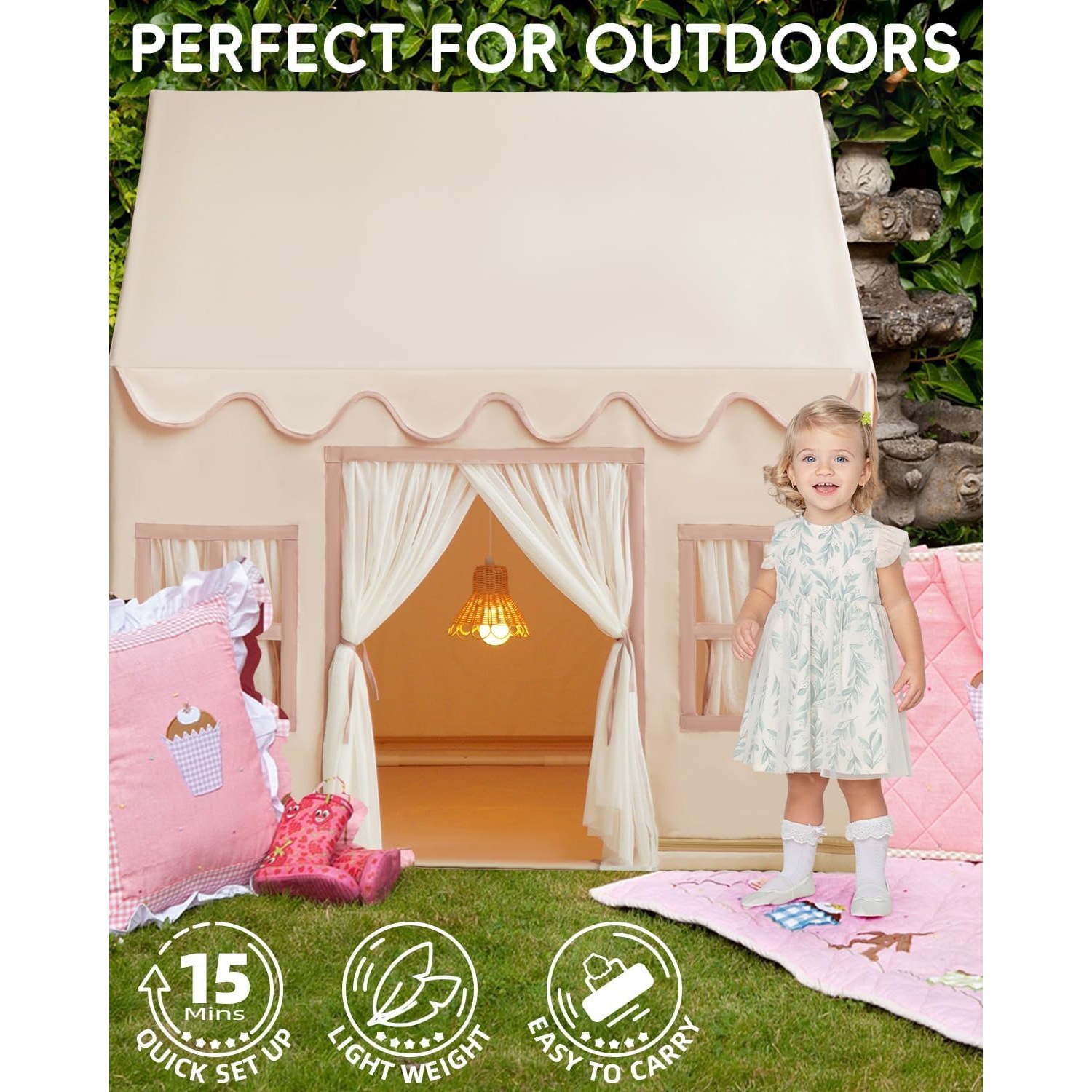
If the tent goes outside, make sure the ground is dry and bring it in before the weather turns. Cotton is not waterproof.
The short version
This is a large cotton castle tent on a metal frame, 119.4 cm square and 149.9 cm tall, in cream. It comes complete with the cover, poles, a washable base mat, star lights and a decorative flag. Four curtained windows and a large door keep it airy and easy to supervise.
The size is the main reason to pick it. Enough floor for two children, enough height to stand up, and a shape that looks like a castle without being loud about it. Assembly takes about ten minutes with no tools, and the fabric parts go in the washing machine when they need it.
Measure your floor before you order, give it a corner with a bit of breathing room, and it will get used far longer than a tent a child outgrows in a season.