
The complete guide
Choosing a Portable Teepee Tent: A Practical Buyer's Guide
The problem a teepee actually solves
Most homes have plenty of space for children and almost no space that belongs to children. There are rooms they sleep in, rooms they eat in, and a floor where the toys end up. What is often missing is a small, clearly marked spot that is theirs, with a boundary they can see.
That sounds like a small thing. It is not. Children who get overstimulated easily, children who share a bedroom, children who are new to a house after a move, all tend to settle better when there is somewhere to retreat to. A portable teepee tent is one of the simplest ways to create that. It draws a line on the floor and puts a roof over it, and suddenly there is an inside and an outside.
It also solves a very practical adult problem. A fixed playhouse takes up permanent floor space whether anyone is using it or not. This one does not. It stands up when it is wanted and folds away when it is not.
How this one is built
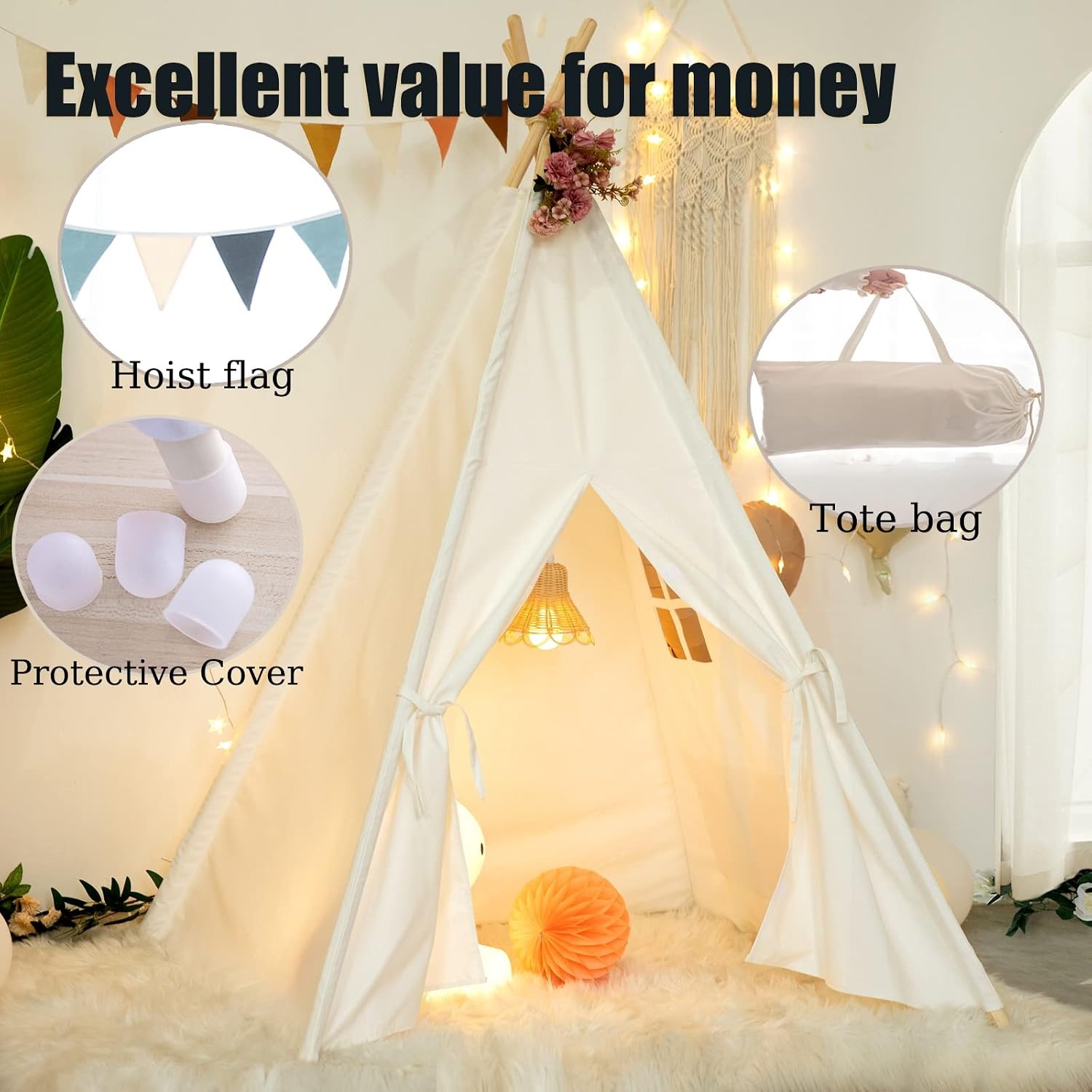
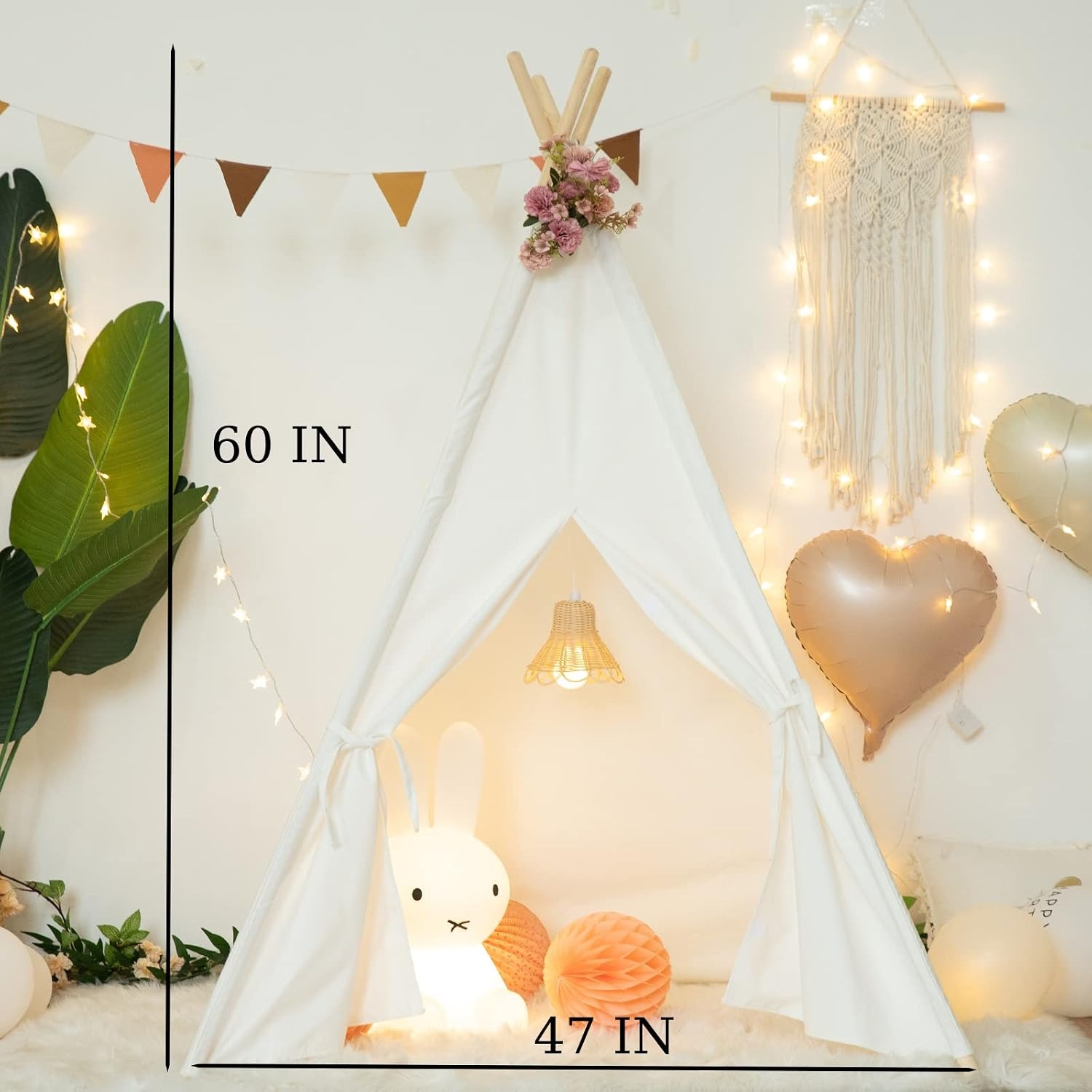
The structure is a cone made from eight pine wood support poles joined with four connectors. The cover goes over the frame, and a hanging flag finishes the top. Assembled, it measures 47 inches wide by 47 inches long by 59 inches high, which works out at roughly 119.4 cm square on the floor and 149.9 cm tall.
Wood is doing real work here. Pine poles have enough weight to keep the cone from drifting around on a hard floor, and they feel sturdier under a child's hand than thin plastic tubing. They also look like furniture rather than equipment, which matters if the tent is going to live in a lounge or a nursery instead of a dedicated playroom.
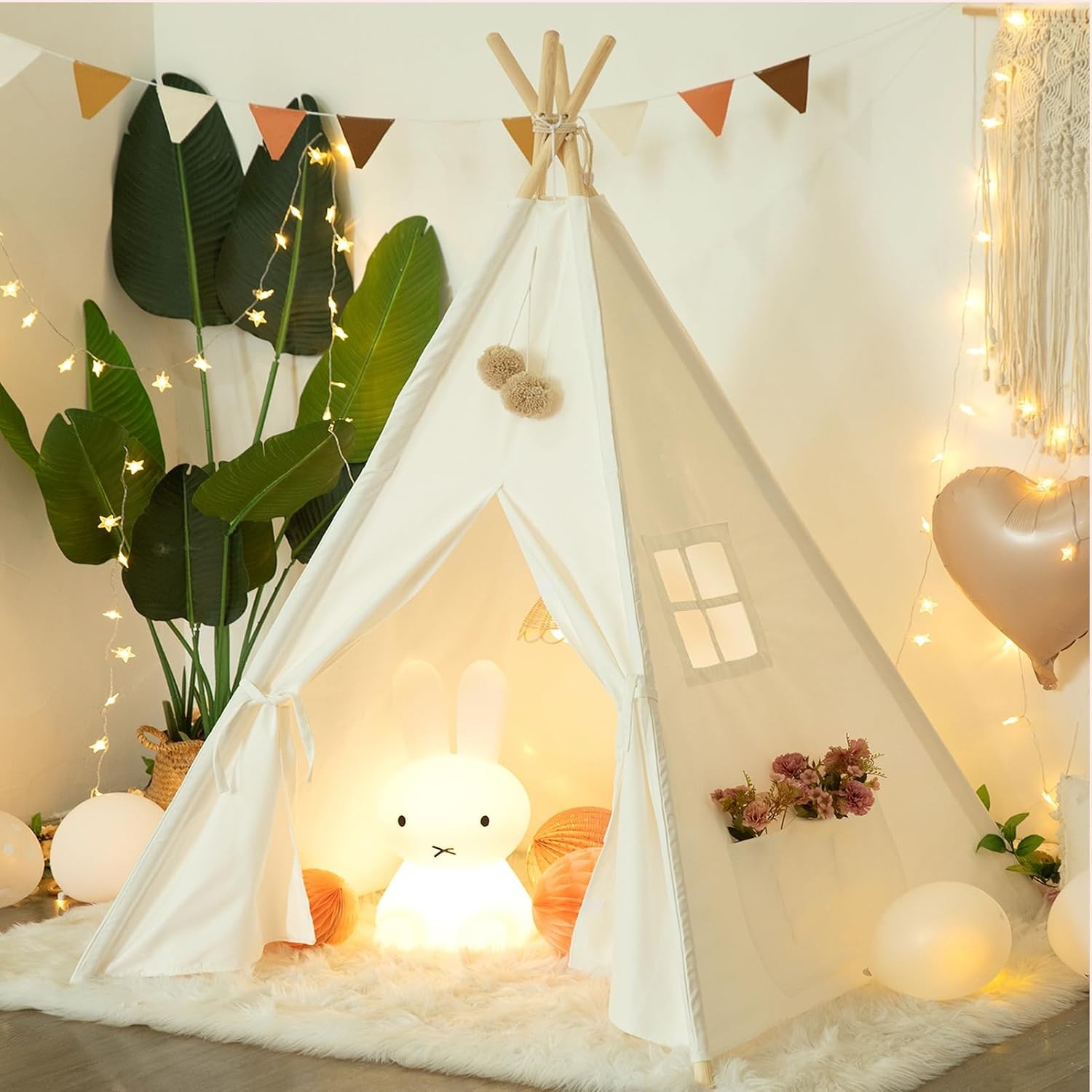
The white cover and the castle theme keep the whole thing visually quiet. It is not covered in cartoon characters, so it will not look dated in eighteen months, and it will not clash with whatever paint is already on the walls. If you want a theme, you add it yourself with bunting, cushions or a garland.
Assembly is required. The first build takes the longest while you work out which pole goes where, and after that it becomes a short job. Lay everything out on a clear patch of floor before you start and the process goes much faster.
Who it suits
The recommended age is three years and up. That is a sensible starting point, because by three most children understand not to climb the frame and can get in and out without pulling the poles over.
Younger children can still enjoy it with an adult in the room. Just be realistic about what a two-year-old does with a pole they can reach. If you are buying for that age, plan to supervise and consider keeping the tent in a room where you are already spending time.
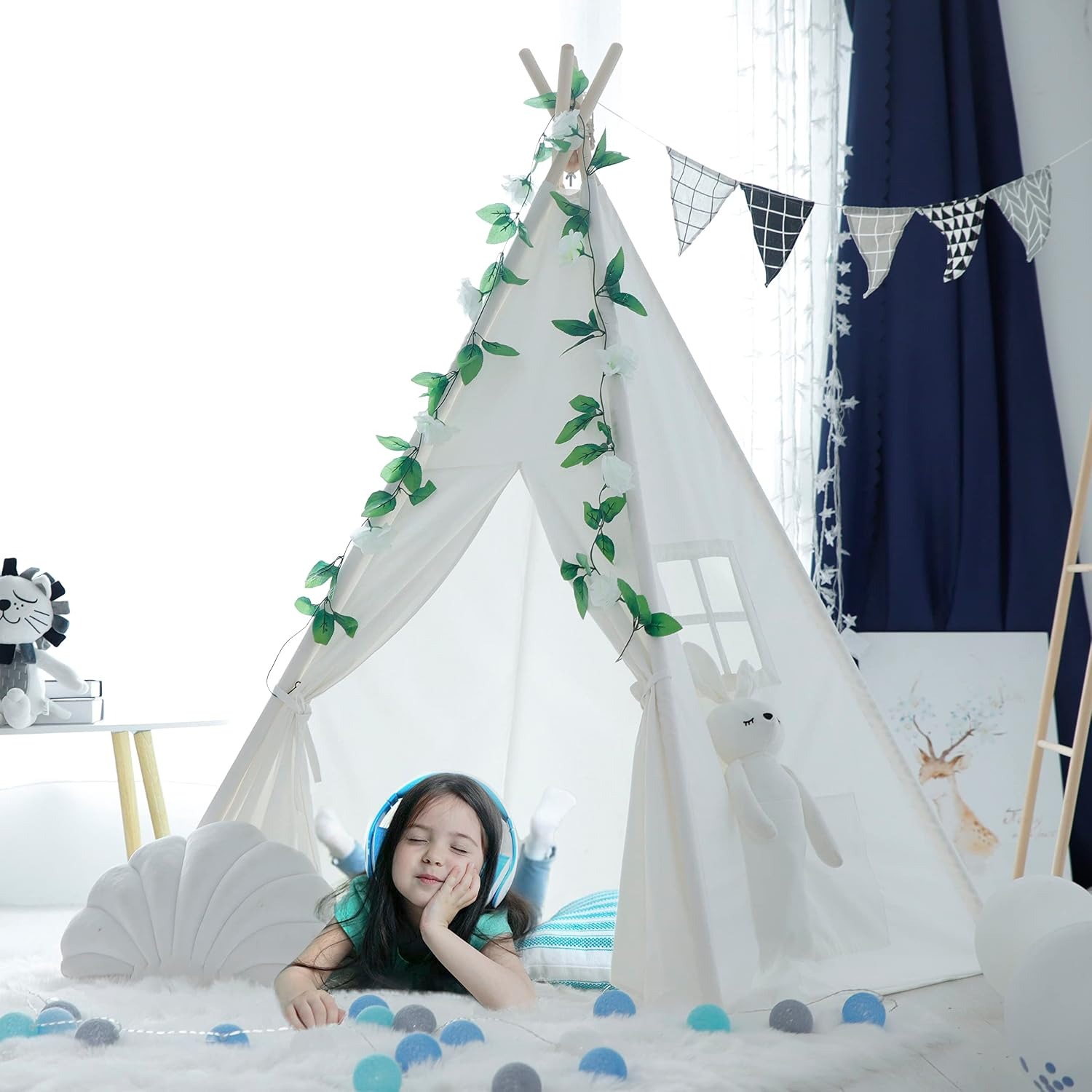
At the other end, children stay interested in a wooden pole teepee longer than you might expect. Older primary-age kids use it less for pretend play and more as a private spot to read, draw or disappear with a tablet. That is still a win.
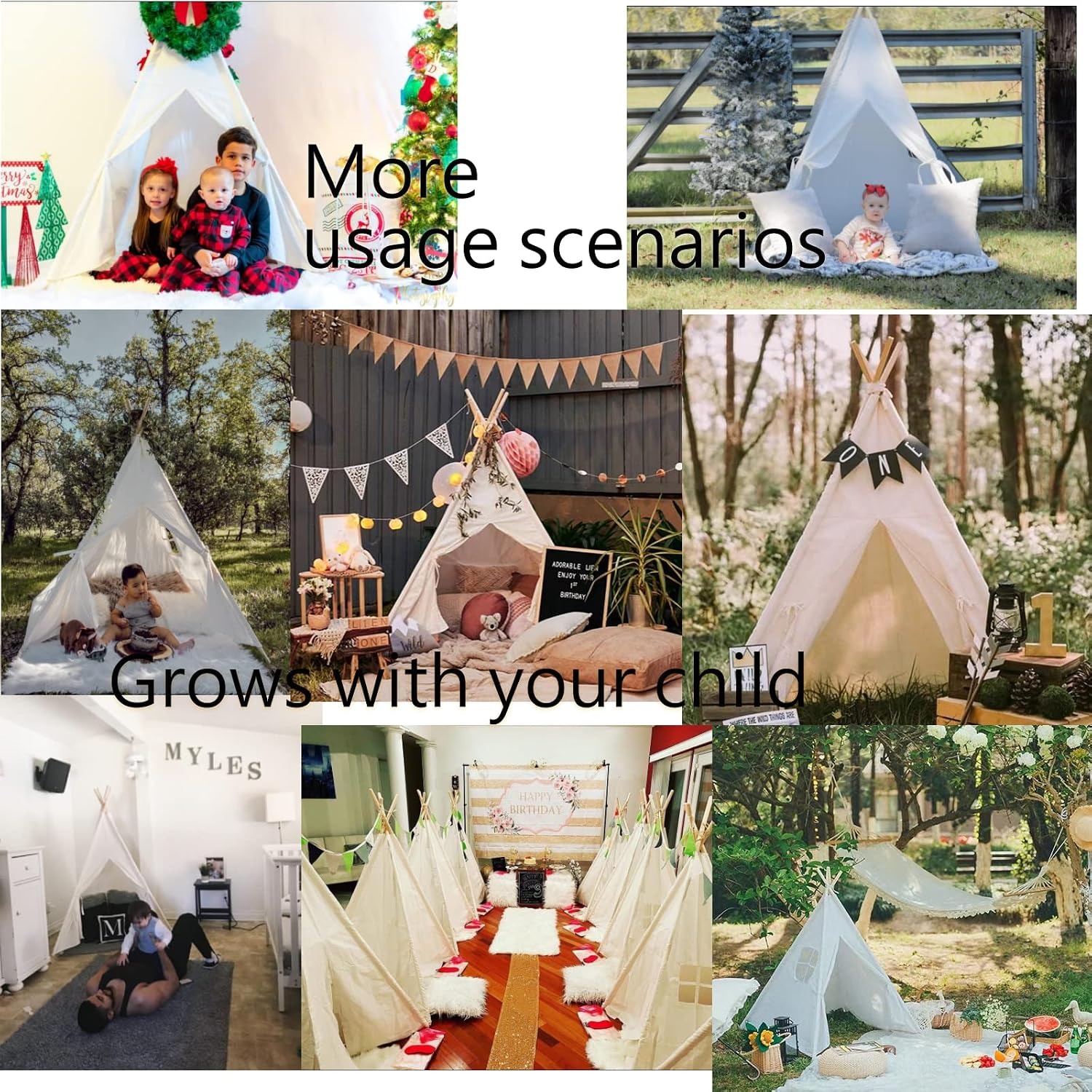
It is a good fit for apartments, for shared bedrooms where one child needs a boundary, and for grandparents who want something for visits that does not have to stay out all week. It is also a reliable children's play tent choice for a first big present, because it does not need batteries and nothing about it goes out of fashion.
How to choose the right spot
Measure before you buy, not after. You need about 120 cm by 120 cm of clear floor and a bit of breathing room around the edges so the poles are not jammed against a wall or a radiator. Ceiling height is rarely an issue at 150 cm tall, but check under sloped ceilings and in attic bedrooms.
Think about the surface. Carpet is the easiest option because it grips the pole feet and softens the floor inside. On tile, laminate or polished wood, put a rug underneath. It stops any sliding and it makes the inside somewhere a child actually wants to sit.
Light matters too. A corner with some natural light nearby keeps the inside usable without needing a lamp. If the only space you have is dim, battery fairy lights wrapped around the poles are the usual fix. Keep them low heat, keep the cables tidy, and switch them off when nobody is inside.
Finally, think about traffic. A tent in a doorway or hallway gets knocked constantly. A tent in the dead corner of a bedroom lasts much longer and gets used more.
Making the inside worth sitting in
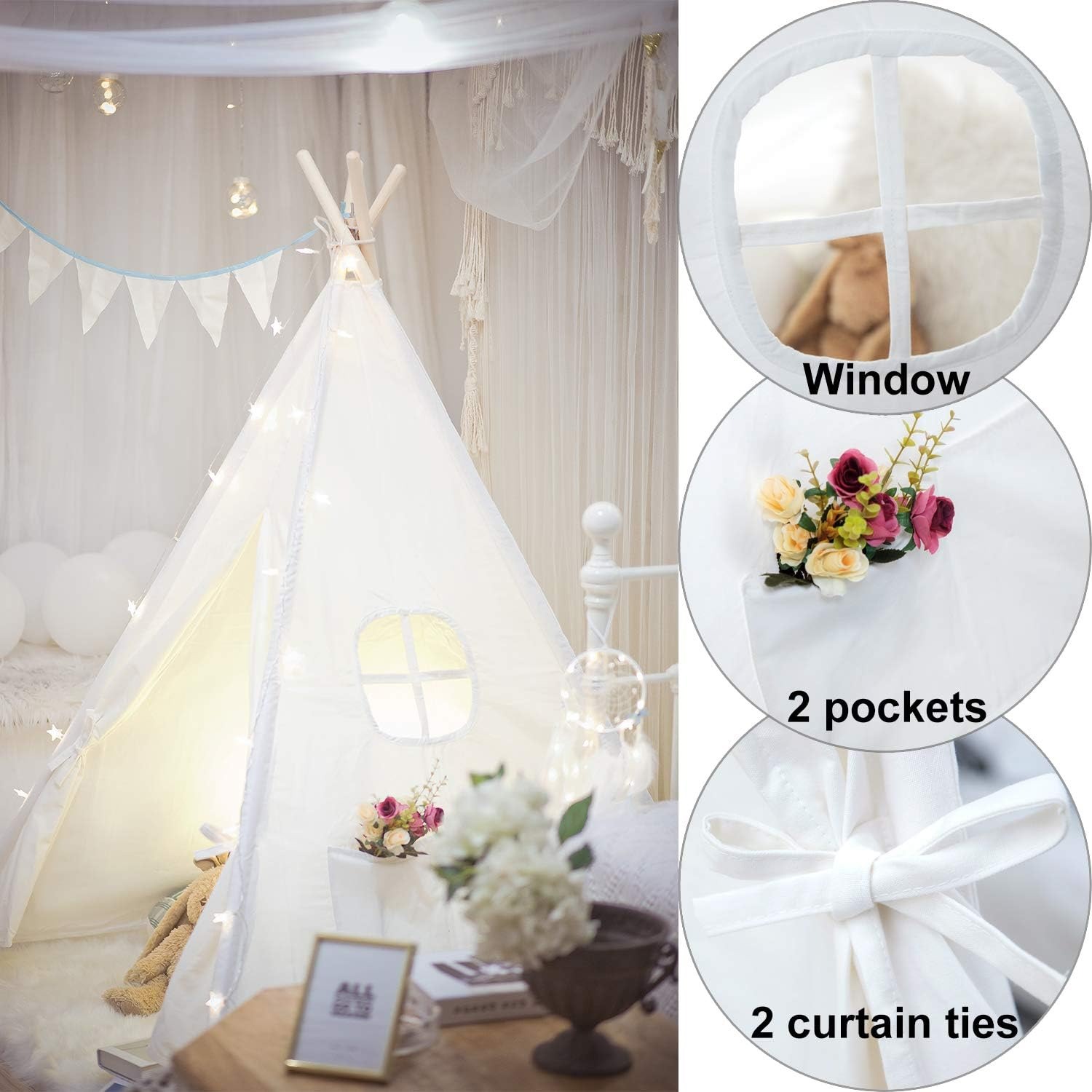
The tent arrives as a frame and a cover. There is no mat, no cushion and no lighting included, and that is normal for this kind of product. The upside is that you get to build the inside to suit your child.
A thick rug or a folded quilt on the floor is the single biggest improvement. After that, two cushions, a soft blanket and a shallow basket for books or a few favourite toys. Resist the urge to fill it. The appeal of a nursery teepee tent is the empty, calm feeling, and that disappears the moment it becomes another toy box.
If you are using it as a reading nook tent, keep books in rather than toys. Children read in there far more when the only option inside is a book.
Looking after it
Care is simple and mostly about keeping things dry. Spot clean marks on the cover with a damp cloth and a small amount of mild soap, work gently, and let the fabric dry fully in open air before folding it. Do not assume the cover is machine washable, because that is not specified for this product.
Wipe the poles with a dry or barely damp cloth. Wood and standing water do not get along, so if the tent has been outside on damp grass, dry the feet before packing it. Store everything together in the carry bag in a dry cupboard rather than a shed or garage.
Every few weeks, check the connectors and any ties and re-tighten what has worked loose. Play loosens things. Two minutes of checking prevents a wobbly frame later.
If you use it outside, bring it in at the end of the day. It is built as an indoor play tent that handles the garden on a dry afternoon, not as camping gear.
Beyond play
Plenty of people buy a children's teepee for reasons that have nothing to do with play. The plain white cover photographs well, so it gets used as a teepee photography prop for newborn shoots, birthday sessions and family albums. The cone shape frames a child neatly and the neutral colour keeps the focus on the subject.
It also works as a seasonal decoration. Dressed with a garland it becomes part of a Christmas corner, and left plain it is simply a soft shape in a nursery. Because it folds, it can be stored between uses rather than living out all year.
The short version
This is a wooden-framed portable teepee tent that stands about 149.9 cm tall on a square footprint of roughly 119.4 cm, built from pine poles with connectors and a white cover plus a hanging flag. It is recommended for ages three and up, needs assembly, and packs down to move or store.
Buy it if you want to give a child a defined, quiet space without giving up a permanent chunk of the room. Measure your corner first, plan on adding a mat and cushions, and keep the wood dry. Done that way, it earns its spot for years.