
The complete guide
Choosing a Pop-Up Ball Pit Tent That Actually Gets Used
The problem with most indoor play gear
Big plastic play equipment has a habit of winning the first week and losing the rest of the year. It arrives, it gets built, and then it sits in the middle of the room because there is nowhere sensible to put it. Within a month it has become furniture that nobody likes.
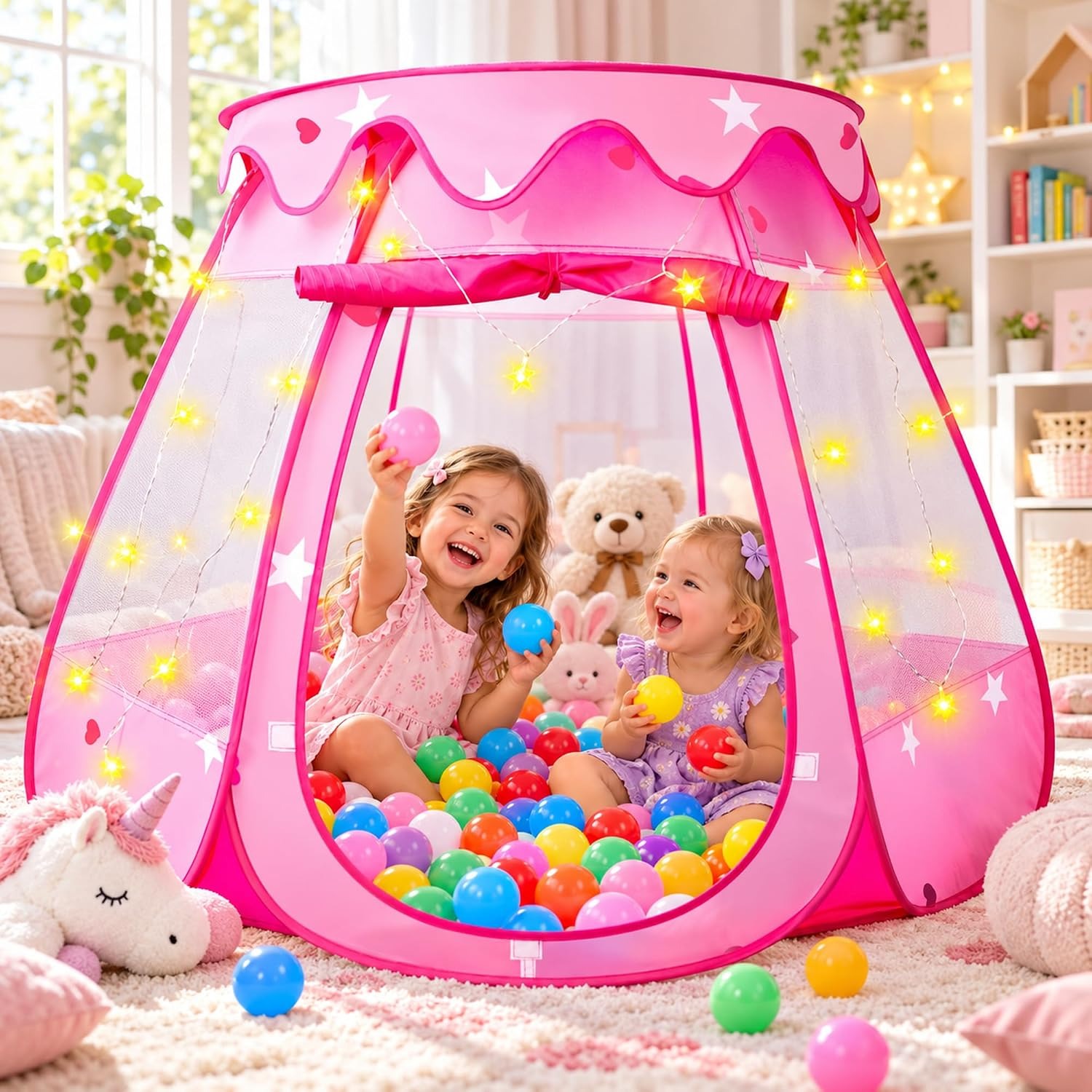
A pop-up ball pit tent solves a different problem. It gives a young child a defined space that is clearly theirs, and it disappears again when you need the floor back. That second part is what keeps it in use. Play gear that can be put away stays welcome.
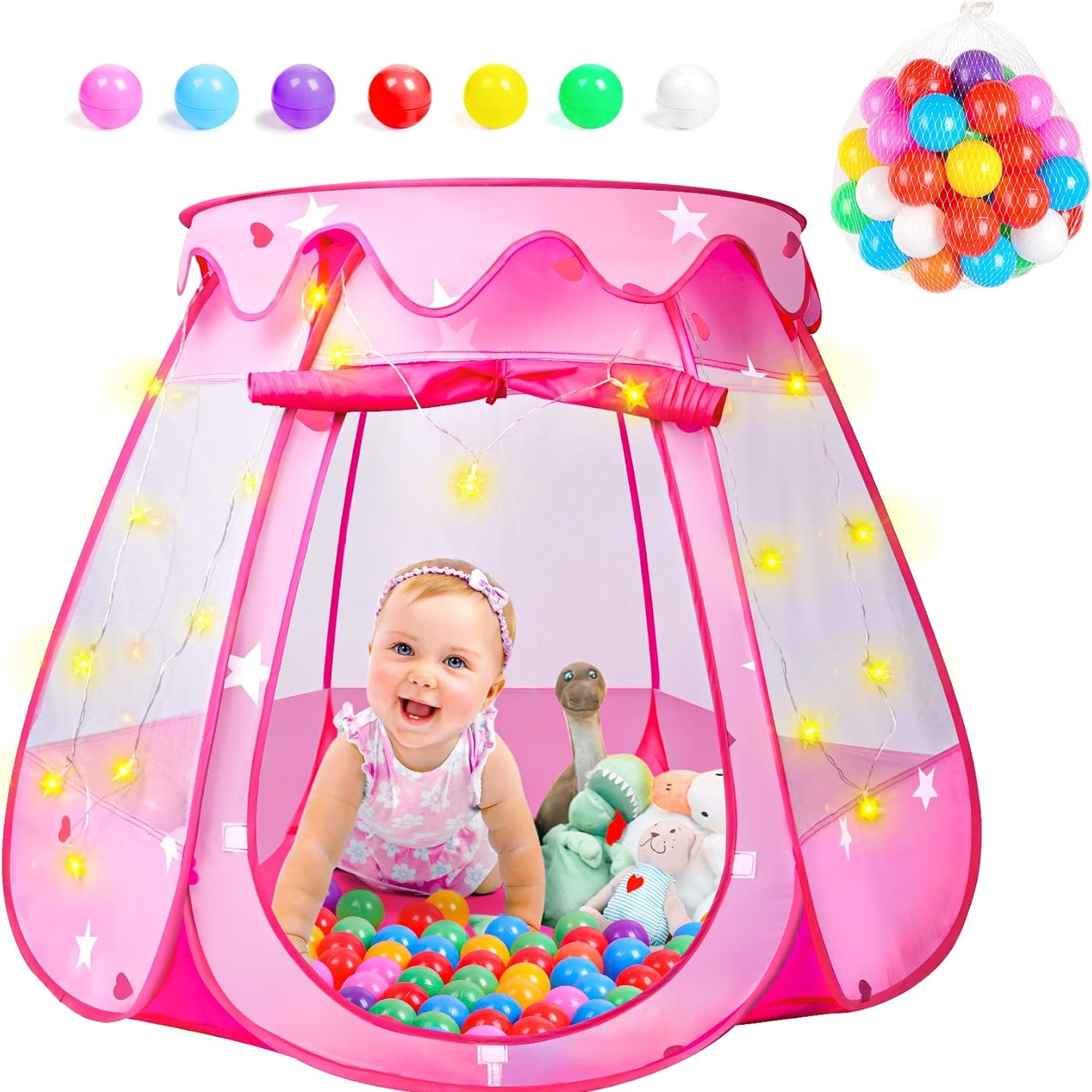
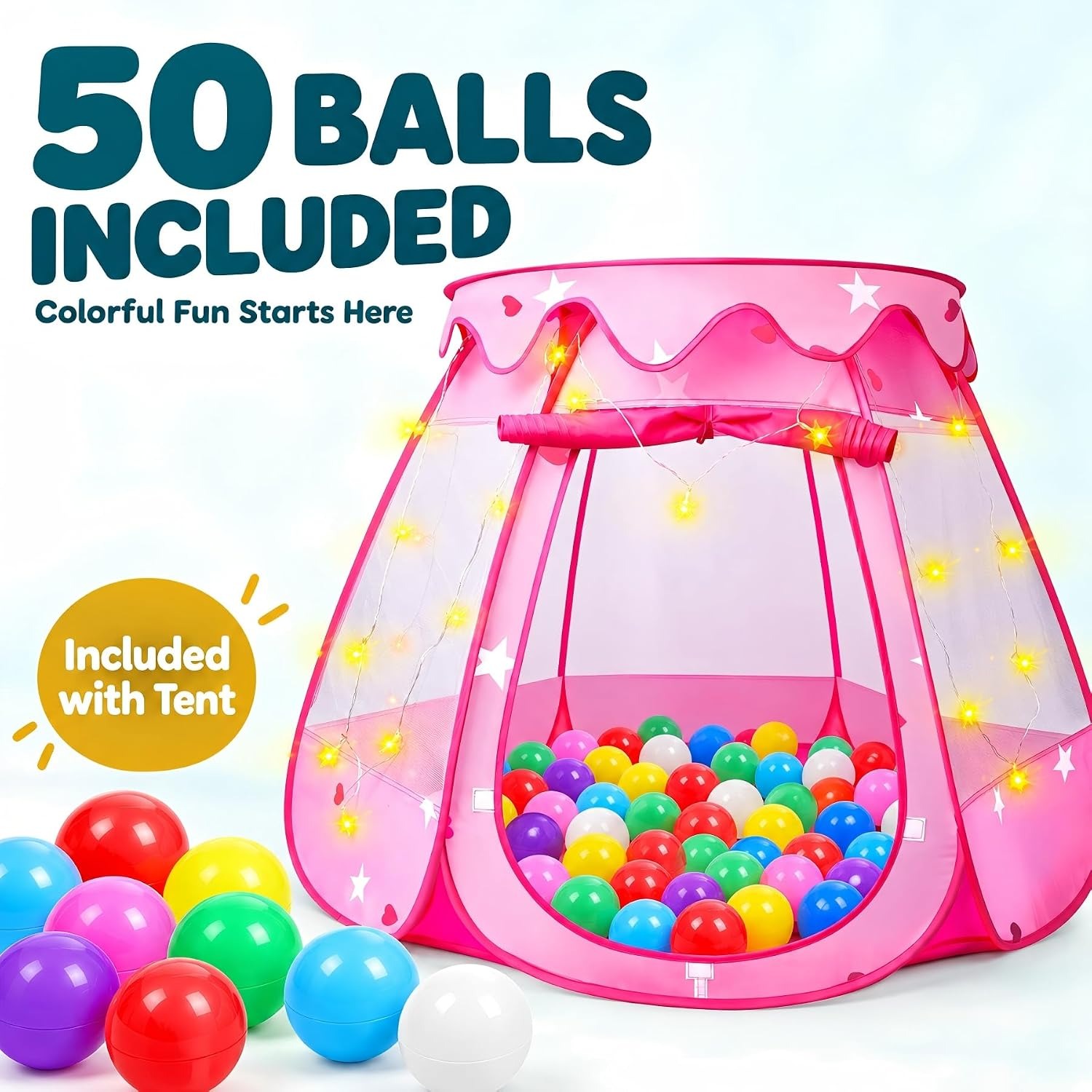
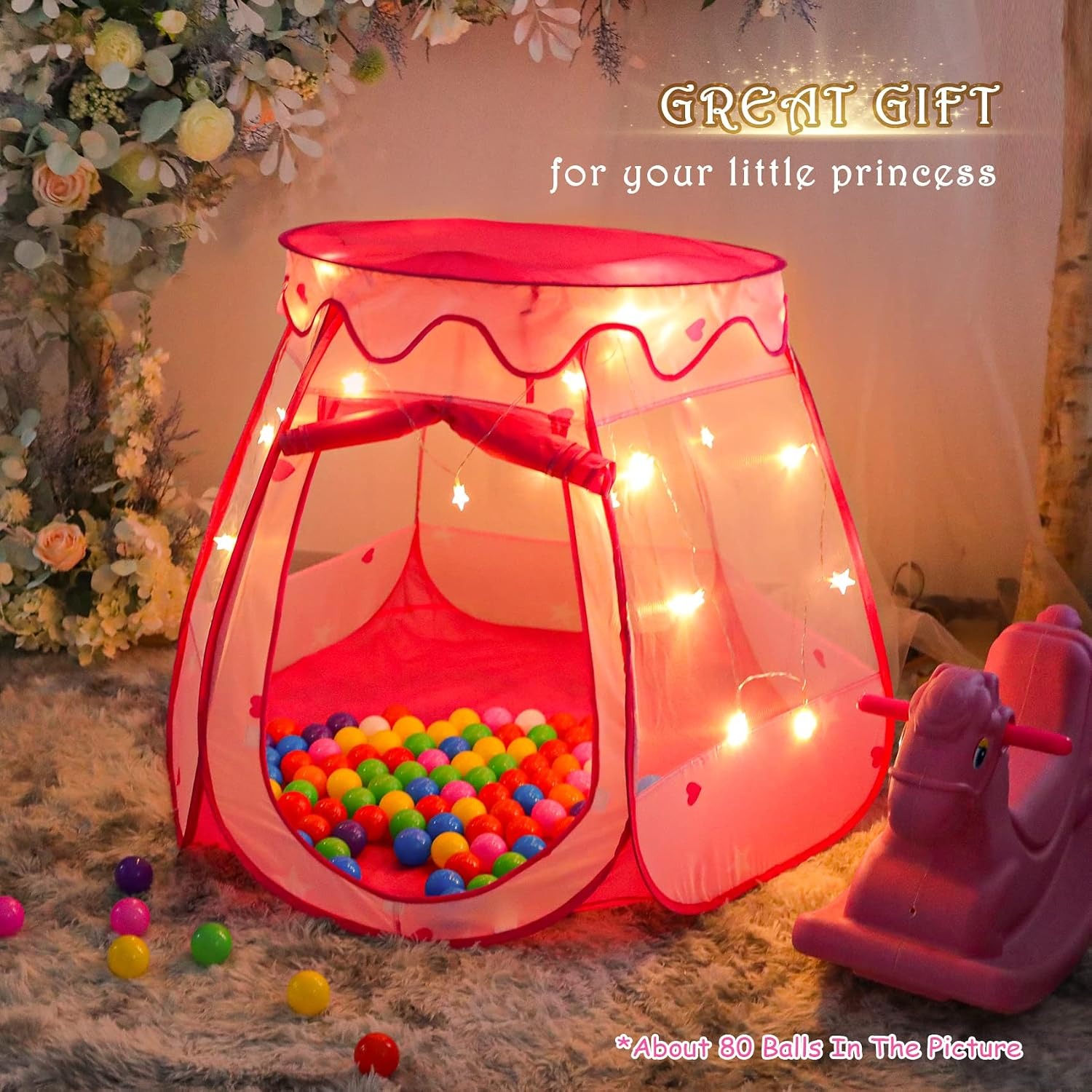
This set is built around that idea. The tent measures 124.5 cm across and 83.8 cm tall, it weighs about 1.14 kg, and it comes with 50 balls and a star light string so there is nothing else to source. It opens from a bag, and it goes back into the bag.
How a pop-up tent actually works
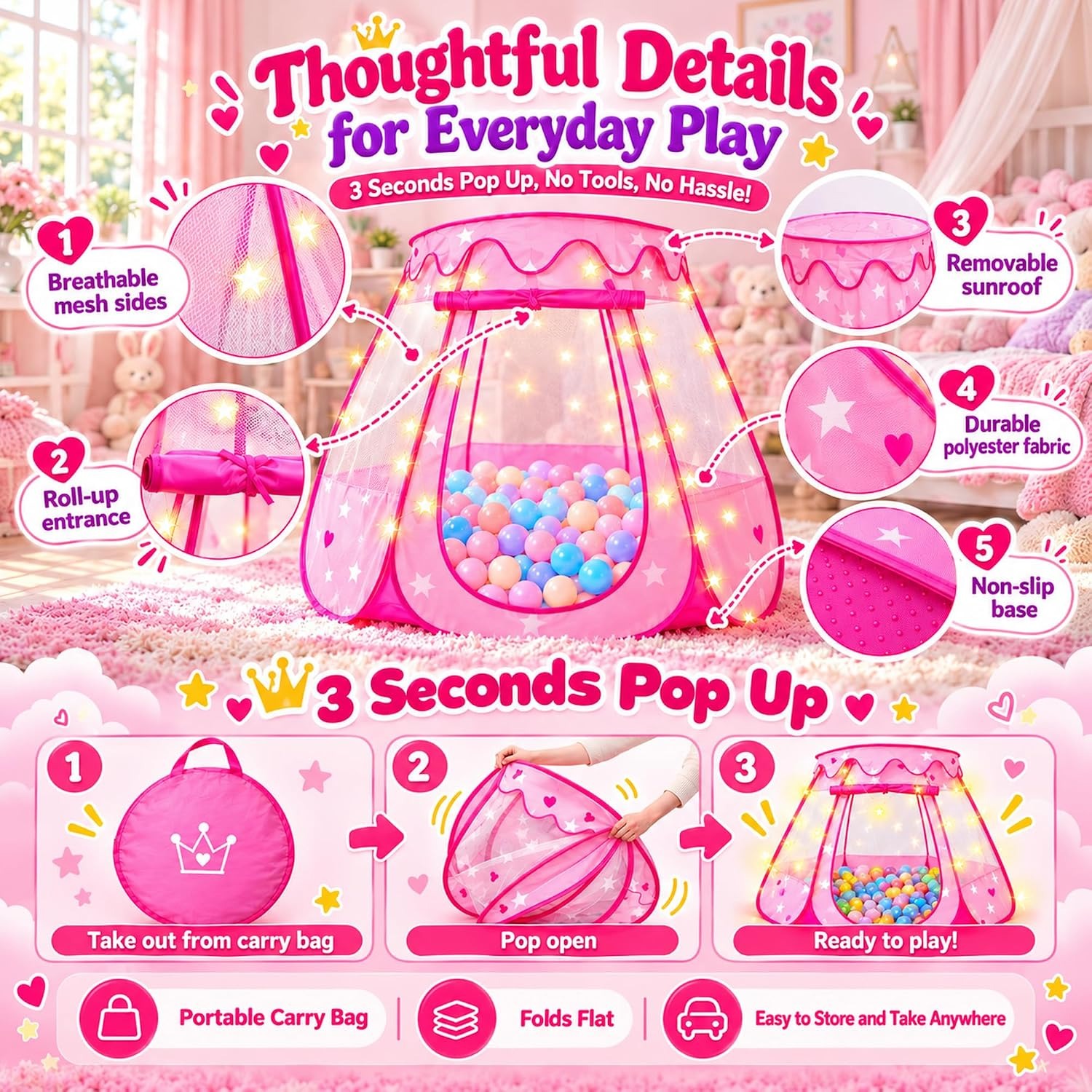
The frame is alloy steel, sewn into channels in the polyester shell and held under tension. Think of a car sunshade or a pop-up beach shelter. The metal wants to return to its hoop shape, so the moment you release it from the bag it springs into a full tent.
That is why the maker says no assembly is required. There is nothing to thread, clip or screw. You lift, you let go, and you guide it upright.
Folding down is the bit that takes a little learning. You twist the hoops against each other so they collapse into flat rings, then slide the whole thing into the carry bag. The first attempt is usually fumbly. By the third you will do it without thinking, and after that the tent can live in a cupboard between sessions.
Who it suits
The manufacturer recommends ages 3 years and up, and describes the age range as young child. That is the sweet spot. Children at that age are confident enough to crawl in and out on their own, and they are old enough to enjoy having a space with a doorway and walls.
Younger children can use it with an adult sitting close by. Small balls and decorative light strings always need supervision, so treat it as shared play rather than somewhere to leave a young child.
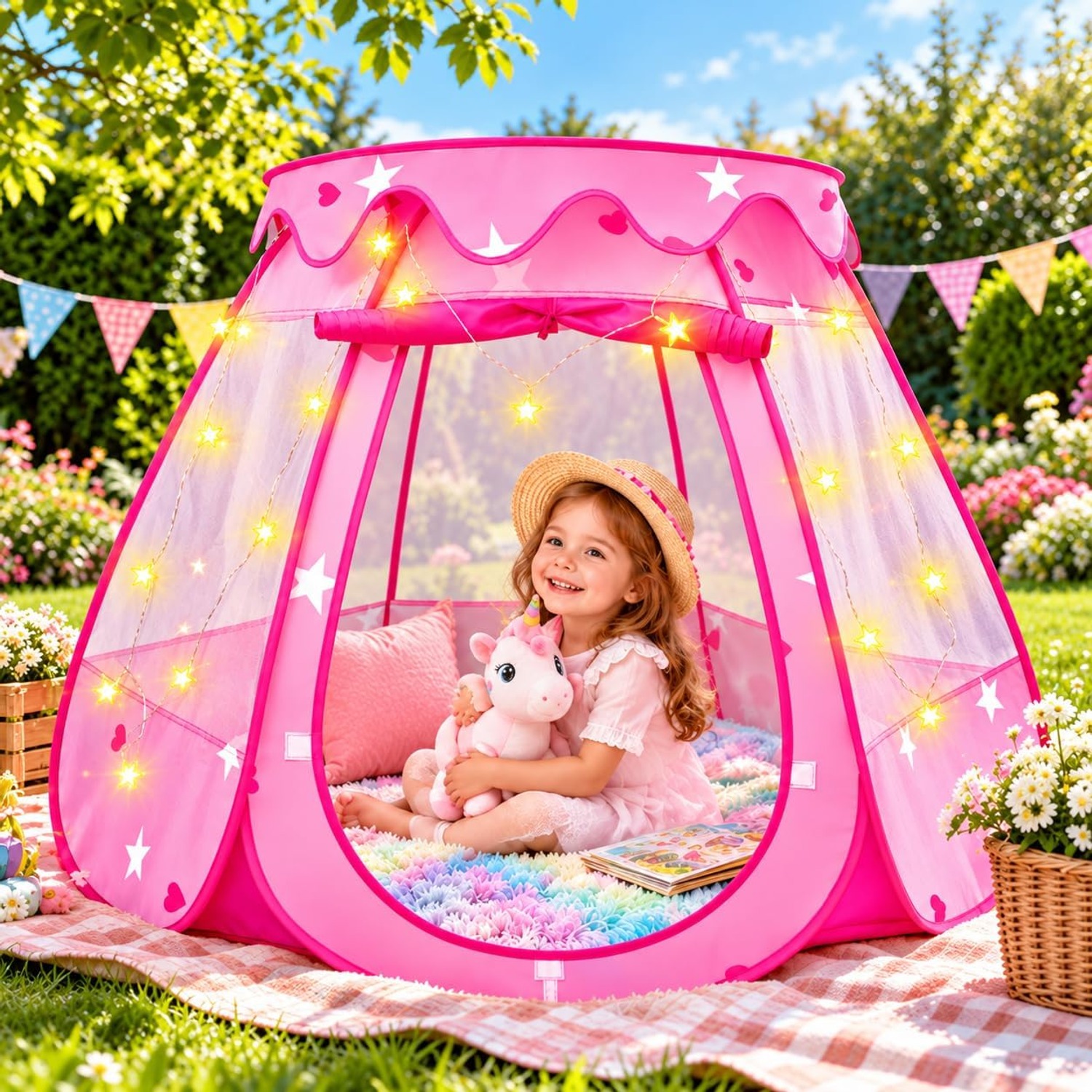
Older children often keep using it past the recommended age, just differently. By four or five the ball pit part tends to matter less and the den part matters more. Tip the balls into a tub, add a cushion and a torch, and the same tent becomes a reading corner. If you are hunting for the best indoor ball pit that will not be outgrown in six months, that double life is worth factoring in.
Working out whether it fits your space
The footprint is roughly a 125 cm square. Before you order, mark that out on the floor with a tape measure and look at it honestly. Can you leave that space clear, or will you be folding the tent away daily?
Both answers are fine. If you have a playroom or a spare corner, leave it up. If you live in an apartment, plan on it being a pop-up in the real sense, out for an hour and away again. The weight of just over a kilogram means that is no hardship.
Height matters less than width here. At 83.8 cm tall it sits well below most furniture lines, so it will not block a window or look like it has swallowed the room. A child can sit up comfortably inside, though adults will be crouching if they join in.
Think about flooring too. Carpet or a rug underneath makes play softer and keeps the tent from sliding. On tiles or boards, a folded blanket or foam mat does the same job and also stops balls rolling across the room every time someone climbs out.
The balls and the lights
Fifty balls sounds like a lot until they are spread across a 125 cm floor. Expect a shallow single layer, which is exactly right for young children who want to scoop, tip and fill containers. It is not a deep pit you sink into, and for small children that is safer anyway.
If you want more depth, standard play balls from any toy supplier will mix in. A second bag gives a noticeably fuller pit. Keep it shallow enough that your child can stand up easily and you can see their feet.
The star lights are the detail children remember. Switched on in a dim room, they turn the inside into a soft den, which helps at the end of the day when you want play to settle rather than build. They clip inside the canopy and lift straight out when you want the tent plain, or when you would rather not leave a light string within reach of a child who likes pulling things.
The maker does not state the power source for the lights, so check the packaging when it arrives and keep spare batteries on hand if that is what they take.
Keeping an eye on things
Mesh panels around the sides are a quiet but useful feature. Fabric tents that are fully closed leave you guessing, and small children get surprisingly quiet when they are about to do something interesting. Mesh lets you glance over from the kitchen and see what is going on.
The mesh also moves air through, which matters more than people expect. A sealed fabric box warms up fast with a child inside it. Ventilation keeps the space comfortable for longer play, and it helps the tent dry out if anything gets spilled.
The supplier describes a detachable roof on this style, so you can open the top up when you want more airflow or close it in for a cosier feel.
Care that keeps it looking decent
Polyester is forgiving, which is the main reason it is used for gear like this. Wipe it with a damp cloth and a little mild soap, then let it air dry fully before folding. Do not put it in a washing machine or a dryer, and skip bleach.
The balls are easy. Warm soapy water, a rinse, and a proper dry before they go back in. A mesh laundry bag makes a batch quicker to handle. While you are at it, check for cracked balls and bin any that have split.
Take the light string out before cleaning and wipe it with a dry cloth only. Store the whole set in its carry bag somewhere dry. Long spells in direct sun will fade the fabric, so the cupboard is kinder than the window.
The short version
This is a complete play set rather than a tent you have to finish buying. Fifty balls, a star light string and a frame that pops open on its own, all in a bag that weighs a bit over a kilogram.
It suits children from around three up, it fits a 125 cm square of floor, and it folds away when that floor is needed for something else. The mesh panels let you watch without hovering, and the polyester wipes clean when something inevitably gets spilled.
Measure your space, decide whether it is staying up or going away daily, and the rest takes care of itself.