

The complete guide
Choosing a Play Tent with Tunnel and Ball Pit, A Parent's Buying Guide
The problem with wet afternoons
Every parent knows the stretch between lunch and dinner when the weather turns and the house suddenly feels small. The children have gone through their toys, the television has lost its charm, and the energy has nowhere to go. That is the gap a play tent with tunnel and ball pit fills. It turns floor space into something to crawl through rather than sit on.
What makes a tunnel set different from an ordinary tent is the movement. A single tent is somewhere to sit. Add a tunnel and two ends, and you have given children a loop. They crawl, pop out, run around, crawl back. The physical play happens almost by accident while they are busy pretending the tunnel is a cave, a train or a secret passage.
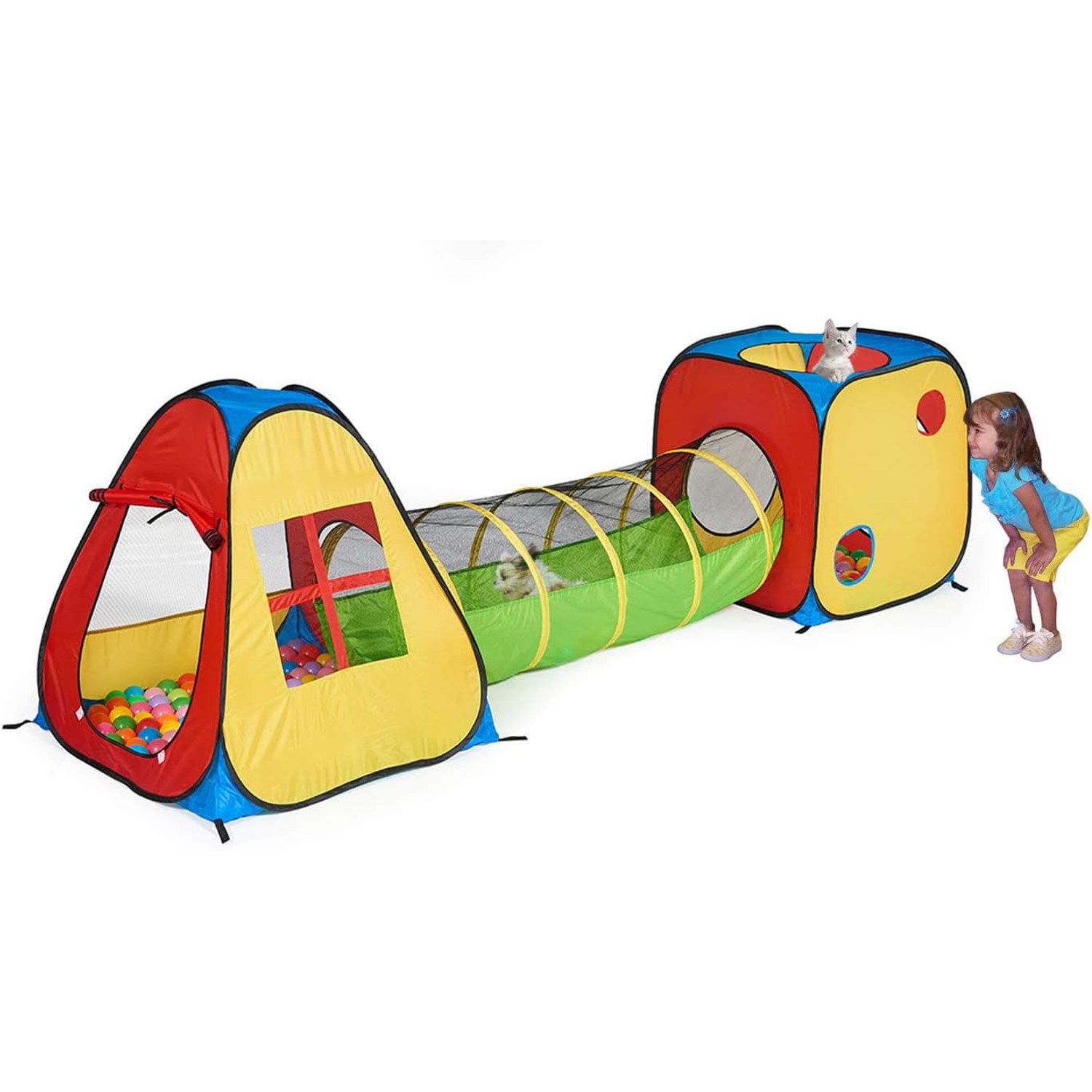
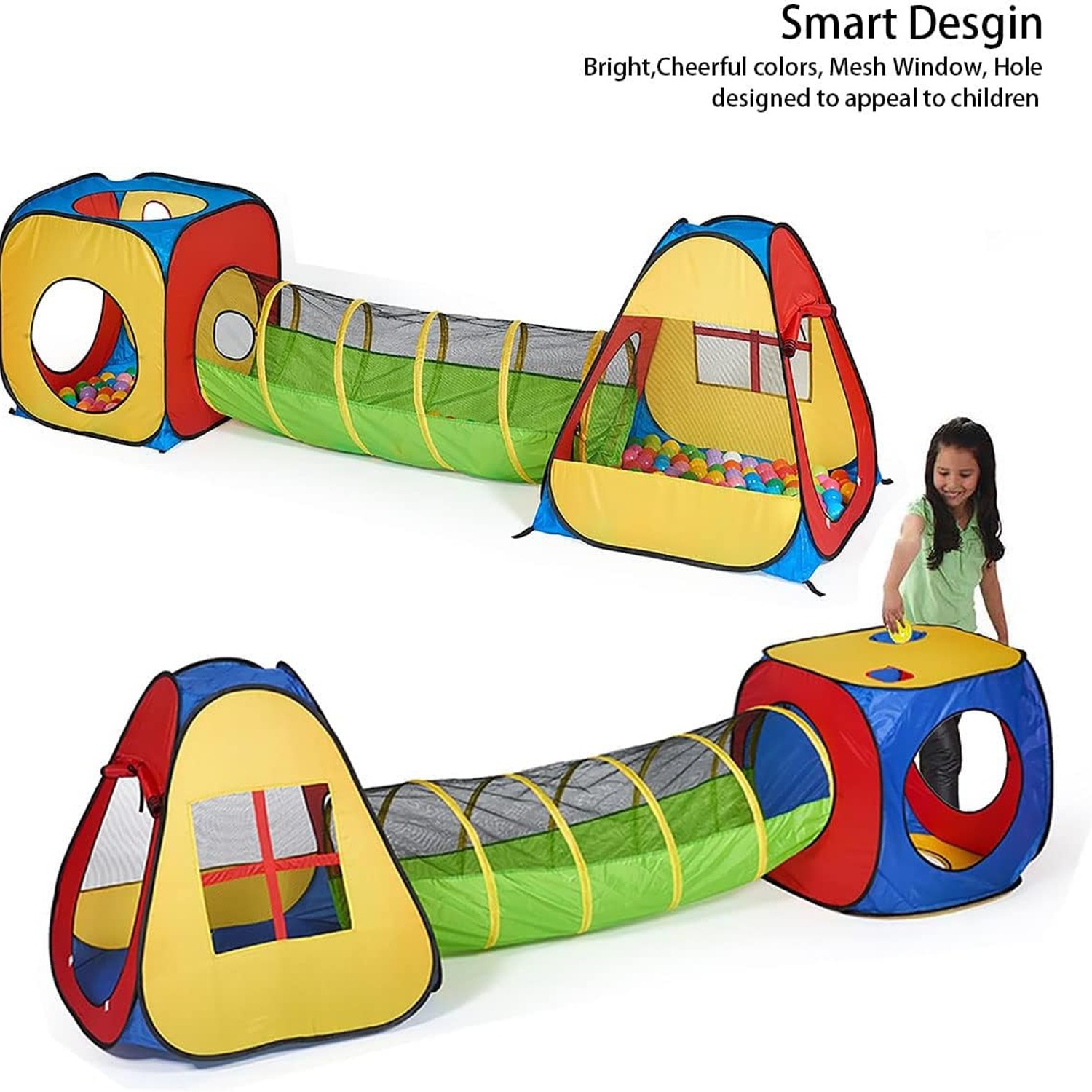
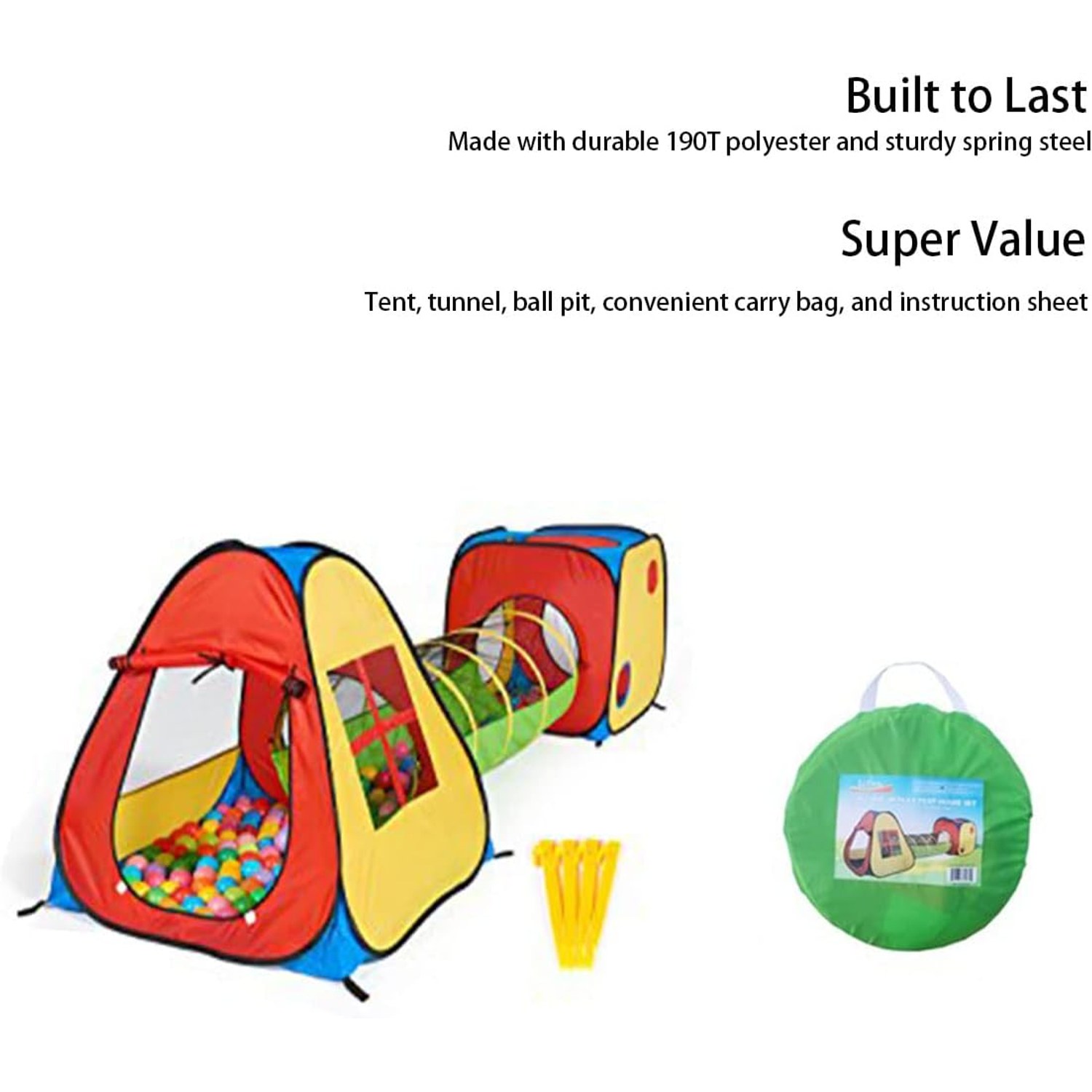
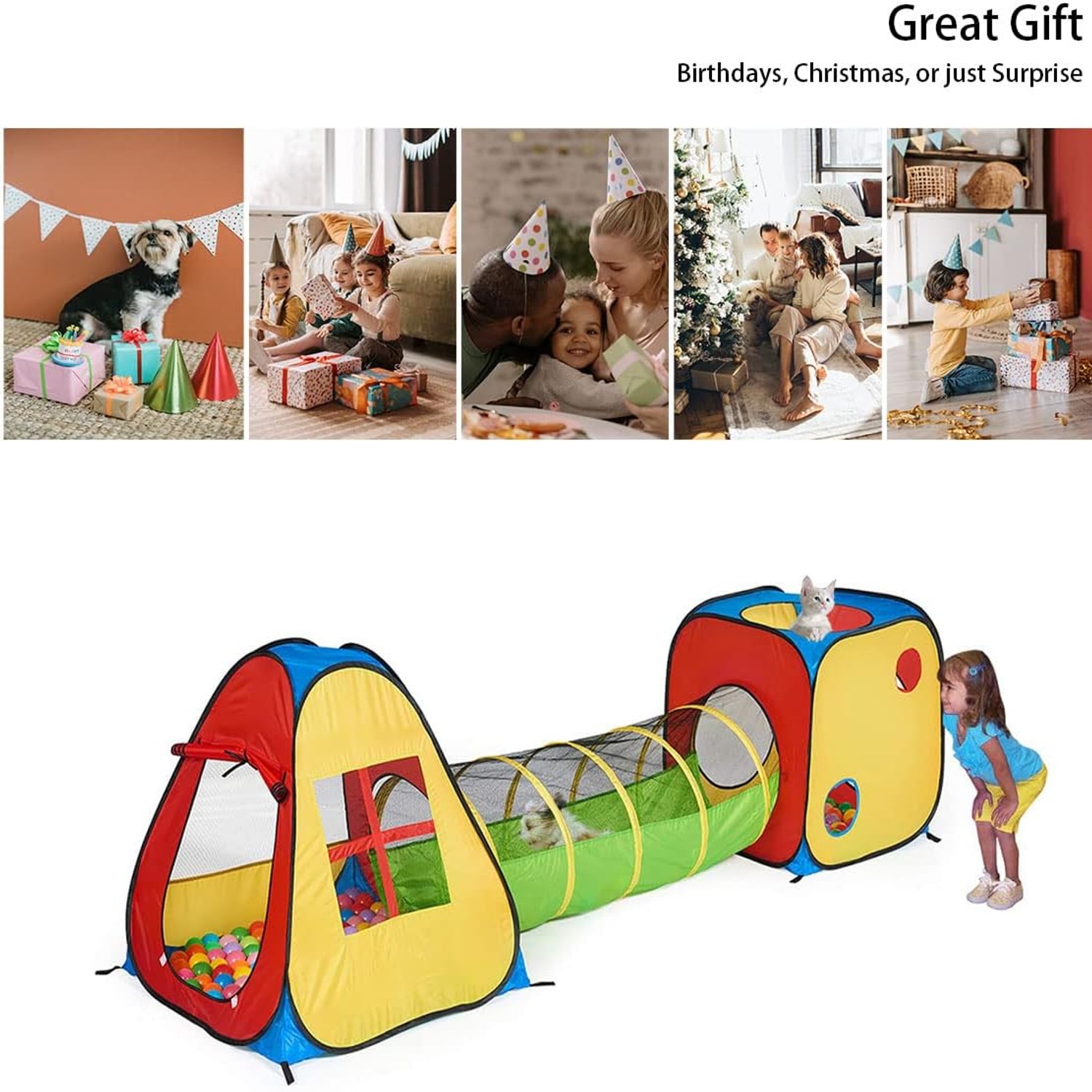
This particular set is three pieces, a teepee tent, a square tent and a long crawl tunnel that links them. The panels are polyester and the frame is alloy steel, the standard combination for pop-up kids' gear because it stays light and springs back into shape. The whole thing weighs 1.36 kg.
How a pop-up tunnel set actually works
The frame is a loop of thin steel sewn into fabric channels. Under tension it wants to be open, which is why the pieces spring into shape when you take them out of the bag. There is nothing to screw together, which the maker confirms as tool free assembly. You still need to connect the tunnel to the tent openings, and that is where the word "assembly" on the specification comes from.
Folding it back down is the part that catches people out the first time. Pop-up frames do not collapse, they twist. You hold two sides, bring them together and let the loop fold over itself into a smaller circle. Watch the instruction sheet once and it becomes muscle memory. Forcing it flat instead of twisting is the main way these frames get bent.
The mesh windows do two jobs. They move air, which matters when two children are inside a fabric box on a warm day, and they let you see in. There are also small openings on the square tent and along the tunnel. Children find uses for those almost immediately, usually involving posting a soft toy through and shouting about it.
Who it suits
The recommended age in the maker's details is 36 months and up. That lines up with the sweet spot for this kind of toy. A three-year-old has the coordination to crawl a tunnel without getting stuck and the imagination to make the teepee into a shop, a den or a spaceship.
Younger children often love a young child play tunnel too, but they need closer supervision, especially at the tunnel ends where a crawling child can be out of sight for a moment. Older children, say six and up, tend to use it differently. The tunnel gets less use and the tents become reading corners or hiding places during games.
It also works well where more than one child is involved. Two or three small children can share the layout, with the tunnel giving them a natural reason to take turns. That makes it a reasonable choice for playgroups, birthday parties and family gatherings where cousins need somewhere to channel their energy.
Matching the set to your space
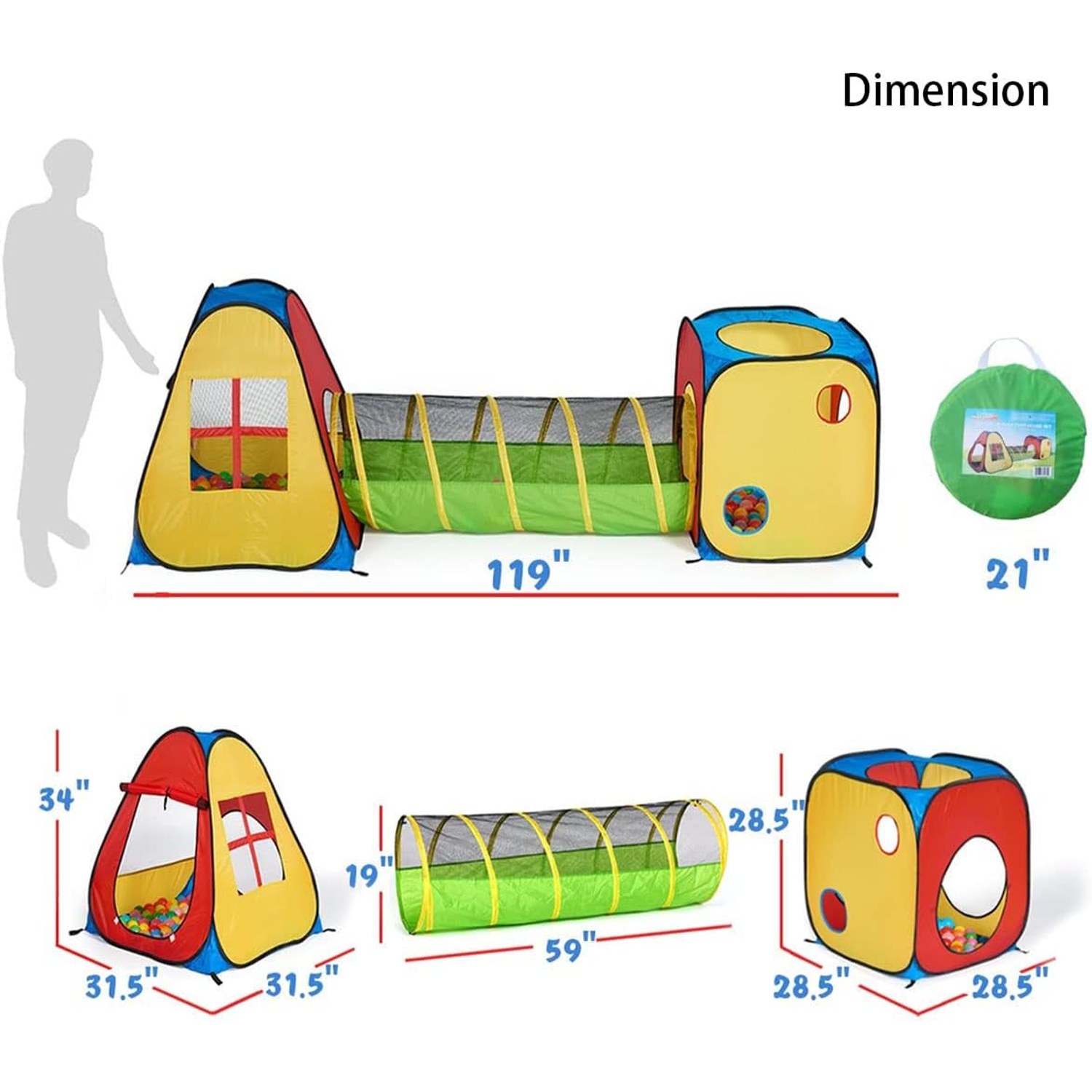
The listed size is 59 x 27 x 28 inches, with the full connected layout coming out at around 3.02 metres wide. That is the figure to check against your floor. Three metres is comfortable in a lounge, a playroom or a hallway. It is tight in a small bedroom.
The good news is that you do not have to use all three pieces at once. Plenty of families set the teepee up in a bedroom corner as a permanent reading nook and keep the tunnel folded until the weekend. Splitting the set is one of the quiet advantages of a 3 in 1 play tent set over a single large structure.
Outdoors you want a flat patch of lawn, clear of sticks and stones that could press into the fabric from below. Avoid slopes, since a light pop-up structure will not stay put on a hill with children bouncing around inside it. Shade is worth seeking out too. A fabric tent in full sun heats up fast and nobody wants to crawl into a warm box.
What to look for when comparing tunnel sets
A few things separate a set you will still be using next year from one that gets binned by autumn.
Frame quality comes first. Alloy steel, as used here, holds its shape better than thin plastic rod. Then check the stitching around the openings, because that is where the stress goes when children pile through.
Ventilation is the second thing. Mesh panels are not a luxury on a kids' tent, they are what makes it tolerable to be inside for more than ten minutes.
The third is packability. A set that folds into a zippered bag will be taken out and used more often than one that lives in a corner half-collapsed. Weight ties into this. At 1.36 kg, this one can be carried in one hand along with everything else you are already carrying.
Colour is personal, but bright is usually right for this age group. Red, blue and yellow reads as a toy from across the room, which is part of why children gravitate to it.
Making it last
The care routine is short. Wipe the fabric with a damp cloth and a little mild soap, then let it air dry all the way through before you fold it. Damp fabric folded into a bag will smell musty within days.
Keep it out of the washing machine. The steel frame is sewn into the structure and a wash cycle will bend it. Avoid bleach, tumble drying and ironing for the same reason, and skip harsh cleaners that can strip colour from polyester.
Sun is the slow enemy. Leaving a fabric tent outdoors for weeks will fade the panels and weaken the threads. Treat it as something you bring out and put away rather than garden furniture.
Give the frame a quick look over every so often, especially after a boisterous session. If a section feels loose or starts poking at the fabric, take the set out of use until you have checked it properly.
Setting up for the best play
A couple of small decisions make a big difference to how much it gets used.
Put the tunnel where it has a run, along a hallway or down the length of a room, rather than curled into a corner. Children want the sense of going somewhere.
Keep the openings clear of furniture corners and radiators. If you are adding pit balls, a contained corner stops them travelling under the sofa within the first five minutes.
And leave it up for a day or two rather than packing it away after every session. Children come back to a space repeatedly if it is still there, and the games get more elaborate each time.
The short version
This is a three-piece set, a teepee, a square tent and a crawl tunnel, in polyester over an alloy steel frame. It pops up without tools, weighs 1.36 kg, stretches to about three metres fully connected, and folds into its own zippered bag. Recommended from 36 months.
It suits families who want something that goes up fast, gets children moving and disappears again when the room needs to be a room. Check your floor space against the three-metre figure, plan to add pit balls separately if you want a filled pit, and store it dry. Do that and a kids pop up tunnel will keep earning its keep through a lot of wet afternoons.