
The complete guide
How to Choose a Playhouse Tent That Actually Gets Used
The problem with most play tents
Buy a cheap play tent and you usually find out the same thing within a fortnight. A child leans against a wall, the whole shape caves in, and the thing ends up folded behind a wardrobe. Wire-sprung pop-ups are the usual offender. They go up in a second, which is genuinely useful, but they have no real structure. The fabric is the structure, and fabric gives way.
The second problem is visual. A lot of play tents are printed in bright primary colours with cartoon characters on every panel. That is fine in a dedicated playroom. It is a harder sell in a living room where adults also sit, and it is often why a tent gets banished to a bedroom nobody uses.
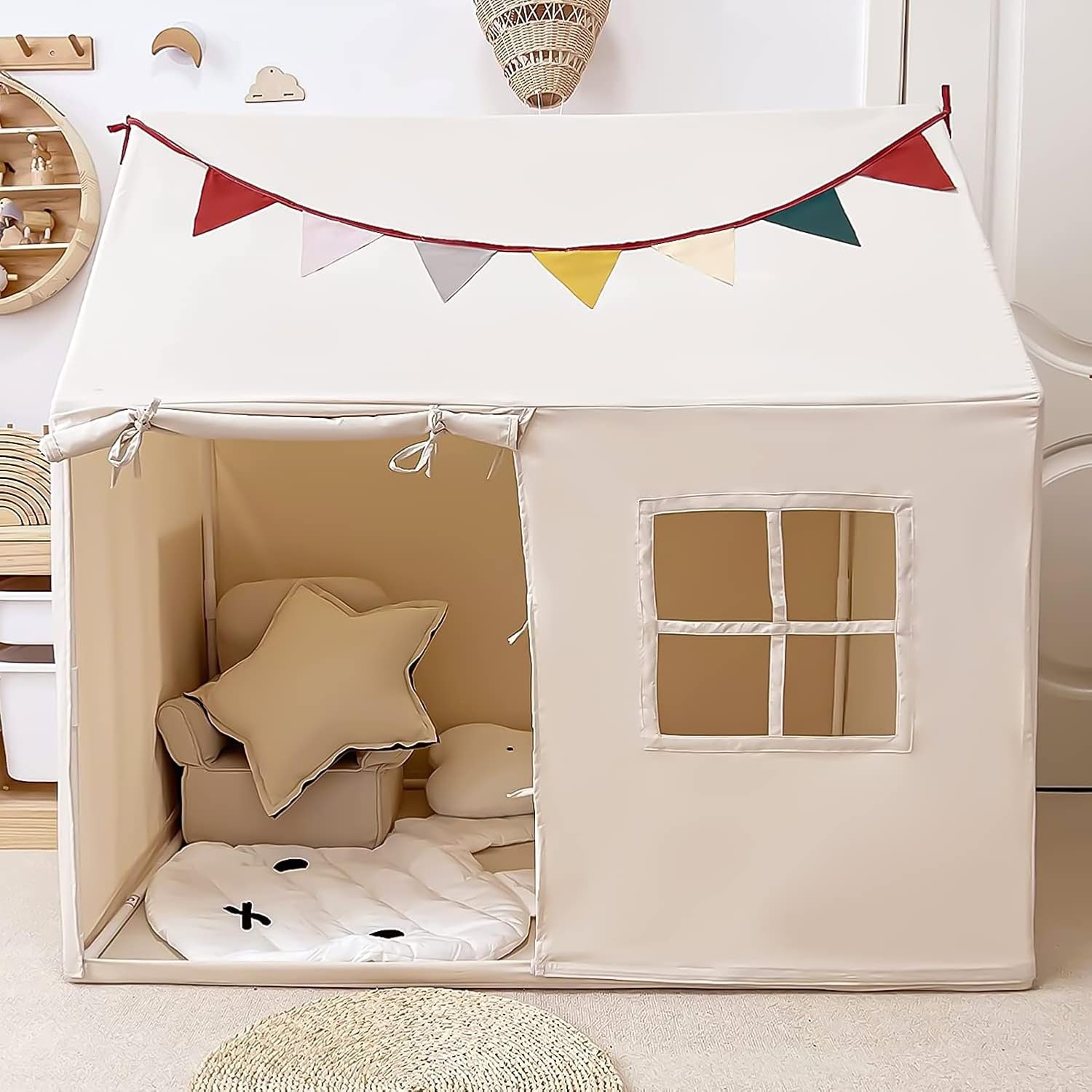
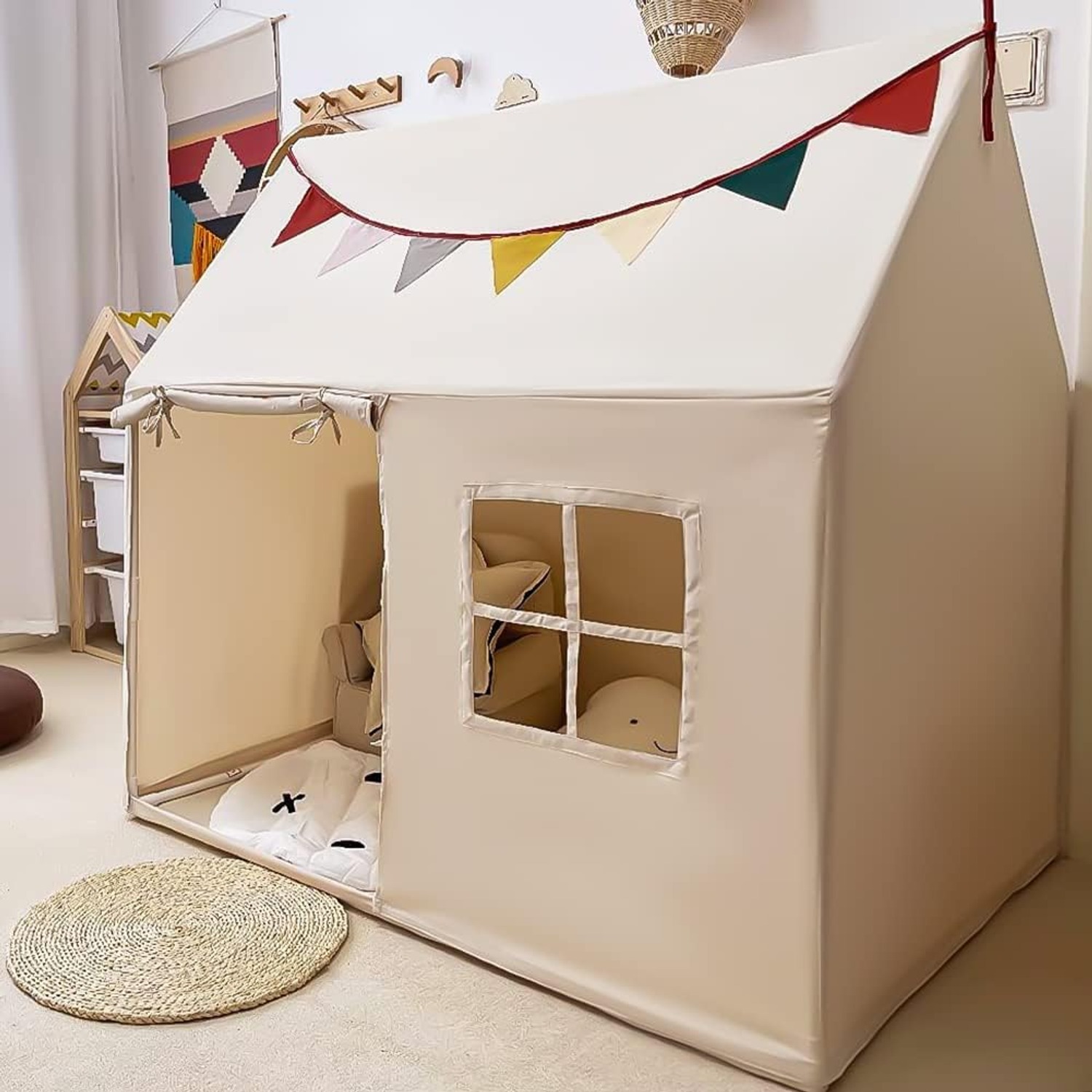
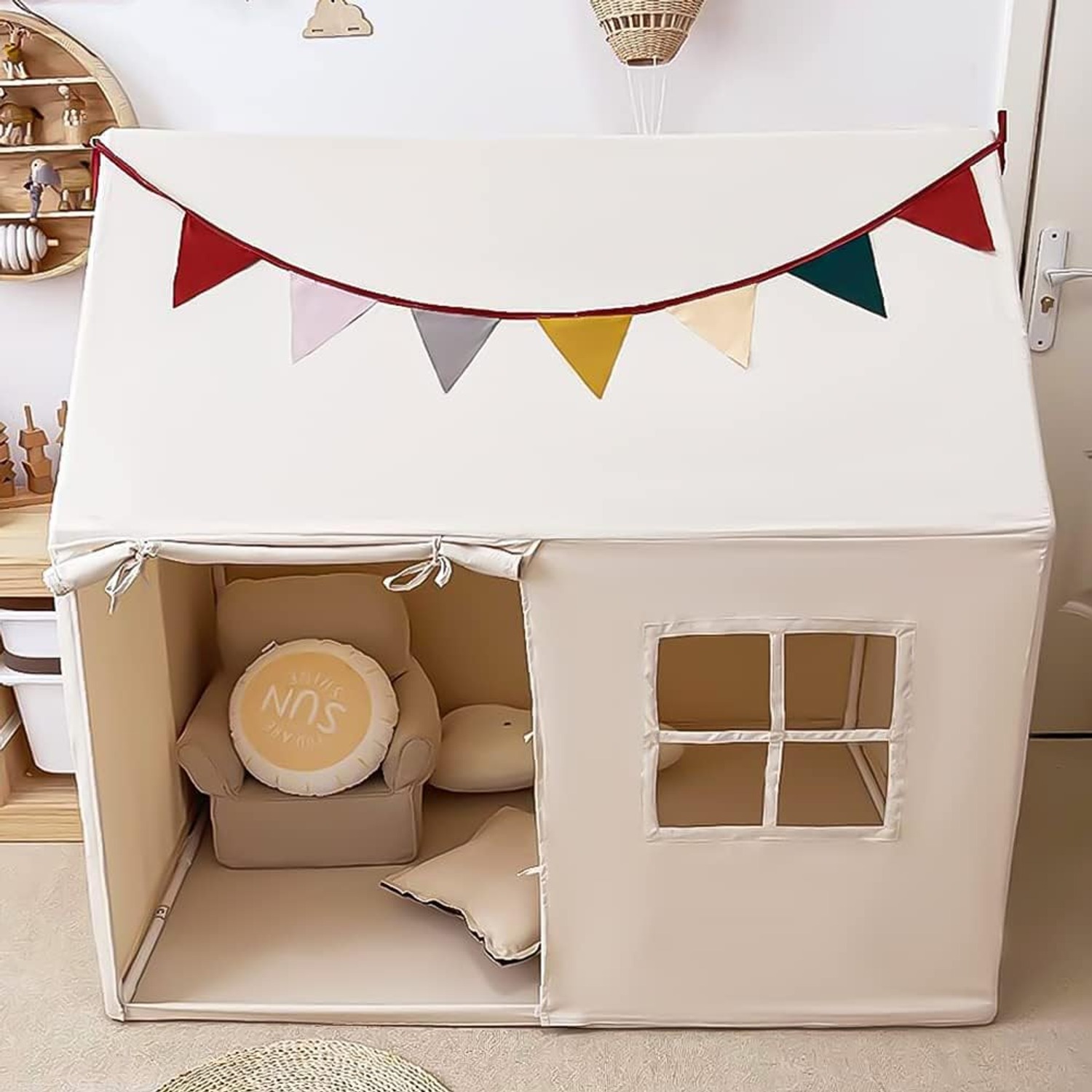
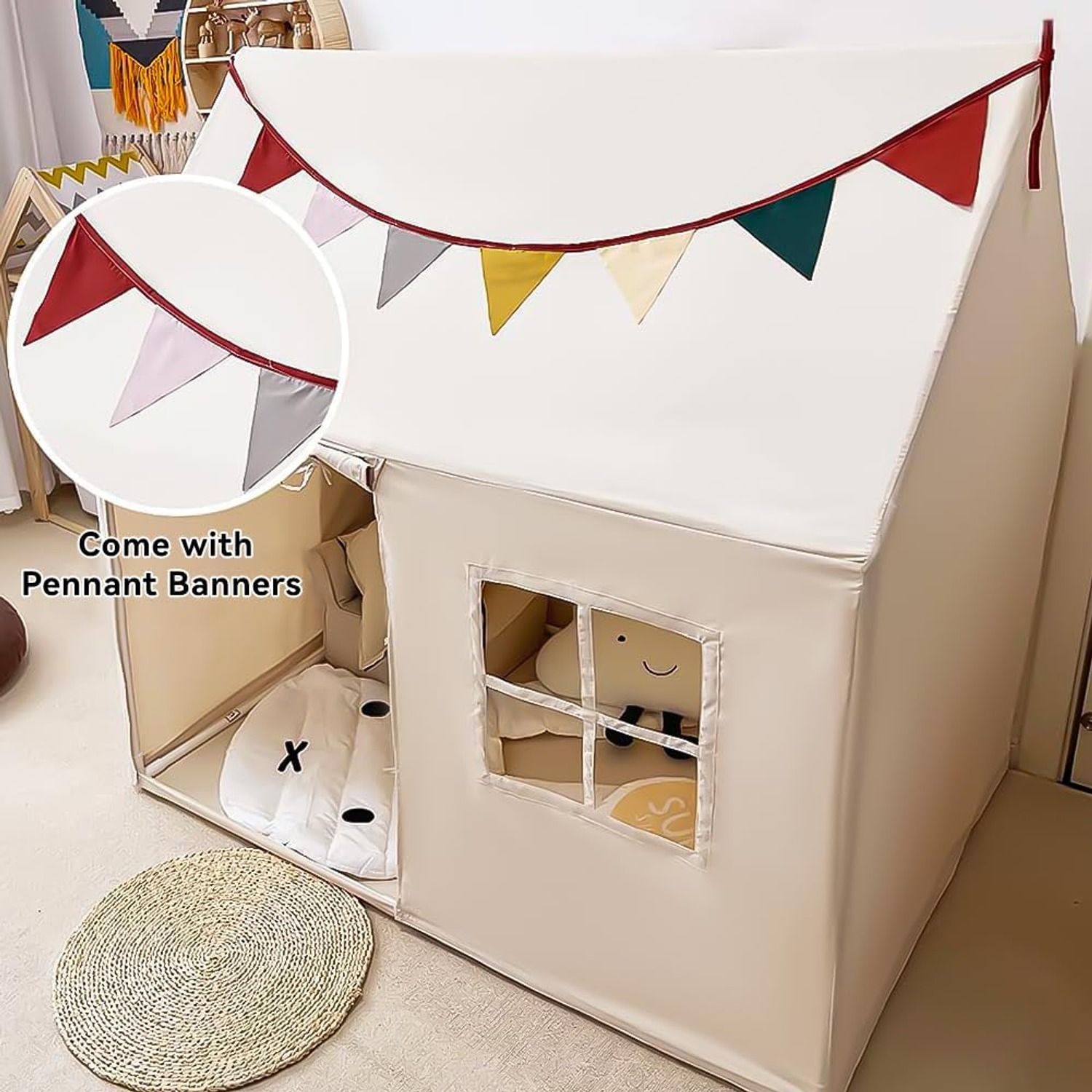
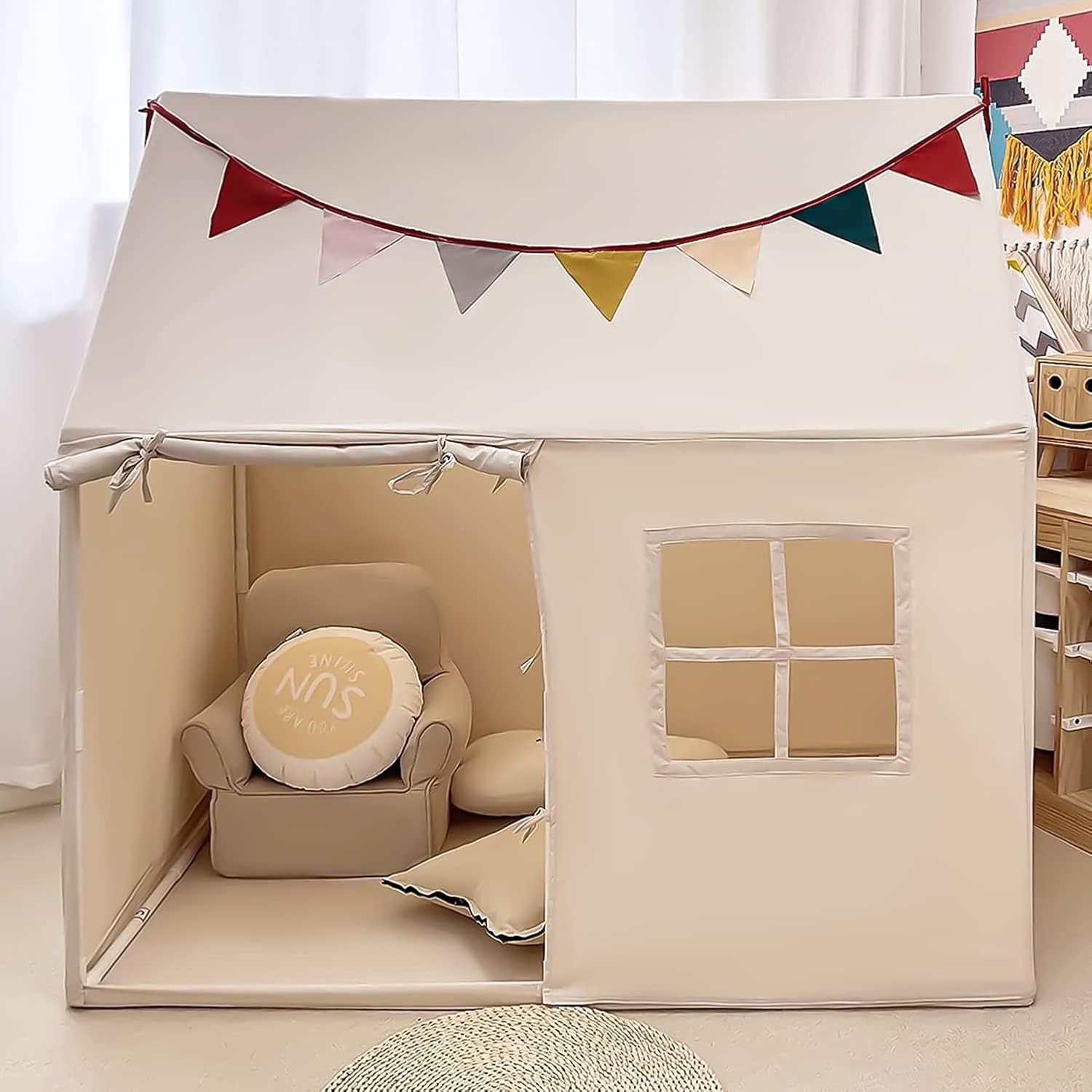
A framed playhouse tent like this one solves both. The aluminium frame means the walls hold their shape when someone leans on them, and the light beige cover with a star theme and pennant banners reads as a piece of soft furnishing rather than a toy. That combination is what makes a tent get used daily rather than once.
How a framed playhouse tent works
The build is simple. Aluminium poles slot together into a house shape with an apex roof and four walls. A cotton polyester cover goes over the top and is secured in place, with a doorway left open at the front. The pennant banners hang as a trim across the top edge.
Because the poles carry the load, the fabric only has to cover. That is a different job to a pop-up, where the fabric is under constant tension and has to hold the whole thing upright. It means less stress on the seams, less sagging, and a shape that stays square after months of use.
The trade-off is that assembly is required. You cannot shake this out of a bag and have it standing. You do need to put the poles together, and the first time takes longer than you expect because you are learning which pole goes where. After that, taking it down and putting it back up is quick.
Weight is where aluminium pays off. The whole tent is listed at 6.54 pounds, or 2.97 kg. That is light enough to pick up fully assembled and move to another room, which is handy at Christmas when the living room needs clearing, or when you want it in the kitchen while you cook.
Who it suits
The manufacturer recommends it for twelve months and up, and the way it gets used changes a lot across that range.
Young children mostly like the in-and-out of it. The doorway is the main attraction, and the tent becomes a thing to crawl through rather than a thing to sit in. That is fine, and it is good physical play.
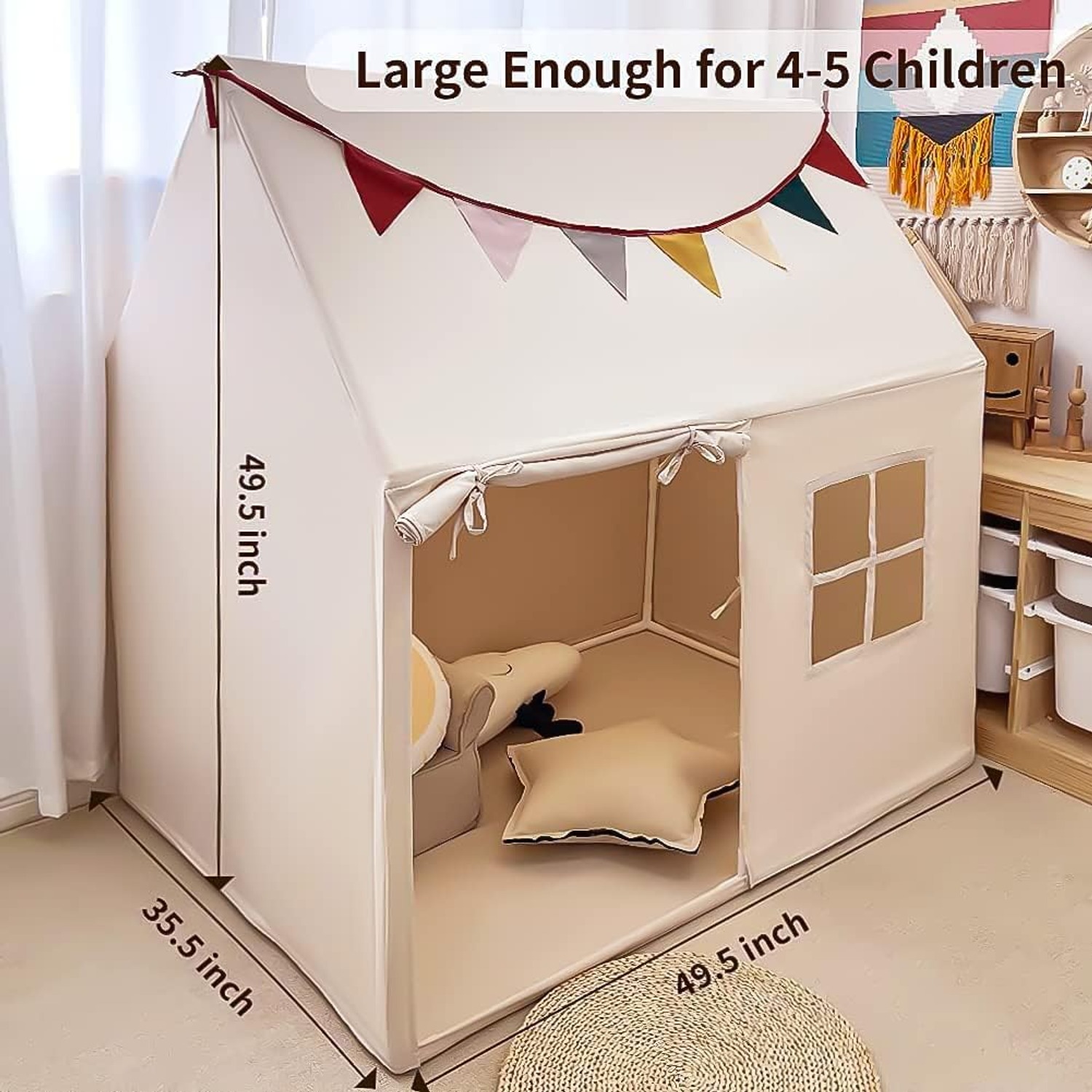
By three or four, children start using it as a place. It becomes a shop, a spaceship, a den where certain toys live and others are not allowed. This is the stage where the interior size matters most, and the listed 49.5 x 35.5 x 49.5 inches gives enough room for a child to sit with a tea set or a pile of blocks without everything being pushed out of the door.
Older children, say five to eight, tend to use it for quiet. It becomes a reading corner, a place to go when the house is loud, or somewhere to hide with a tablet. Parents hunting for the best quiet corner tent for a child who gets overwhelmed often land on something like this, because the solid walls make the inside feel genuinely separate from the room.
It also works well for siblings. The supplier describes room inside for four or five children, which in practice means two can share it comfortably with space for books and toys between them.
How to choose the right size and spot
Start with the floor, not the tent. Measure the corner you have in mind, then add a little clearance on each side. The listed footprint is roughly 125.7 cm by 90.2 cm. That is a real chunk of a small bedroom, so be honest about whether the space works before you order.
Height matters too. The apex sits at about 125.7 cm, which clears most low ceilings easily but might clash with a sloped attic ceiling or a shelf. Check what is above the spot you are planning.
Think about doorway direction. The open side should face into the room, not into a wall, and ideally away from a main walking route so nobody trips on a pole. Corners work best because two walls take some of the knocks.
Floor surface is worth a thought. Hard floors are fine but cold and loud. A rug, a folded quilt or foam tiles underneath make the inside far nicer to sit in and stop the frame sliding about. Most people add something within a week of setting it up.
Finally, think about who else uses the room. If this is going in a shared living space, the light beige and star theme is doing a lot of work for you. A neutral tent gets to stay in the nice room. A bright printed one usually gets moved.
Living with it day to day
The honest reality is that a play tent fills with stuff. Soft toys, blankets, half a jigsaw. That is not a failure, it is the tent doing its job as a container. Many parents use it deliberately as toy storage, which clears the main floor and makes tidy-up a single sweep rather than a sorting exercise.
Lights make a big difference. Battery fairy lights draped inside turn it into something children want to sit in after dark. Stick to battery or low voltage LED options, keep anything hot away from fabric, and make sure trailing cords are out of reach of smaller children.
Set some simple rules early. No climbing, no hanging off the frame, no pulling the cover. This is a lightweight structure, not furniture, and it will last far longer if children treat it as a house rather than a climbing frame. Most children accept that quickly once they understand the tent can break.
Care and storage
Care is straightforward. Spot clean the cotton polyester cover with a damp cloth and a little mild detergent, working on the mark rather than scrubbing at the whole panel. Let it dry completely in open air before you put it back on the frame. Damp fabric left bunched up will smell.
Machine washing is not something the supplier specifies in the maker's details, so we would not suggest it. A cut and fitted cover can shrink or distort, and then it no longer sits properly on the poles.
Wipe the aluminium poles with a dry cloth now and then. When you reassemble, check each joint has seated fully before you fit the cover. A pole that is only half pushed in is the usual cause of a wobbly tent.
For storage, take the frame apart rather than trying to squeeze the whole thing into a cupboard. Fold the cover loosely rather than creasing it hard along the same lines every time. Keep both somewhere dry.
The short version
This is a framed playhouse tent, not a pop-up, and that is the main thing to understand about it. The aluminium frame holds its shape, which means it survives being leaned on and lived in. At 2.97 kg it is light enough to move around the house, and the cover is cotton polyester in light beige with a star theme and hanging pennant banners.
The listed size is 49.5 x 35.5 x 49.5 inches, roughly 125.7 x 90.2 x 125.7 cm, with room for several children to sit inside. Assembly is required and the recommended age is twelve months and up.
What is not listed in the maker's details is the exact fabric blend, the country of origin and the packed carton size. We are not going to invent those. What we can tell you is that measuring your corner first and adding a rug underneath are the two things that make the difference between a tent that gets used every day and one that ends up folded away.