
The complete guide
How to Choose a Pop Up Tent and Tunnel Set for Kids
The problem with most indoor toys
Ask any parent what happens on the fourth rainy day in a row and you get the same answer. The toys that were exciting on Monday are ignored by Thursday. Kids get restless, the house gets loud, and nobody has anywhere to go.
Part of the reason is that most toys only do one thing. A puzzle is a puzzle. A truck is a truck. What children actually want, especially between three and seven, is space they can change. Somewhere they can crawl into, close off, shout from, and rebuild when the story changes. That is the gap a pop up tent and tunnel set fills, and it is why these sets stay in rotation long after a single toy has been shoved under the sofa.
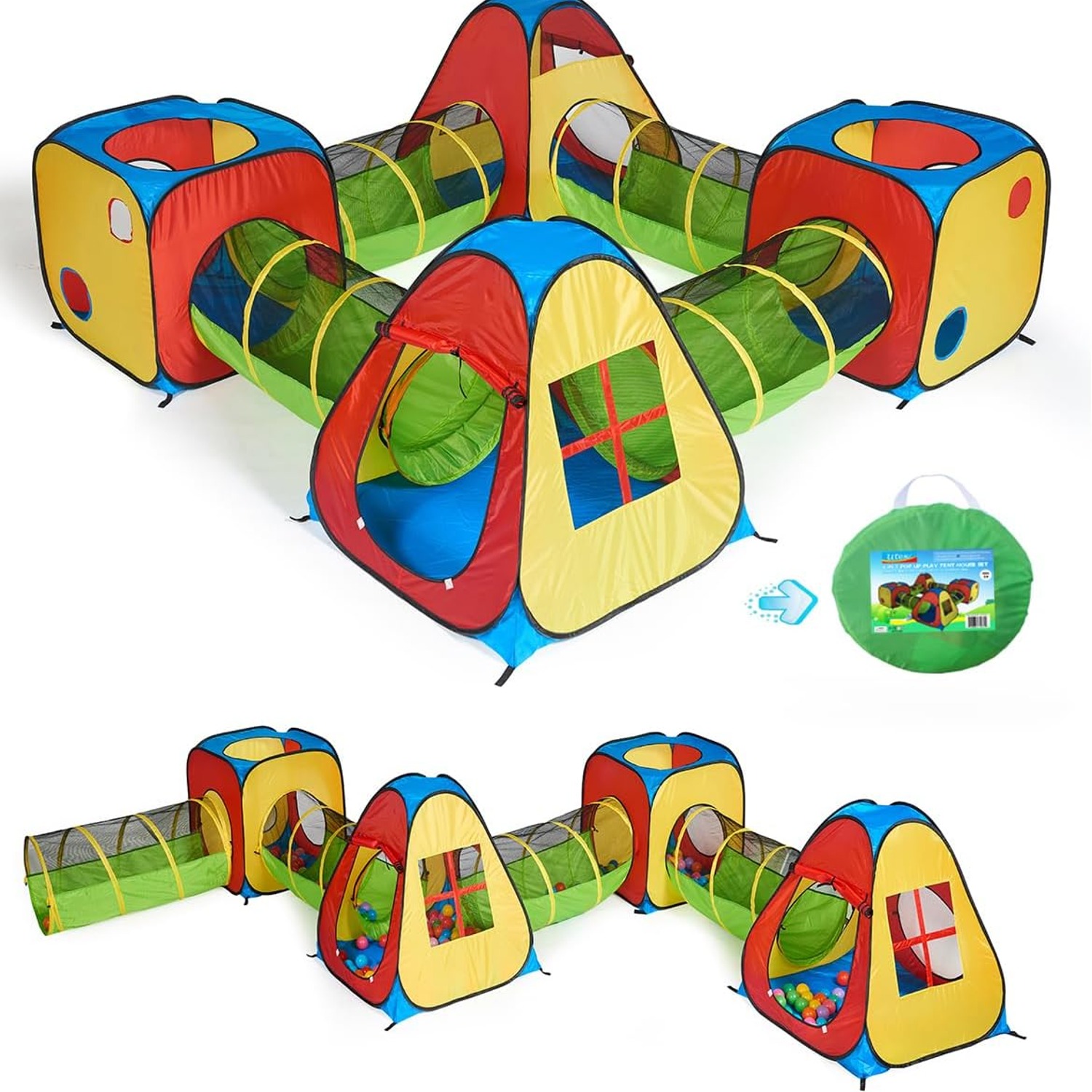
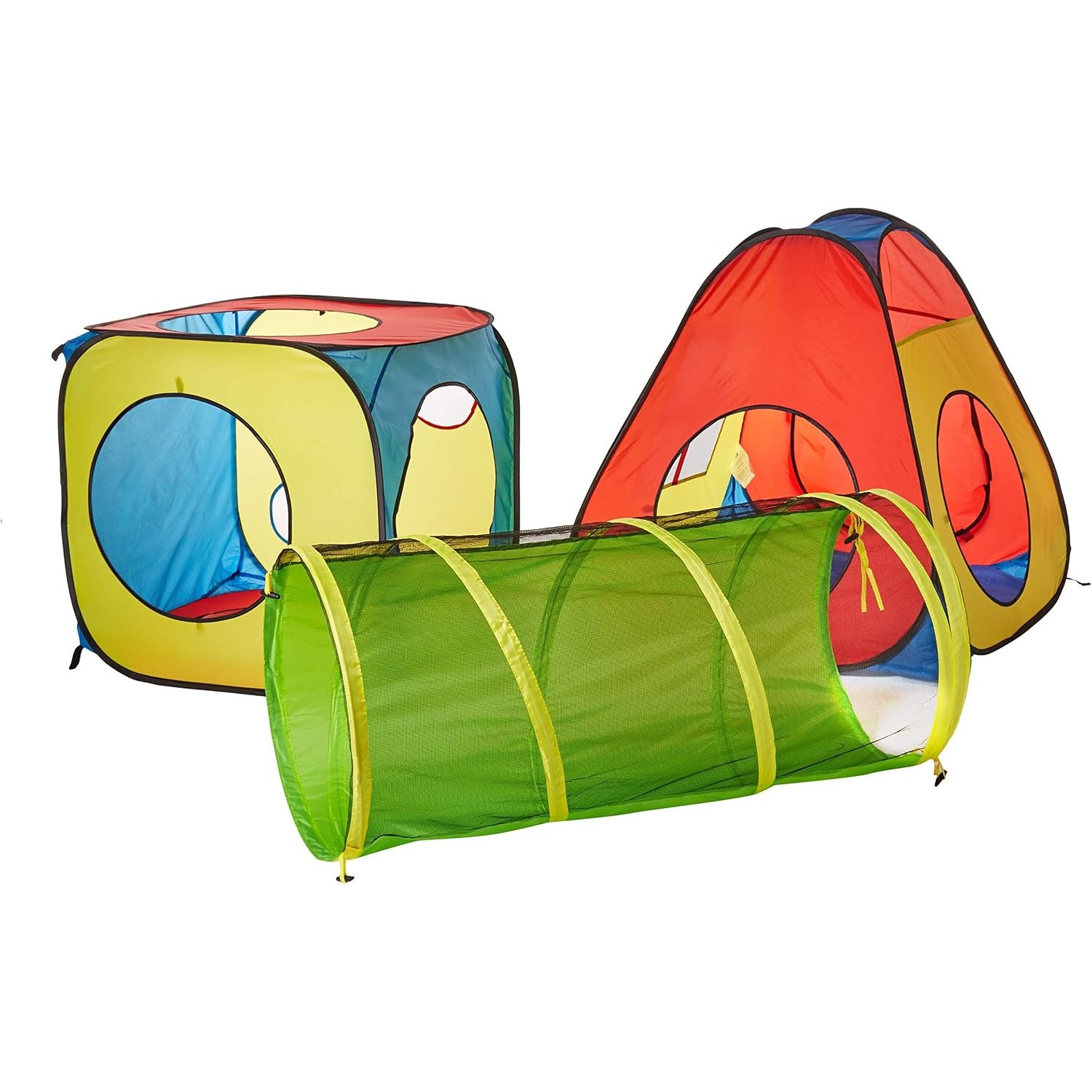
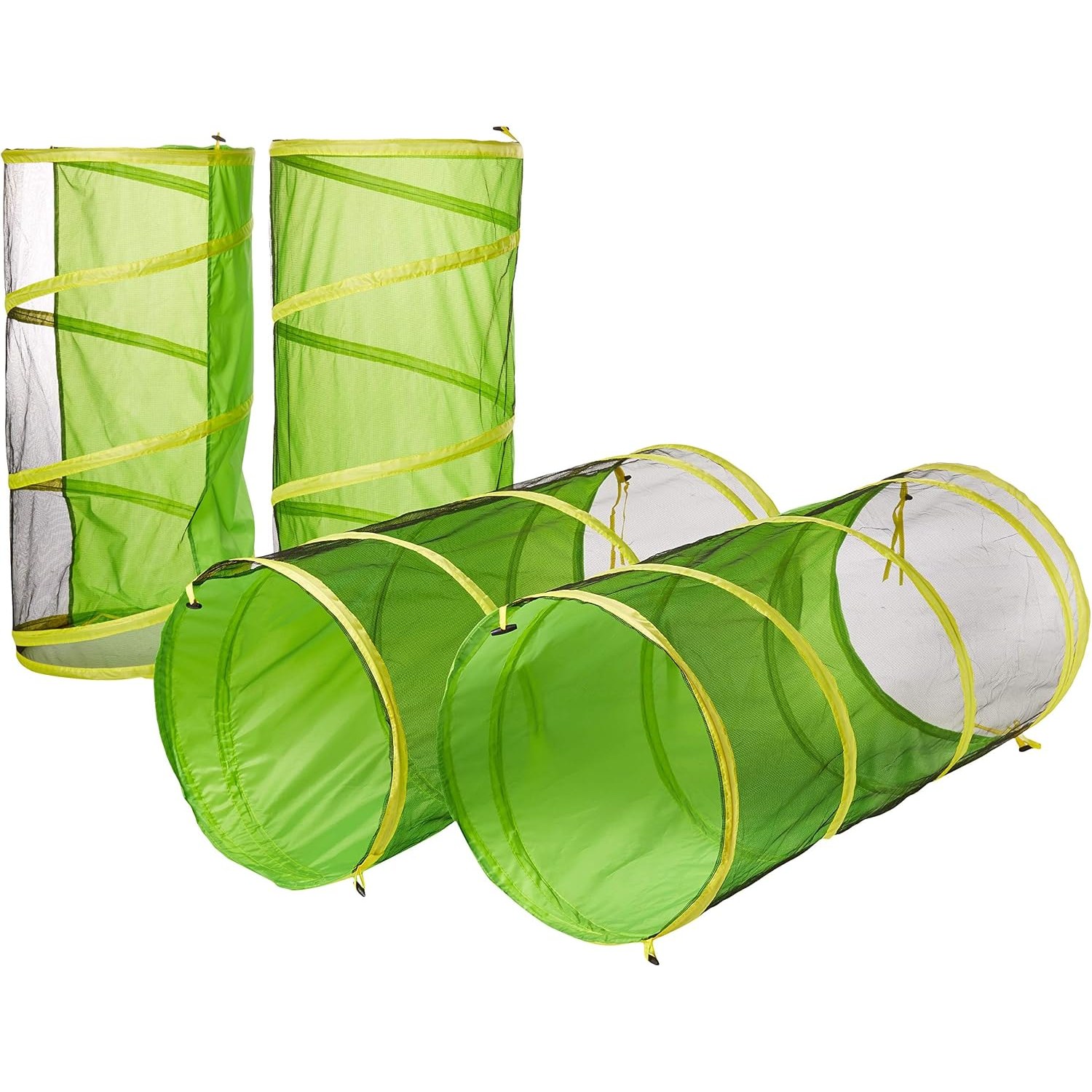
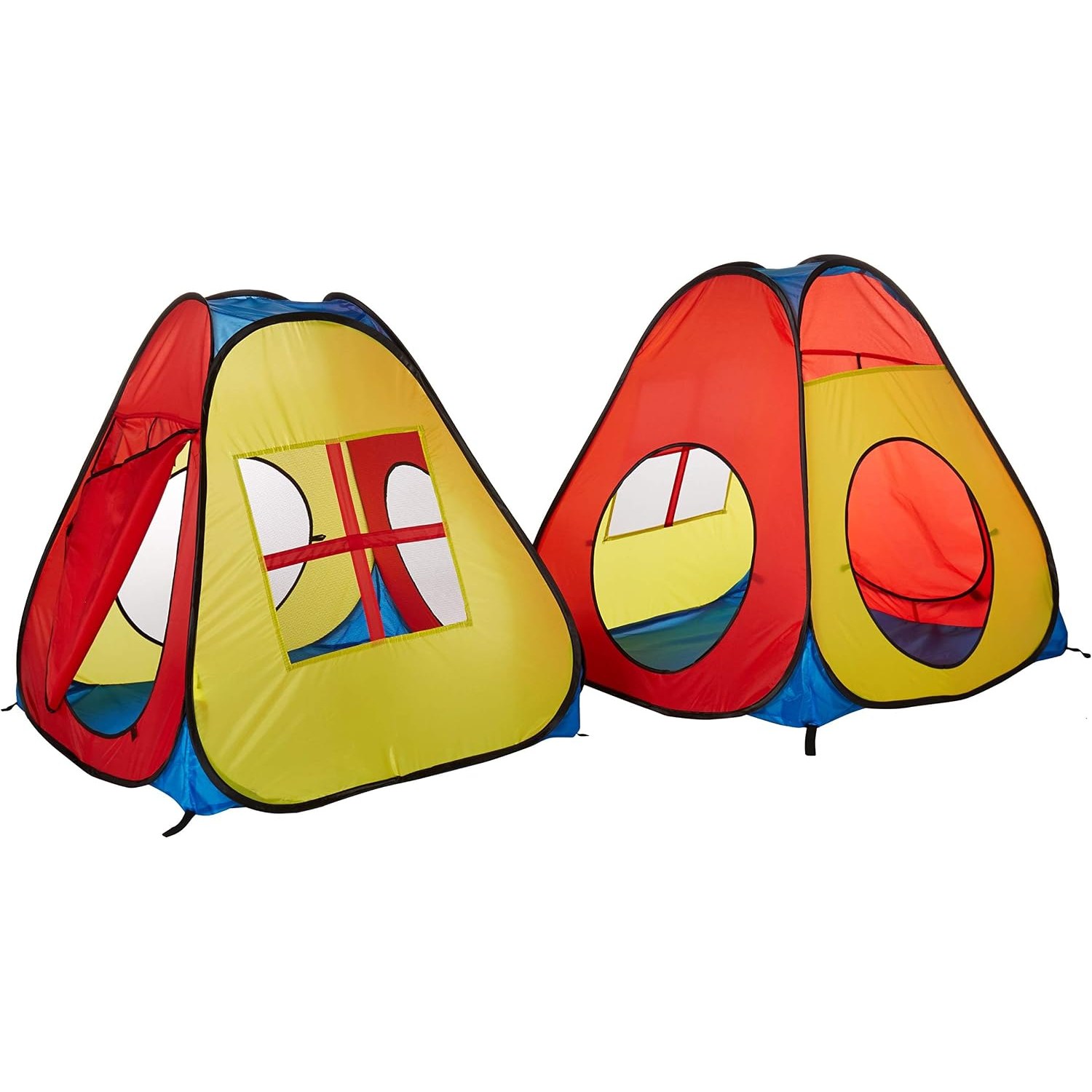
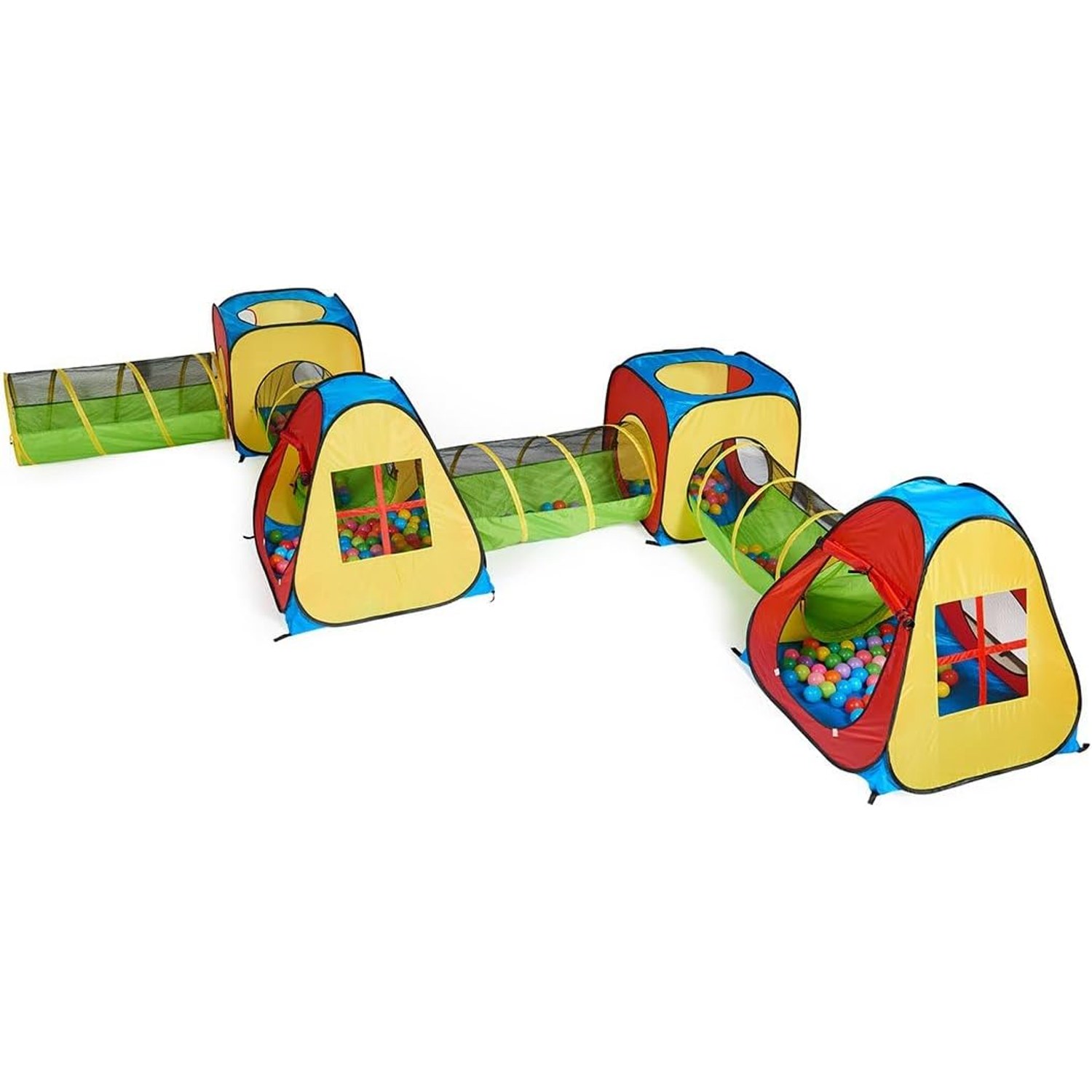
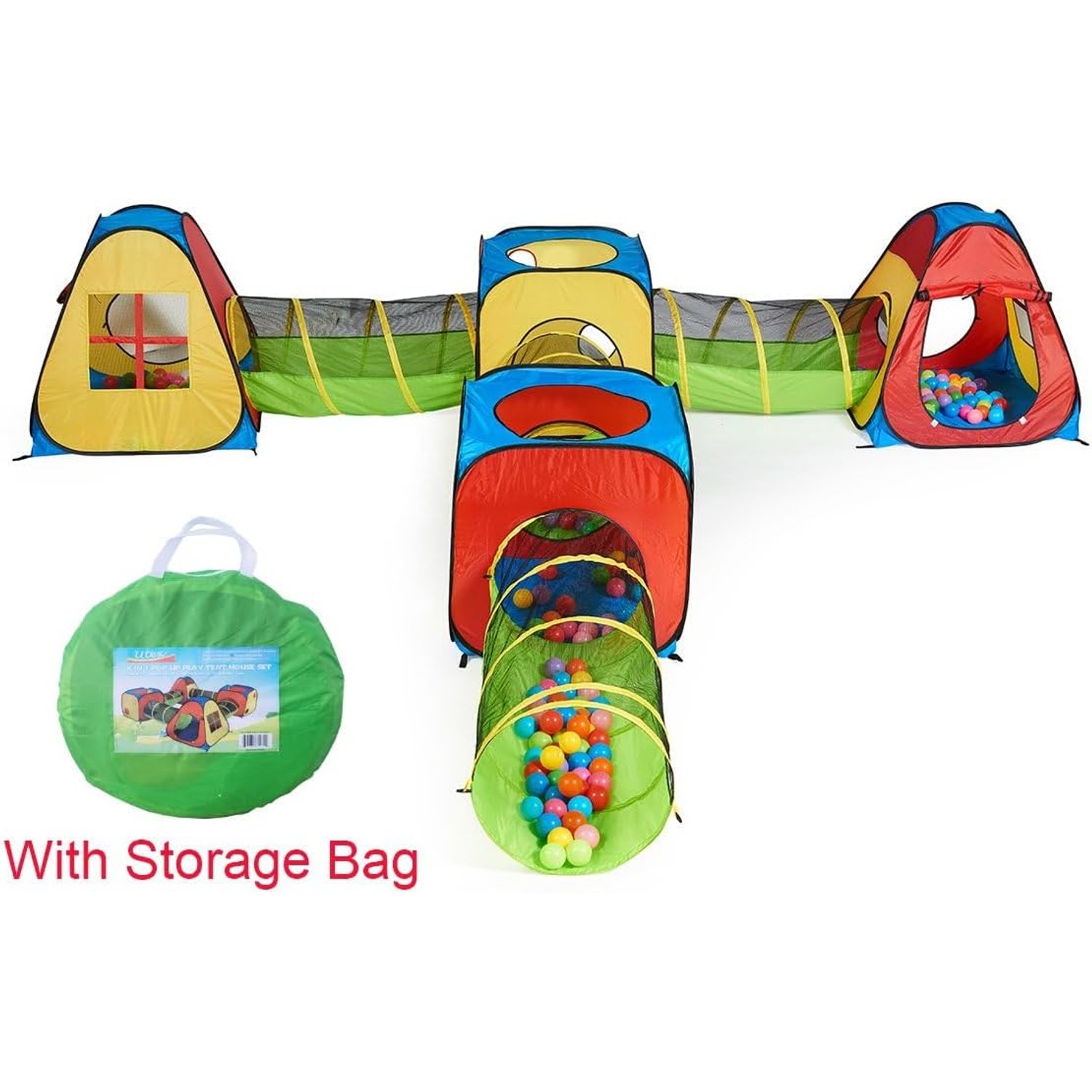
An eight in one pop up tent house gives you eight separate pieces instead of one fixed structure. Two square tents, two teepee-style houses and four tunnel sections. That is the difference between a toy and a kit.
How a pop up set actually works
The mechanism is simple and it is worth understanding before you buy, because it explains both the good and the slightly annoying parts.
Inside the polyester panels runs a flexible plastic frame, a loop of sprung material sewn into the edges. When the piece is folded, that loop is under tension. Unzip the bag, let go, and it snaps out into shape on its own. No poles to thread, no screws, no instructions beyond a glance. That is what "no assembly required" means here, and it is genuinely true.
The trade-off is the fold-down. Collapsing a sprung frame means twisting it against itself so the big loop becomes two small ones. The first attempt is clumsy for almost everyone. By the third attempt it takes about five seconds per piece. If you have ever folded a car sunshade, it is exactly that motion.
Mesh panels in the walls do two useful jobs. Air moves through, so an enclosed tent on a warm afternoon does not get stuffy. And you can see in. That second point matters more than people expect, because you can check on a quiet child from across the room instead of crawling to the door flap.
Who this kind of set suits
The listed age range is 36 months to seven years, and that is a fair window.
At three, the appeal is almost entirely physical. Crawling through a tunnel is the game. There is no story, just the pleasure of going in one end and coming out the other, usually ten times in a row. A good kids pop up tunnel gets more use at this age than almost anything else you can buy.
By four or five, the dens start to mean something. A tent becomes a house, a shop, a cave, a spaceship. Children start asking for the layout to be a particular shape, which is when having eight pieces instead of two earns its keep.
At six and seven, the building becomes the activity. Mazes, obstacle courses, timed races between siblings. They will put balls in one tent and treat it as a ball pit, or run a tunnel out of a doorway so the course covers two rooms. The best play tunnel set at this age is one that lets them change the rules, and modularity is the whole answer.
It also works well in shared settings. Playrooms, childminders, grandparents who want something for visits. The low weight, 1.36 kg for the lot, and the zippered bag mean it is genuinely portable rather than theoretically portable.
How to choose between sets
A few things separate a set that lasts from one that frustrates everybody by the second month.
Count the pieces properly. Marketing numbers can be generous. Here the eight pieces are two square tents, two teepee houses and four tunnel sections, so you can genuinely build two separate play areas or one long connected course.
Check how pieces connect. Modular sets let you join and separate at will. Sets that only work as one fixed shape lose their appeal faster, because once a child has seen the shape there is nothing left to discover.
Think about your floor space honestly. Measure the longest clear run in the room you have in mind. If it is short, that is fine, you simply use fewer tunnels indoors and save the full layout for the garden or a hall. A set that can be shortened is more useful than a big one that only fits outdoors.
Look at fold-down and storage. A set with no carry bag ends up as loose fabric in a cupboard and pieces go missing. A zippered bag keeps the whole thing together and makes it easy to say yes when a child asks to take it somewhere.
Weight matters for independence. Light pieces mean a child can set up and rearrange without help, which is half the point. Heavy structures become something an adult has to manage.
Be realistic about outdoor use. Polyester and plastic handle a lawn fine on a dry day. Overnight dew, heavy rain and strong wind are different, and no lightweight pop up set is built to live outside permanently.
Setting it up well
Give the layout a plan rather than scattering pieces randomly. The best configurations have a route. Start at one tent, through a tunnel, into a second tent, out through another tunnel. Children follow a route naturally and the play lasts longer.
Soft ground underneath helps. Carpet, a rug or grass is more comfortable than tiles or decking, especially for knees doing the same tunnel run twenty times.
Outdoors, think about wind. A breeze catches a light tent easily. Setting up against a hedge or a fence, or weighting corners with something soft, keeps everything where you put it.
And set two rules early. Nobody stands on it, nobody sits on the frame from above. Sprung plastic handles crawling and tumbling well, but it does not handle a child's full weight pressing down on a single point. Those two rules add months to the life of the set.
Keeping it clean
Care here is straightforward because the materials are simple.
Wipe the polyester with a damp cloth and a little mild soap, then let it air dry fully before folding. Skip the washing machine entirely. The sprung frame is not built for a drum, and a soaked folded tent can grow a musty smell that is hard to shift.
After outdoor use, shake out grass, sand and crumbs before packing. Crumbs attract insects in a stored bag, which is an unpleasant surprise weeks later.
Store it dry, out of long direct sunlight. Bright colours fade over time in strong sun, and prolonged UV makes plastic frames more brittle. A cupboard or the top of a wardrobe is ideal.
Every so often, run a hand over the frame edges and check the mesh for tears. Catching a small split early is easier than dealing with a snapped frame mid-game.
Gift considerations
Play tents present well. Bright colours, a lot of pieces, and no adult required to build anything on the day. For a birthday, setting up the full layout before guests arrive gives children something to run straight into, which takes pressure off the first half hour of a party.
If you are buying for someone else's home, the pack-down size is the selling point worth mentioning. Parents are wary of large toys. "It folds into a bag the size of a cushion" tends to settle that worry.
The short version
An eight in one pop up tent house works because it is eight things, not one. Two square tents, two teepee houses and four tunnels, in polyester over a plastic frame, popping open with no tools and folding back into a zippered bag. Total weight 1.36 kg. Suggested for ages three to seven.
If you want one fixed structure that looks like furniture, this is not it. If you want something a child can rebuild a hundred different ways, carry outside, and pack away before dinner, it does that job well. Measure your clear floor space, teach the no-standing rule on day one, and wipe it down before it goes back in the bag.