


The complete guide
How to Choose a Play Tunnel Set That Actually Gets Used
The problem with most indoor play equipment
Big toys have a short honeymoon. A plastic playhouse arrives, it is the best thing in the world for nine days, and then it becomes a thing you walk around for the next two years. The reason is almost never that the toy was bad. It is that the toy only did one thing, in one shape, in one spot, and children get bored of fixed arrangements faster than adults expect.
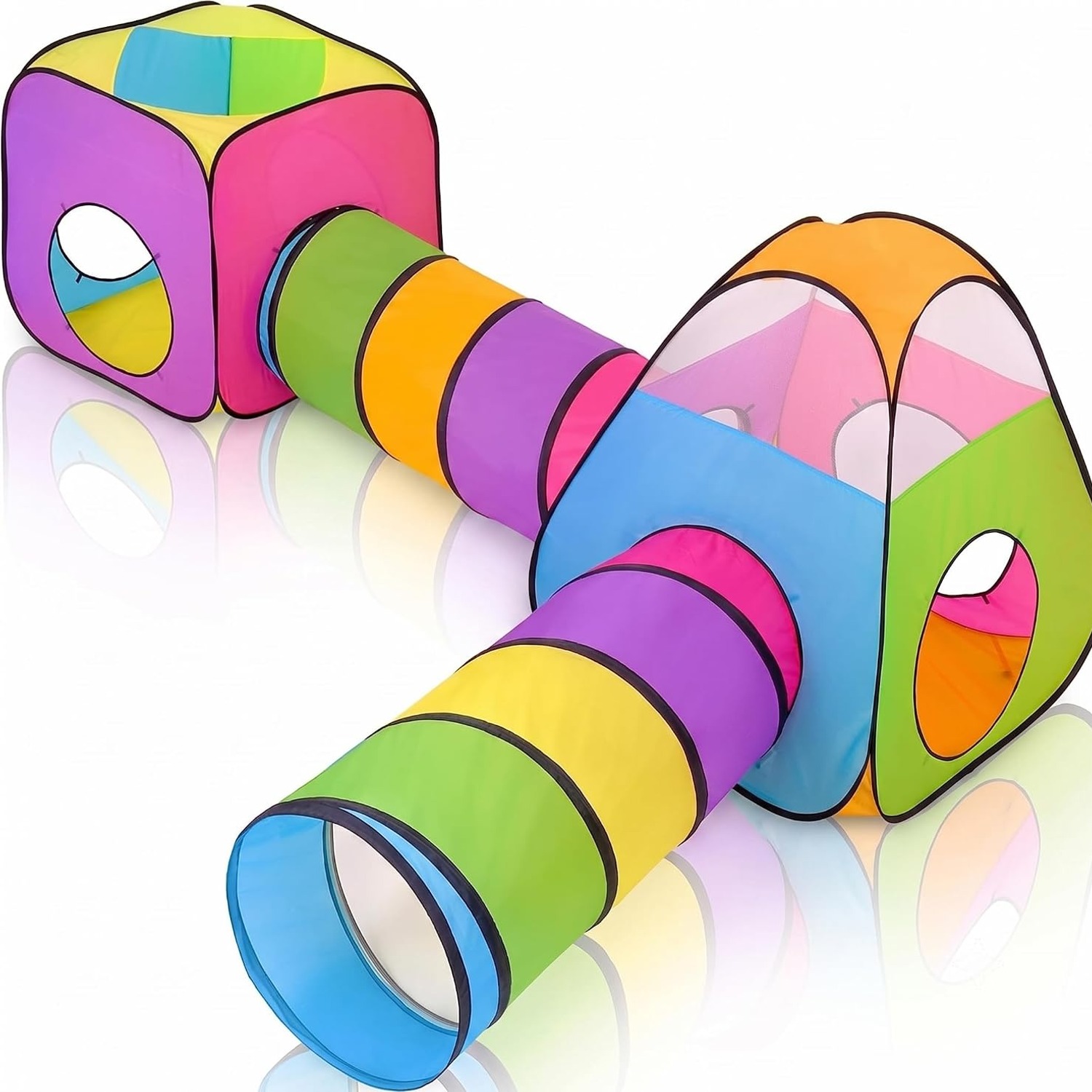
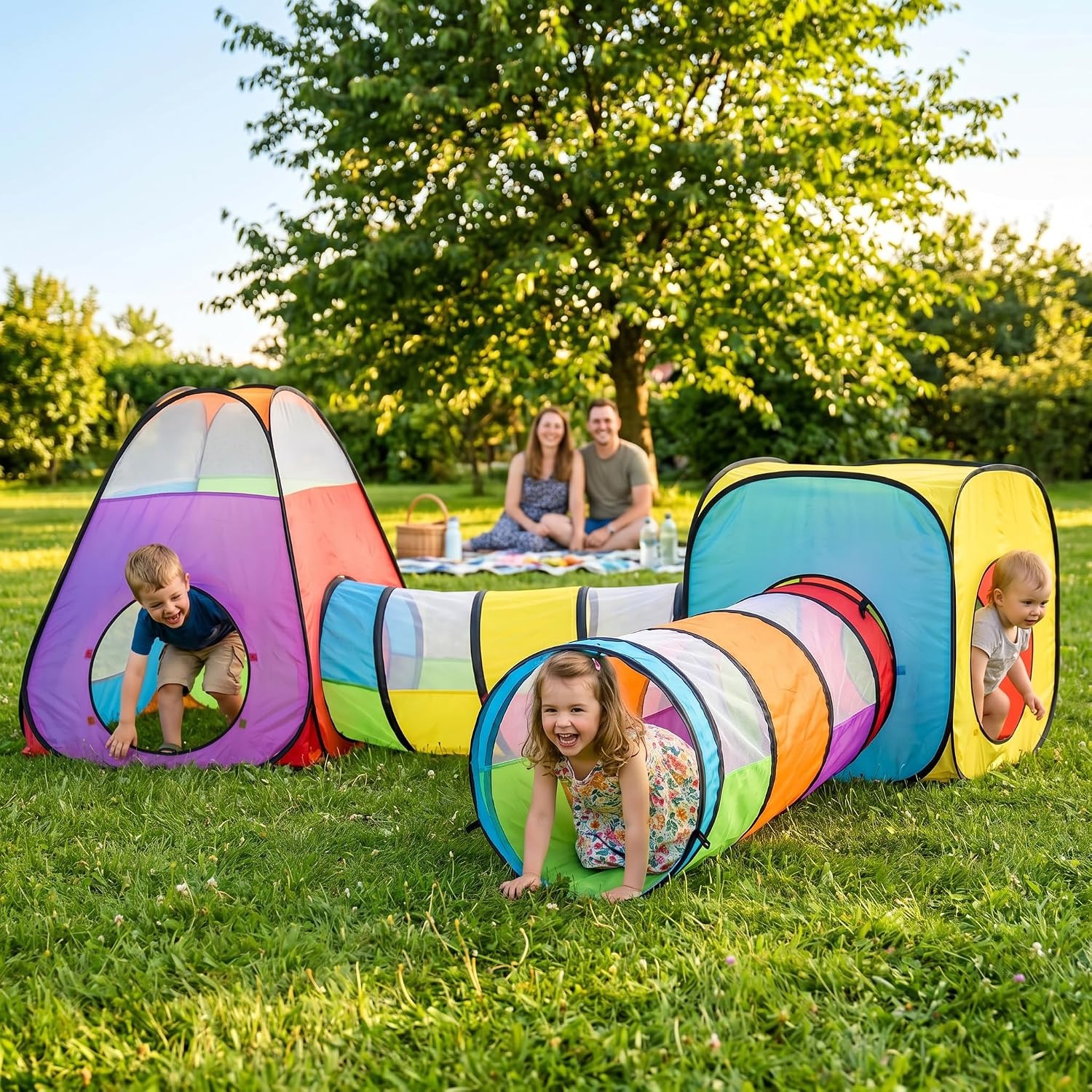
A play tunnel set works differently because it has no fixed arrangement. Four separate pieces can be set out as a straight run, an L shape, a circle, a den with one exit, or a den with three. A child who has lost interest in the layout can change it themselves in thirty seconds. That is the whole trick. The novelty is rebuilt by the person playing, not by the manufacturer.
The second problem is storage. Most family homes do not have a dedicated playroom. The living room is a living room again at seven in the evening, and anything that cannot disappear by then becomes an argument. Fabric and sprung wire fold flat. Moulded plastic does not.
How a pop-up tunnel set works
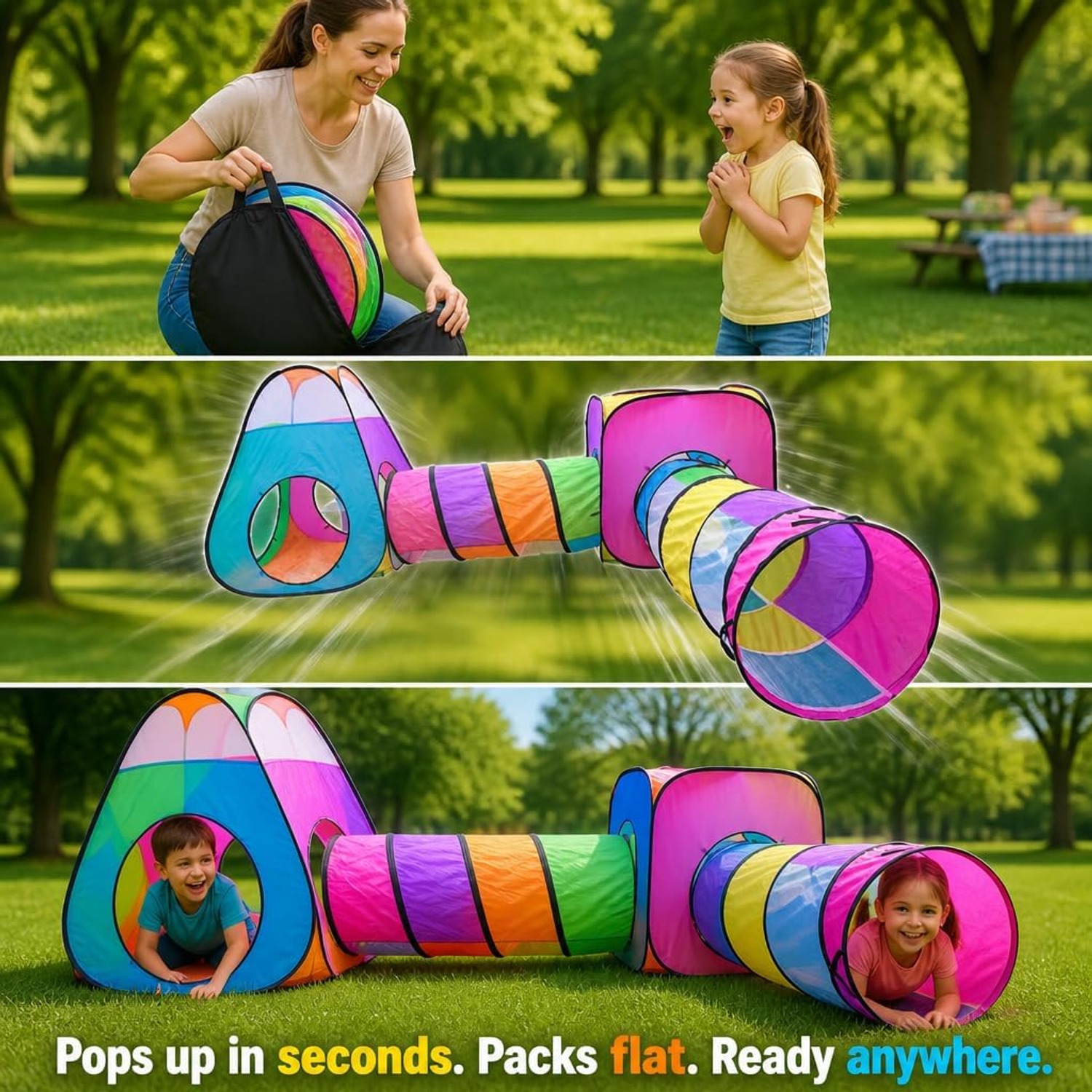
The mechanism is simple and borrowed from camping gear. A loop of sprung steel wire is sewn into the seam of a polyester panel. Compressed and twisted, that wire sits flat as a small circle. Released, it snaps back to its natural shape and pulls the fabric taut with it. No poles, no clips, no numbered diagram.
In this set the same idea is used four times, for a cube, a pyramid and two tunnels. The shell is polyester and the frames are metal. Assembly is listed as required, which here means unfolding, not building. You lift each piece out of the bag, let it open, and put it where you want it.
The mesh windows are worth a paragraph on their own. A sealed fabric box with a young child in it warms up quickly, and a hot den is a den nobody wants to be in for long. Mesh panels let air pass through and keep the inside closer to room temperature. They also let you check on play from the sofa, which sounds minor until you have spent an afternoon crouching to open a flap every five minutes.
Who this suits
The maker gives an age range description of 1 to 6 and a manufacturer recommended age of 0 to 12 years, and in real homes the useful window is wide because each age uses it differently.
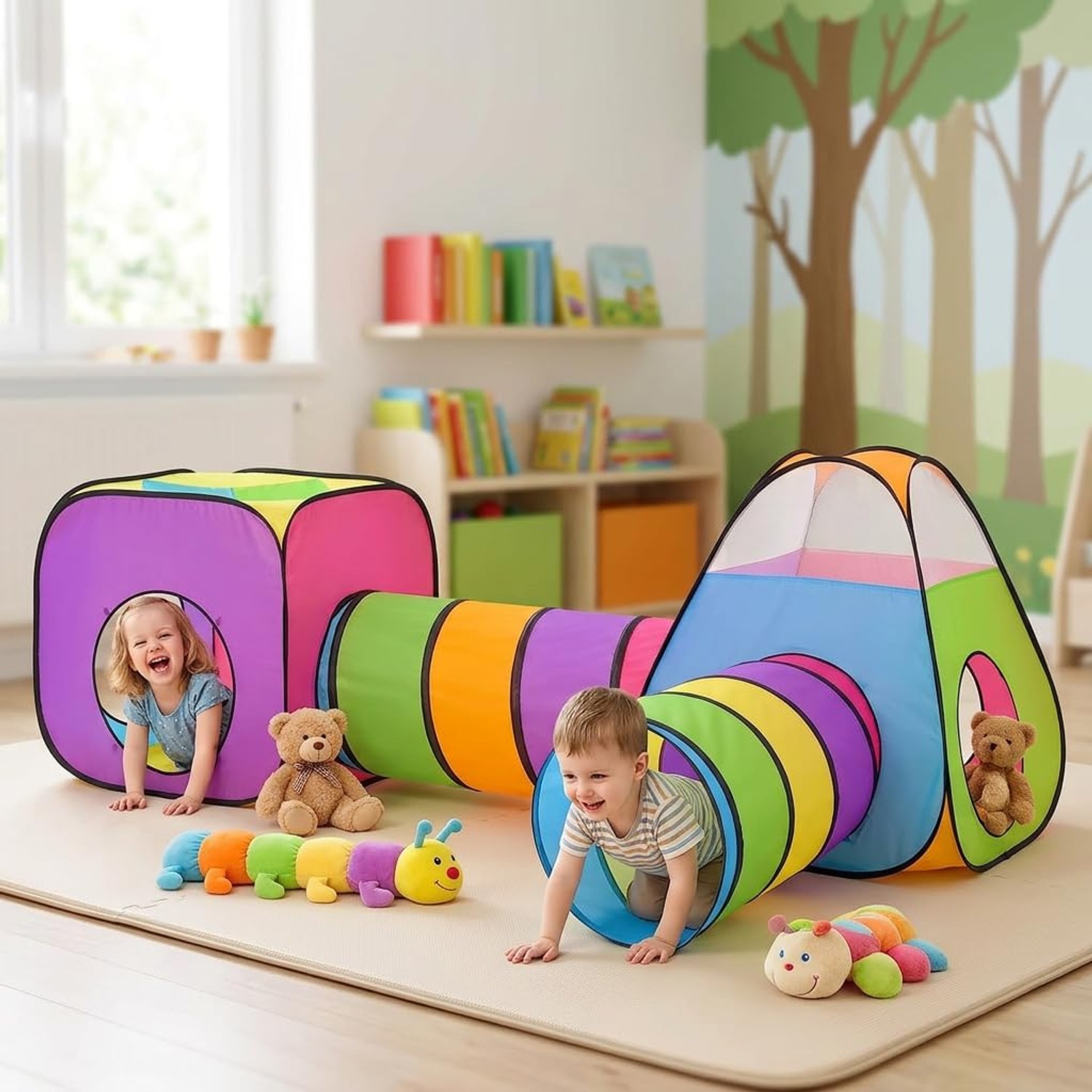
Young children and new crawlers mostly want one tunnel, laid flat, with a familiar face at the other end. The tunnel gives them a clear goal and a reward, and it is a surprisingly good motivator for crawling practice. Keep it short and keep it supervised.
young children are the core audience. This is the age that wants a den, wants to drag cushions into it, wants to hide and be found, and wants to crawl the same loop forty times in a row. A best ball pit tent for young children tends to be the piece that stays set up longest in the house.
School-age children use it for structured games. Circuits, races, timed runs, obstacle courses with the sofa cushions added. They also like rebuilding the layout, which is a kind of play in itself. By around ten most children have moved on, though it often reappears when younger siblings or visiting cousins arrive.
It also suits specific situations rather than specific ages. Small apartments where a toy has to fold away. Grandparents who need something to keep at their house. Rainy-week countries where indoor activity has to be planned for. Childminders and small groups who need gear that packs into a car boot.
How to choose between tunnel sets
Count the pieces, not the marketing. A four in one set means four usable elements. Some sets count a carry bag or a flap as a feature. Look for distinct structures that stand up on their own.
Check whether elements work separately. This matters more than almost anything else. If the pieces only function when joined, you need the full floor space every single time. Independent elements mean you can run a small setup on a normal evening and the full circuit at the weekend.
Look for ventilation. Mesh windows are the difference between a den a child stays in and one they climb out of after four minutes. Solid fabric on every face is a warning sign.
Weigh it. This set is 1.36 kg. Anything much heavier stops being portable, and portability is a large part of why these sets earn their keep. If you want a best travel play tent, weight is the spec to check first.
Think about the floor. Hard floors are fine but a rug makes crawling more comfortable and stops pieces sliding around. If you only have tile or laminate, budget for a cheap play mat.
Be realistic about the circuit. A full four-piece run needs a cleared stretch of floor. Measure the gap between your furniture before you imagine the whole thing assembled. Two pieces at a time is a perfectly normal way to use it.
Setting it up well
Pick a corner away from radiators, heaters, stairs and glass. Fabric and open flame do not mix, and a tunnel exit pointed at a staircase is an obvious thing to avoid once someone points it out.
Give the openings clear space. A tunnel mouth pressed against a wall traps a child inside, and that is how a fun game turns into a scared one. Leave at least an arm's length at each end.
Resist the urge to tidy it too neatly. Children often prefer a slightly chaotic layout with odd angles and cushions jammed in the corners. A perfect symmetrical circuit is an adult's idea of fun.
If you are using it as a quiet space rather than an active one, set up the cube alone with a cushion, a soft toy and a book. A lot of children use enclosed fabric spaces to decompress, and that use is just as valuable as the running around.
Keeping it in good shape
Wipe the polyester with a damp cloth and a little mild soap when it needs it, then let it dry fully in the air before folding. Do not machine wash, tumble dry, bleach or iron it. The wire frames are sewn in permanently, and a washing machine will bend them out of true.
Shake out crumbs, sand and stray crayons before packing down. Grit inside a folded panel grinds against the fabric and wears it thin at the creases over time.
Store it dry. A damp folded tent left in a bag for a month will smell, and that smell is hard to shift. Ten minutes of air drying saves a lot of trouble.
Teach the folding technique once, properly, and show an older child how to do it. Twist opposite sides towards each other and the frame coils down on itself. Forcing a stuck panel is the main way these things break.
The short version
This is a four-piece pop-up play set, a cube, a pyramid and two tunnels, made from polyester with metal-wire frames and finished in multicolour. It weighs 1.36 kg, measures 81.3 x 73.7 x 73.7 cm, and folds into a carry bag for flat storage. Assembly means unfolding the sprung elements.
The reason to buy it is flexibility. Every piece works alone, so it fits a small room on a Tuesday and a full circuit on a Saturday, and it changes as a child grows from crawling to racing. The mesh windows keep it comfortable and keep it visible.
Check your floor space before you order, and check whether you want to add play balls separately, since ball quantity is not specified in the maker's details. Everything else about this one is straightforward.