
The complete guide
Choosing a Castle Play Tent, A Practical Buyer's Guide
The problem a play tent actually solves
Most homes do not have a spare room for a child. What they have is a corner of the living room, a strip of floor beside the bed, or a patch of garden that nobody uses. A child still wants somewhere that is theirs, with a door they control and walls that block out the rest of the house. That urge shows up early. It is why kids build forts out of sofa cushions and clothes horses, and why the fort gets rebuilt the moment you take it apart.
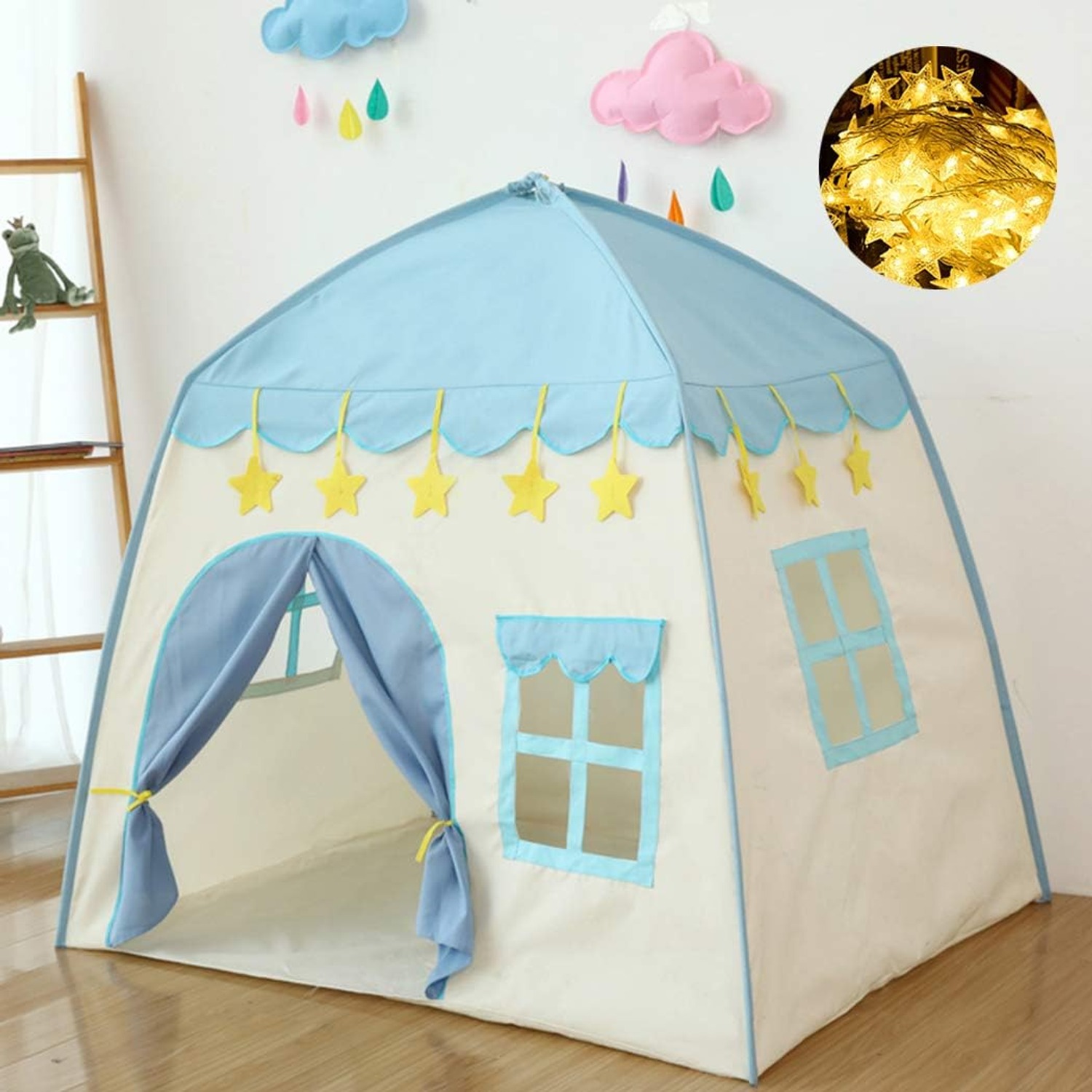
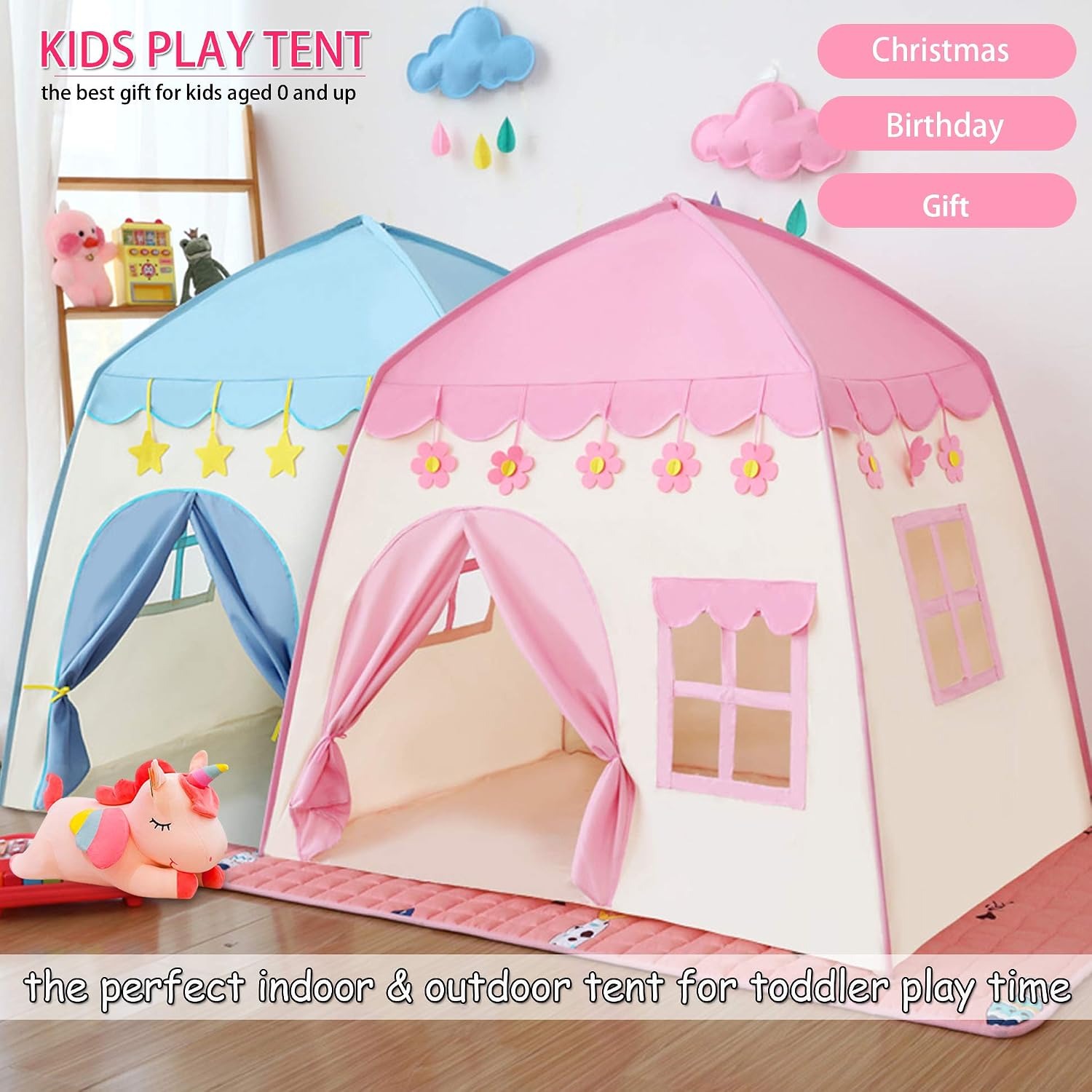
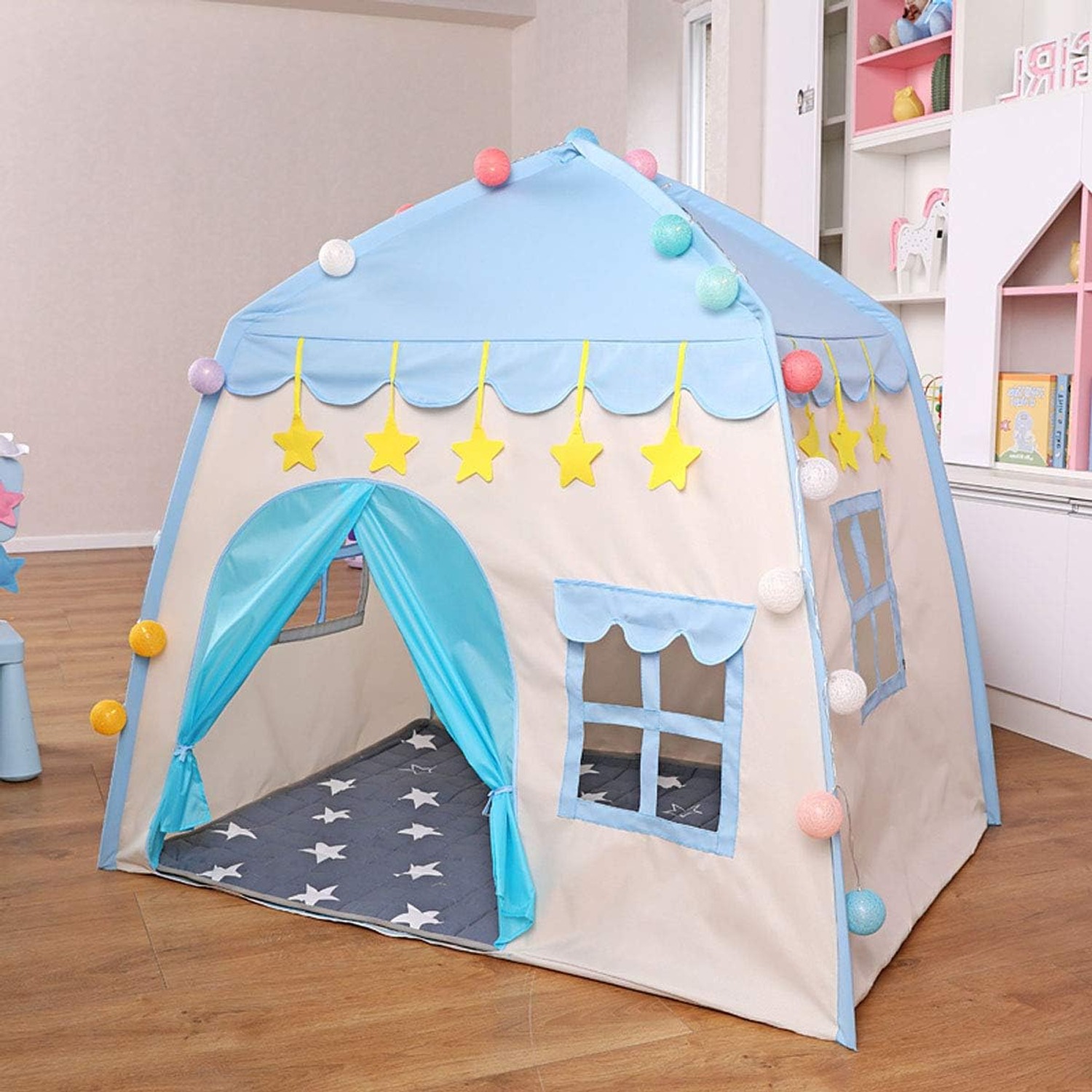
A castle play tent gives that instinct a permanent home without permanently taking over your house. It goes up, it gets used, it goes back in a bag. The blue castle play tent here is a straightforward version of that idea: Oxford fabric, two fibreglass poles, a doorway, and a shape that clearly says castle rather than generic dome.
There is a practical side too. A child absorbed in their own space is a child who is not asking for the tablet. That hour of independent play is good for them and it is good for whoever is trying to cook dinner.
How this tent is built
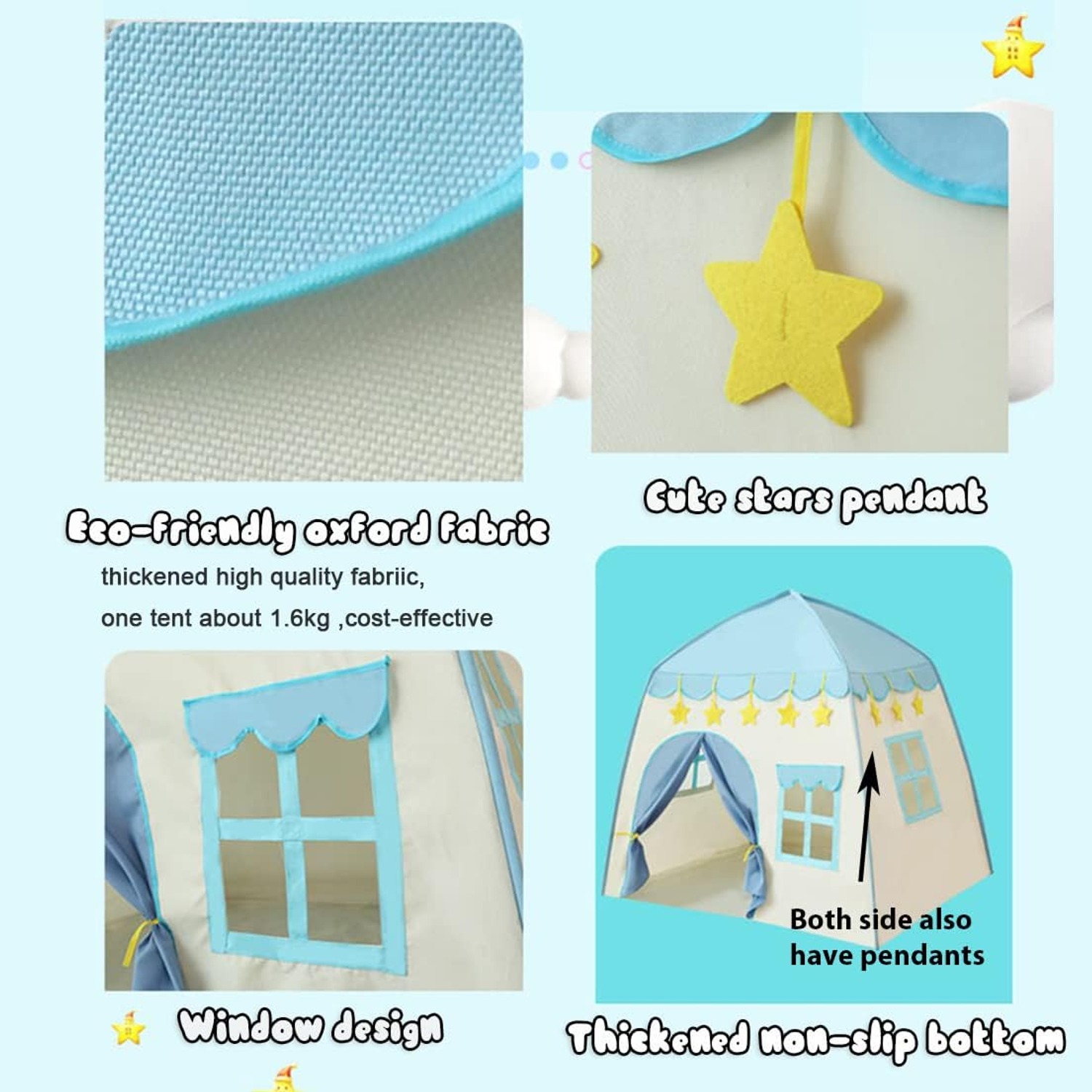
The cover is Oxford fabric. If you have owned a decent backpack or a sports holdall, you already know the material. It is a woven polyester with a tight weave, chosen because it takes dye well, resists scuffs, and does not pill the way cheap felt or thin nylon does. For something that will be crawled into several times a day, that matters more than it sounds.
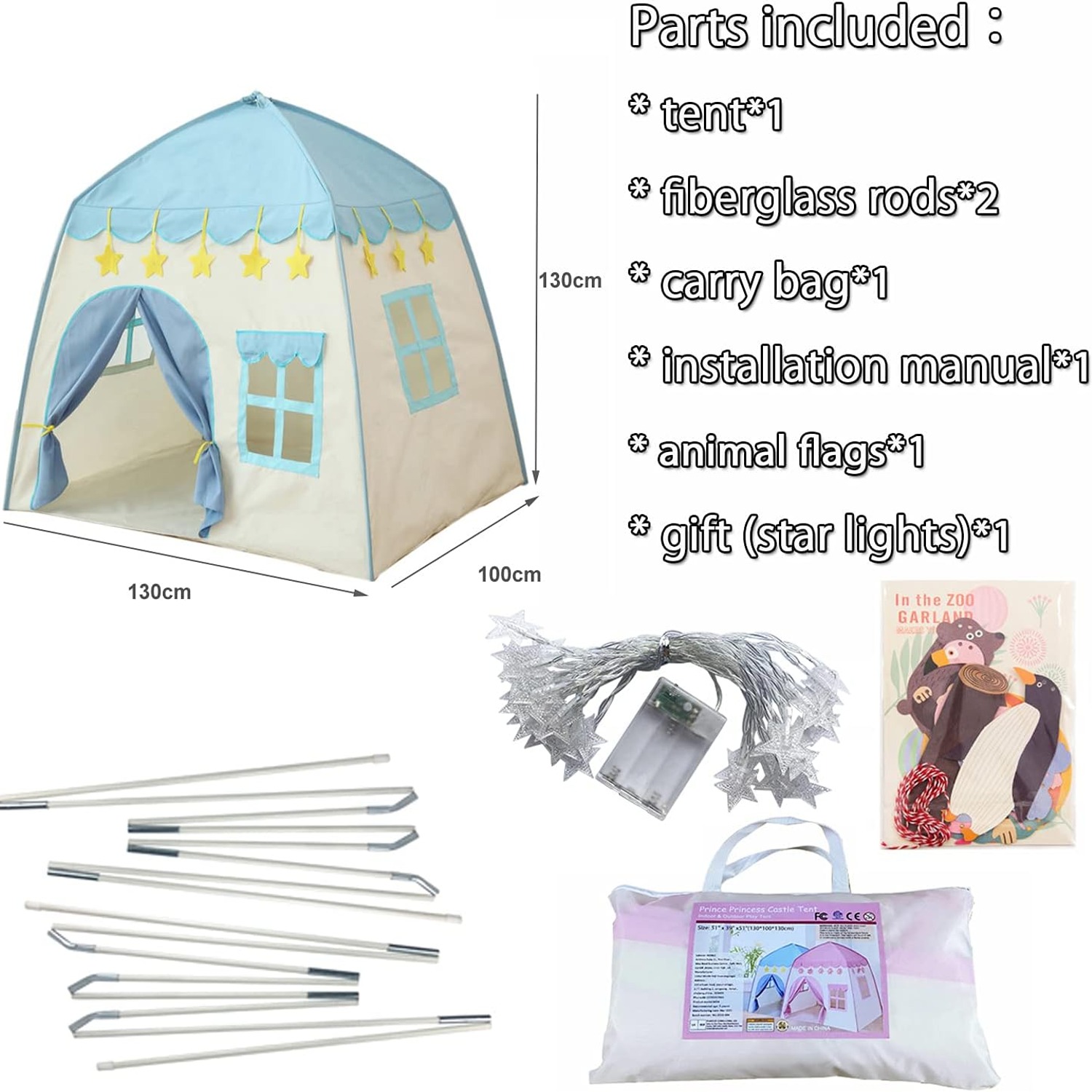
The frame is two fibreglass poles. Fibreglass is the usual choice for play structures because it bends. Push a wall and the pole flexes, then springs back. A rigid plastic rod would crack at the same load. It also means the tent has no sharp metal joints at child height.
Setup needs no tools and no assembly. The poles thread through the fabric channels and bow into the castle shape, and the instructions cover it in a couple of steps. Worth noting up front: the instruction sheet is not guaranteed to be in English. It is a diagram-led job, so this rarely causes trouble, but it is fair to know before you open the box.
Open size is 130 cm wide, 100 cm deep and 130 cm tall. Those numbers are the ones to write down before ordering.
Does it fit your space?
A 130 by 100 cm footprint is roughly the same floor area as a small two-seater sofa. That fits in most bedrooms and living rooms, but it is not nothing. Before buying, put a tape measure down and mark the corners with books or cushions. Then check two things: can the doorway face into the room rather than into a wall, and is there clear space in front of it for a child to crawl in and out without knocking a lamp over.
The 130 cm height is generous for the age range. A three or four year old can stand up inside. A seven year old will need to duck, which is fine, because at that age they tend to sit or lie down in there anyway.
Outdoors, pick level ground and ideally some shade. The tent has no pegs listed, so it sits on the surface rather than anchoring into it. On a breezy day, a couple of heavy cushions inside keeps it settled.
Who it suits
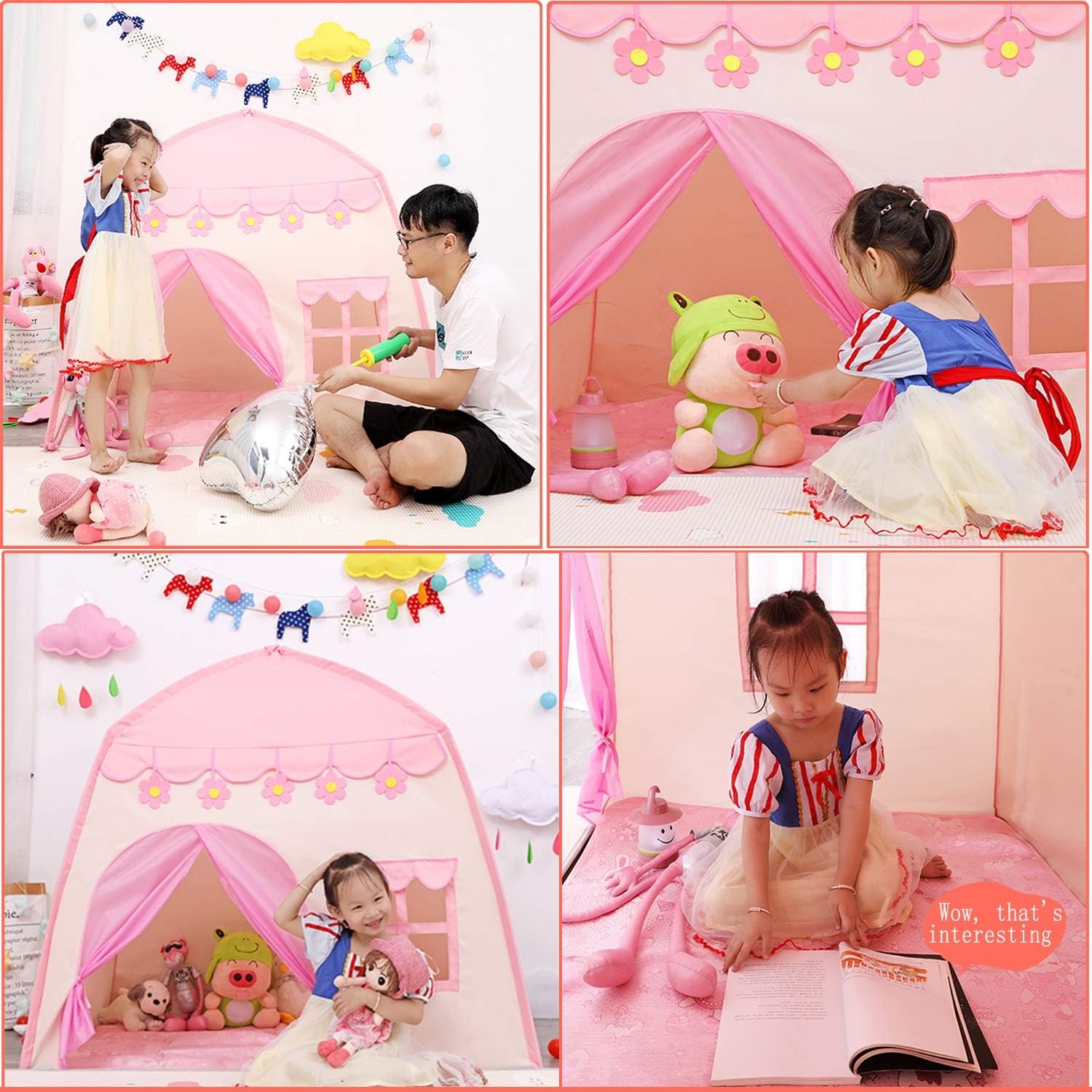
It is listed for children aged three and up. That is the sweet spot where a child can get in and out safely on their own and has enough imagination to turn an empty tent into a throne room, a shop, a spaceship or a hospital, often all in the same afternoon.
Younger children enjoy it too, with an adult in the room. They mostly use it as a crawl-through and a hiding place, which is still plenty of fun.
Older children do not abandon it as fast as you might expect. Around six to nine, the use shifts from pretend play to retreat. It becomes the place for reading, drawing, listening to an audiobook, or just being out of sight of siblings for twenty minutes. Adding the included star lights pushes it firmly in that direction, which is why it holds up as one of the best indoor play tent choices for mixed-age households.
Two children can share it comfortably if they are small and getting along. Three is a squeeze.
What the extras add
The box includes a 5 m string of 30 LED star lights and a set of animal flags. These are not the kind of extras you shrug at. The lights change the inside of the tent completely once the room is dim, and they are the single most common reason children want to be in there at bedtime rather than fighting it. The flags give the roofline that castle silhouette from across the room.
Buying these separately would cost money and take a second shopping trip. Having them in the box means the tent is finished the moment it is up, which matters a lot if you are giving it as a birthday or Christmas present and want the reaction to land on day one.
The carry bag is the quietly useful one. It is what turns this from furniture into something portable. The tent can go to a grandparent's house for the weekend, out to the garden on a sunny afternoon, or into a cupboard when you want the living room back.
How to choose between play tents
A few things separate a tent that lasts from one that annoys you by month two.
Look at the frame material first. Fibreglass poles flex and survive play. Thin plastic rods and wire hoops do not, and they are the single most common failure point in budget tents.
Then look at the fabric. Oxford and similar woven polyesters hold their shape and colour. Very thin polyester feels flimsy and shows every crease after storage.
Check whether assembly is required. Some castle tents arrive as a bag of connectors and tubes that take half an hour and a lost temper. This one needs no assembly, which makes a real difference when you are setting it up at a party or on holiday.
Finally, think about packing down. If a tent does not fold into something you can store, it will stay up permanently, and that is fine until you need the floor back.
Looking after it
Care is simple and mostly about habit. Spot clean marks with a damp cloth and a little mild soap, and let the fabric air dry fully before you fold it. Folding a damp tent is how you get a musty smell that is hard to shift.
Skip bleach and strong solvents, and do not tumble dry it. Take the star lights off before any cleaning.
After outdoor use, wipe the poles dry and put them in the bag so they stay straight. Keep the packed tent somewhere dry and out of direct sun. Colour fades under long sun exposure, so a shaded pitch outside and a cupboard indoors will keep a blue play tent looking right for years rather than seasons.
If your child decorates the inside with stickers, test removal on a hidden patch first. Oxford fabric usually releases them cleanly, but adhesive varies.
The short version
This is a 130 x 100 x 130 cm castle play tent in blue, made from Oxford fabric on fibreglass poles, with no assembly required. It comes with a carry bag, animal flags and a 5 m string of 30 LED star lights, and is recommended for children aged three and up.
Measure your corner, decide which way the door should face, and keep the carry bag. Everything else takes care of itself. Country of origin and certification details are not specified in the maker's details, so if you need those for a particular setting, ask us before you order and we will check what the supplier can confirm.